Best Christmas Light Colors for Smart Holiday Lighting
Choosing the best Christmas light colors for smart holiday lighting requires careful planning. We evaluate architecture, brightness, spacing, and how colors appear on our home after dark. Permanent smart systems let us refine classic and modern palettes with app control. We adjust dimming, zoning, and seasonal themes while keeping a clean, polished appearance.
Key Takeaways
- Christmas light colors look different at night than in product photos, so we assess siding tone, rooflines, spacing, and brightness in real nighttime conditions.
- Warm white and balanced red-and-green combinations create a refined, reliable look for most homes and small commercial properties.
- Modern palettes like cool white, gold, blue-and-white, or single-color layouts complement contemporary architecture when we control saturation and placement.
- Smart lighting systems give us instant color changes, dimming, and zoning without seasonal reinstallation, which improves safety and long-term value.
- Professional installation secures mounting, maintains consistent output, and withstands harsh weather, protecting curb appeal all season.
Choosing Christmas Light Colors That Instantly Improve Curb Appeal
The most common question we hear is simple: which Christmas light colors create the most polished, professional look on a home or commercial property? The answer depends on architecture, placement, and how the colors appear at night on the actual structure.
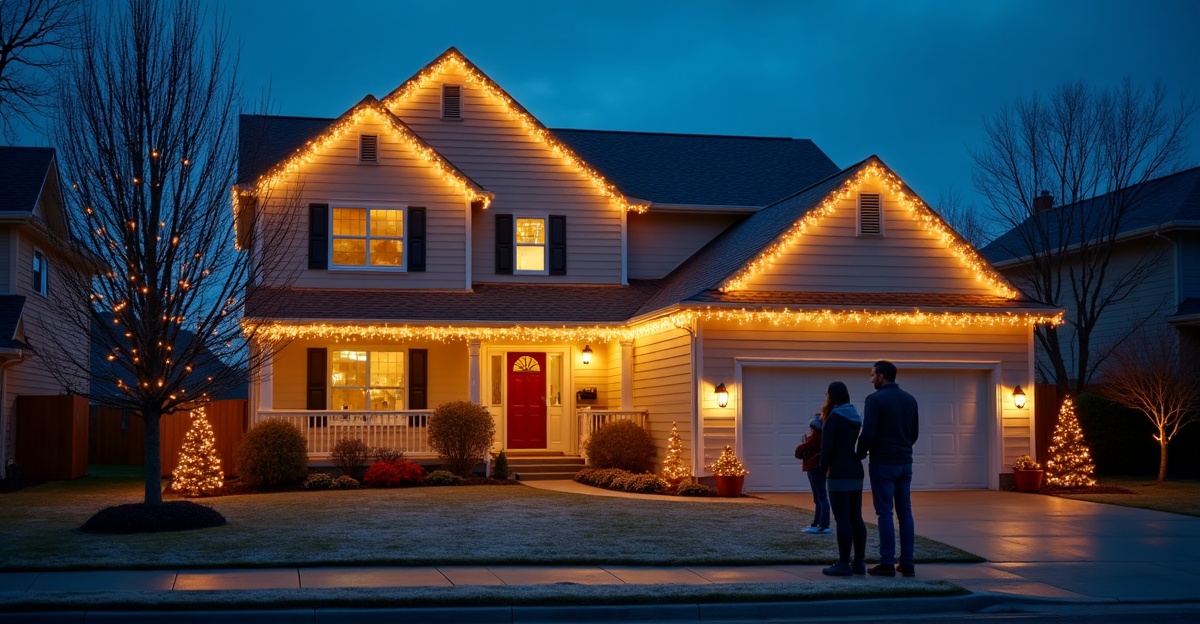
Christmas light colors on house exteriors always look different than they do in product photos. Siding color, rooflines, landscaping, bulb spacing, and brightness all affect the final result. A warm white that looks soft in a catalog can appear much brighter against light stucco. A bold red-and-green combination may look balanced online but feel uneven if spacing is inconsistent.
Clean design starts with structure. Balanced placement along rooflines, peaks, windows, and entry points creates an intentional look. Even spacing highlights architectural lines and keeps the display from feeling cluttered. Concentrating lights in one area while leaving other sections dark often makes a home look unfinished.
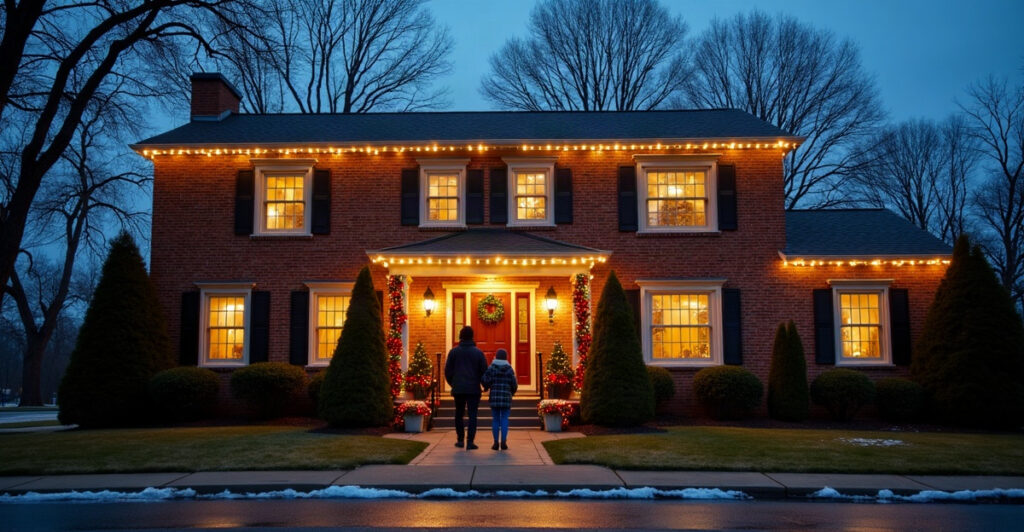
Warm white and evenly distributed red-and-green combinations tend to look refined on mid-to-high-end homes and small commercial properties. These palettes photograph well, but more importantly, they maintain definition at night. Overly bright or tightly spaced bulbs can overpower trim details and wash out texture, especially on lighter siding.
Western United States climates add another layer of planning. Strong sun exposure can fade low-quality bulbs. Wind and temperature swings place stress on wiring and clips. Cold nights reveal inconsistencies in cheaper systems. We account for durability, secure mounting, and consistent output so Christmas light colors stay uniform through the full season.
Classic Christmas Light Colors That Work Year After Year
Classic Christmas light colors remain popular because they’re reliable and adaptable across architectural styles. Each option creates a distinct effect once installed and viewed at night.
Warm White
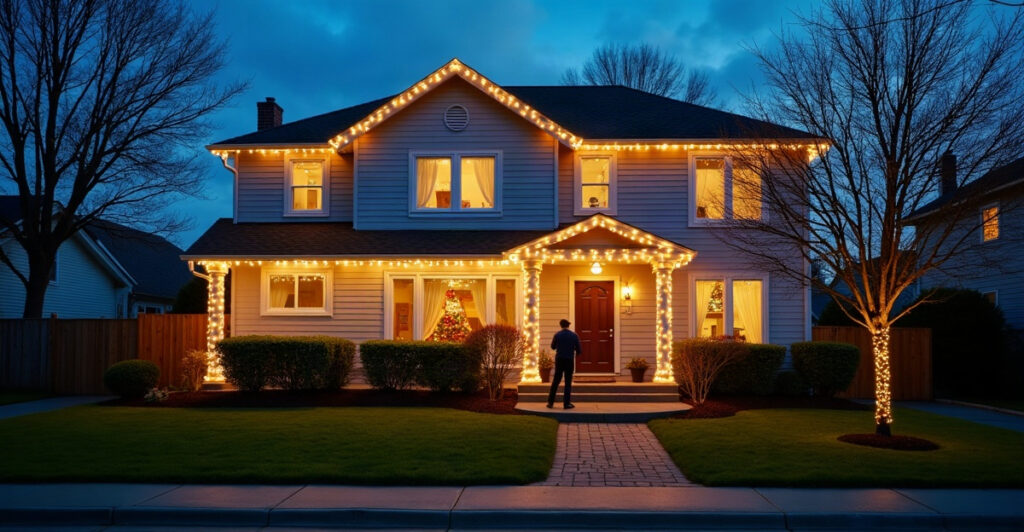
Warm white delivers a clean, elegant appearance. It pairs well with stone, brick, stucco, and neutral siding. On darker homes, it creates contrast without feeling harsh. On lighter exteriors, we often recommend moderating brightness to prevent glare. This choice works especially well for homeowners who prefer a timeless look.
Red and Green
Red and green remain instantly recognizable. Even distribution is critical. Balanced strands along rooflines and consistent spacing around windows prevent color clustering. On large homes, alternating bulbs in a steady pattern keeps the display organized rather than chaotic.
Multicolor
Multicolor designs bring nostalgic energy. These Christmas light colors on house exteriors suit traditional architectural styles with defined rooflines. Larger bulb sizes amplify the retro feel, while smaller LED nodes create a cleaner look. Brightness control plays a major role at night. Highly saturated bulbs can dominate detailed trim if not dimmed appropriately.
Small business storefronts often lean toward warm white or carefully spaced red and green. These choices feel festive while preserving a professional appearance. Overly dense multicolor displays can distract from signage. Consistent spacing and moderate brightness help maintain brand integrity.
Catalog photos rarely show true scale. Bulb size, lumen output, and spacing determine how classic Christmas light colors actually read from the street. We evaluate designs under real nighttime conditions before finalizing placement.
Modern and Different Christmas Light Colors for a Distinctive Look
Different Christmas light colors offer clear advantages for modern homes and updated commercial buildings. Clean lines and simplified palettes often highlight architecture more effectively than busy combinations.
- Cool white creates a crisp, contemporary feel and pairs well with black trim and metal roofs.
- Gold and soft amber tones produce a warm, upscale impression.
- Blue and white combinations support winter-themed displays and coordinated commercial settings.
Single-color designs continue to grow in popularity. Coordinated rooflines in one tone—such as deep red, emerald green, or icy white—draw attention to symmetry. Monochromatic schemes can make peaks and dormers stand out without visual noise. These approaches offer a modern alternative to classic Christmas light colors.
Saturation matters. Highly saturated hues appear more intense on light siding. Dark brick and charcoal exteriors tend to soften bold colors. Placement and dimming become essential. Different Christmas light colors should accent lines, not flatten them.
Neighborhood context and HOA guidelines also influence choices. Subtle, evenly spaced lighting tends to integrate better within upscale communities. Commercial buildings often use coordinated color themes for brand alignment or seasonal events. App-controlled systems allow quick transitions between neutral architectural lighting and brighter holiday palettes.
How Architecture, Materials, and Placement Affect Christmas Light Colors on a House
Architecture shapes perception. Siding tone, brick undertones, roof pitch, and landscaping all influence perceived brightness and color balance.
Dark roofs absorb light. We plan spacing and brightness carefully to avoid dull or uneven sections along ridgelines. Additional nodes or adjusted output may be needed to maintain consistent visibility.
Light stucco and snow reflection can amplify intensity. In these conditions, softer tones often feel more balanced than extremely bright whites or vivid blues. Landscaping also affects perception. Bare winter trees allow full visibility, while dense shrubs can block lower trim lighting.
Roofline complexity changes design strategy:
- Simple gables often support multicolor or red-and-green layouts cleanly.
- Highly detailed elevations tend to look better with single-color or controlled two-tone schemes.
- Layered peaks benefit from evenly zoned brightness control.
Christmas light colors should frame architectural lines rather than compete with them. We evaluate lighting after sunset in real conditions before final adjustments. Digital previews assist planning, but final decisions reflect how the installation performs at full darkness from the street.
Traditional String Lights vs. Permanent Smart Lighting Systems
Traditional seasonal string lights remain common. They deliver familiar results but require annual installation, removal, and storage. Repeated ladder use increases safety risk. Exposed wiring can strain outlets and connections over time.
Permanent systems provide a different approach. With permanent holiday lighting, we install discreet track systems along soffits and rooflines once. Fixtures remain in place year-round and withstand Western climate conditions, including sun exposure, wind, and cold temperatures.
Customization marks the biggest difference:
- App-based controls allow instant switching between classic Christmas light colors and different Christmas light colors.
- Brightness adjustment and zoning deliver balanced results across peaks, eaves, and entry points.
- Preset scheduling simplifies daily operation.
Maintenance becomes simpler. There’s no yearly detangling of strands or replacing broken clips. The higher initial investment offsets repeated seasonal labor and materials over time. Many homeowners value consistency, safety, and the ability to fine-tune color and intensity without climbing a ladder.
For properties that prefer traditional seasonal décor, professional Christmas light installation remains a reliable option. We secure strands properly and design layouts that emphasize structure rather than clutter.
Flexibility Beyond December: Year-Round Control and Long-Term Value
Smart lighting systems extend well past the holidays. We can switch from classic Christmas light colors in December to team colors, patriotic palettes, or subtle warm white accents throughout the year. Christmas light colors on house exteriors become part of an ongoing exterior design strategy rather than a temporary addition.
Discreet track systems blend into soffits and roof edges. During daylight hours, visibility remains minimal. At night, precise LED placement outlines architectural features cleanly. App-based scheduling, timers, dimming, and zone control simplify operation through tools like the Bosso lighting app.
Professional installation supports long-term reliability. We focus on secure mounting, organized wiring, and accurate alignment. These details protect consistency in color output and brightness season after season.
Permanent solutions also complement permanent outdoor lighting designed for everyday curb appeal. Holiday settings become one preset within a larger lighting plan.
For homeowners and business owners ready to explore advanced options, we provide practical guidance and clear design recommendations. A consultation through our lighting consultation team allows us to evaluate architecture, environment, and goals before recommending specific Christmas light colors. We prioritize craftsmanship, durability, and real-world performance so the final result looks intentional every night it’s on.