Best Outdoor Landscape Lighting Ideas for Your Home
The best outdoor landscape lighting ideas combine pathway, entry, architectural, and outdoor living-area lighting to improve safety, curb appeal, and after-dark use. A balanced plan layers fixtures, manages brightness, uses suitable beam angles, and separates lighting zones. This approach highlights key areas without glare or excess spill light.
Key Takeaways
- Illuminate walkways, steps, driveways, and entrances with focused fixtures that improve visibility without creating glare for residents or drivers.
- Use uplights, wash lights, and tree lighting with restraint to define architectural details and landscape focal points without making the property feel overlit.
- Plan patios, decks, pools, and entertaining areas with separate ambient, task, and safety lighting based on how each area is used.
- Use smart controls, timers, dimmers, and zones to manage schedules, brightness, white-light settings, and optional seasonal color scenes.
- Match fixture types, mounting methods, electrical needs, and weather ratings to the property. Use professional installation for complex projects or work subject to electrical codes.
Lighting Ideas That Improve Safety, Curb Appeal, and Outdoor Use
The best outdoor landscape lighting ideas bring structure, safety, comfort, and curb appeal to a property after dark. We achieve the strongest results by lighting the routes, features, and activity areas that matter most.
Start with illuminated walkways, steps, entries, patios, decks, trees, architectural details, and outdoor gathering areas. These locations support four core outcomes: curb appeal, safer movement, better outdoor usability, and a polished property appearance throughout the year.
Effective outdoor landscape lighting relies on layers. Path fixtures guide movement. Accent lights define focal points. Ambient lighting supports relaxed use of patios and seating areas. Focused task or security fixtures cover areas where visibility matters most. This approach creates a balanced exterior home lighting plan without overlighting the property.
More fixtures and higher output do not automatically create better results. We consider beam spread, color temperature, fixture placement, shielding, glare control, dimming, and separate control zones. Warm or neutral white light often gives outdoor lighting for curb appeal a natural, welcoming appearance, while properly aimed beams keep light off windows and neighboring properties.
For inspiration around front-facing features, see these front-of-house lighting ideas. A coordinated plan helps each fixture serve a clear purpose instead of creating scattered pools of light.
Pathways, Steps, Entrances, and Driveways: Lighting for Safer Movement
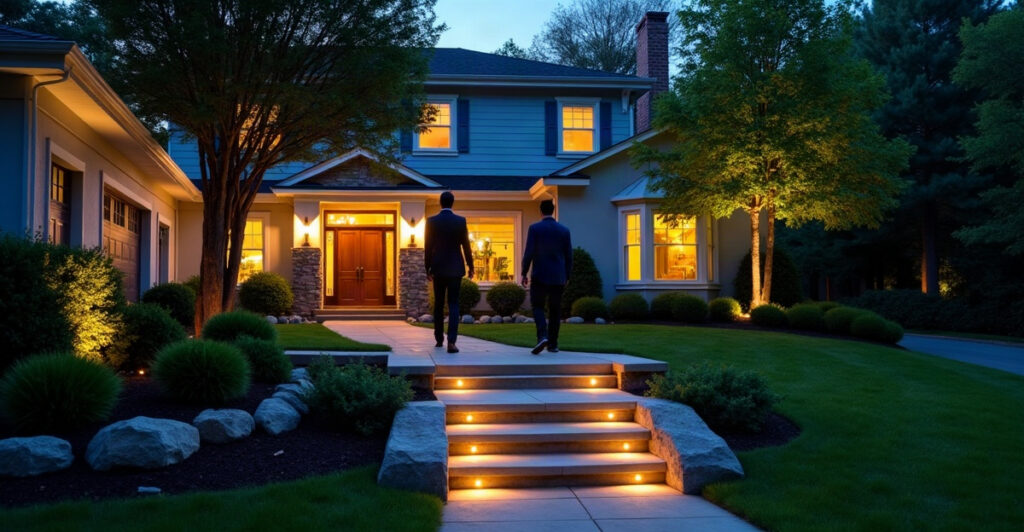
Pathway lighting ideas should make walking routes and grade changes easy to identify without placing bright light directly in anyone’s line of sight. Low-voltage landscape lighting works well for sidewalks, garden paths, gates, and front entries because it can provide controlled downward illumination close to the ground.
We commonly combine low-voltage path lights with recessed outdoor step lighting, bollard lights, downlights, and carefully placed wall or post fixtures. Recessed step lights help define tread edges. Downlights mounted on nearby structures or trees can cast a soft wash across a route. Bollards can define wider pathways where a taller fixture suits the setting.
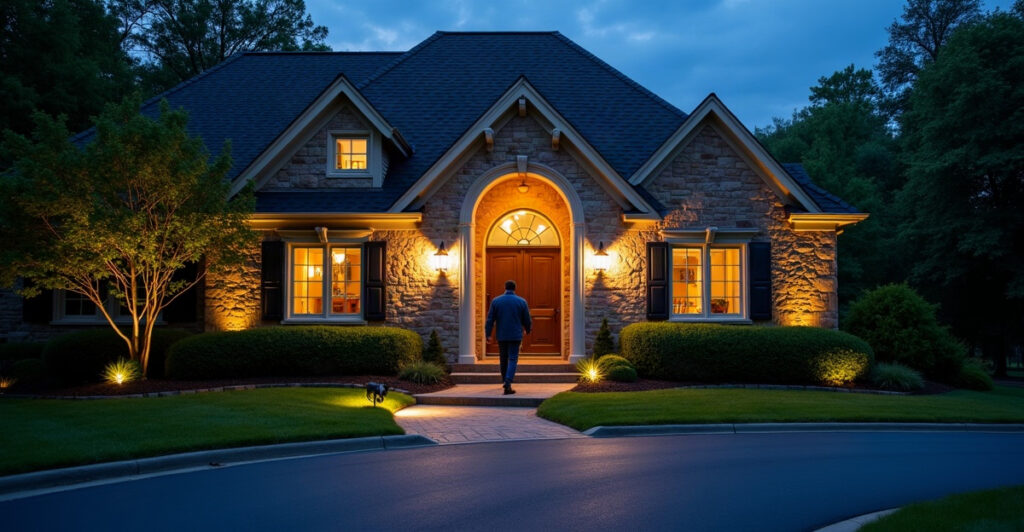
Driveway lighting needs careful placement. Aim fixtures away from drivers, avoid glare at the garage approach, and use light to define edges, turns, gates, and transitions. Front entrance lighting should make the door, lockset, steps, and approach visible while complementing the home’s architecture.
Timers, dimmers, and zoning keep outdoor safety lighting useful without leaving every fixture at full brightness all night. We also recommend respecting neighborhood expectations by limiting spill light and avoiding excessively bright driveway or entry fixtures.
Decorative permanent lighting does not replace dedicated safety or security lighting. Uneven steps, steep grades, dark driveways, and heavily used nighttime routes may need focused lighting planned specifically for visibility. For areas that need purposeful coverage, consider a professional security lighting installation.
Architectural Uplighting, Tree Lighting, and Permanent Accent Lighting
Architectural landscape lighting gives a home depth and visual definition after sunset. Spotlights, uplights, well lights, wash lights, and carefully positioned roofline fixtures can highlight stonework, columns, gables, fences, retaining walls, garden beds, and mature trees.
House uplighting works best when we use it with restraint. The beam angle, distance from the surface, output level, and fixture shielding determine whether a wall receives a smooth glow or a harsh hotspot. A narrow beam can emphasize a column or tall tree trunk. A wider wash can bring out a stone façade or broad garden wall. Shielding keeps the source comfortable to view and limits unwanted spill.
Tree lighting ideas can include uplights at the base of a specimen tree, downlights installed above a path, or grazing light that brings out bark texture. We position fixtures so plants remain the focal point, not the hardware. Proper landscape accent lighting can tie the house and garden together in one cohesive nighttime scene.
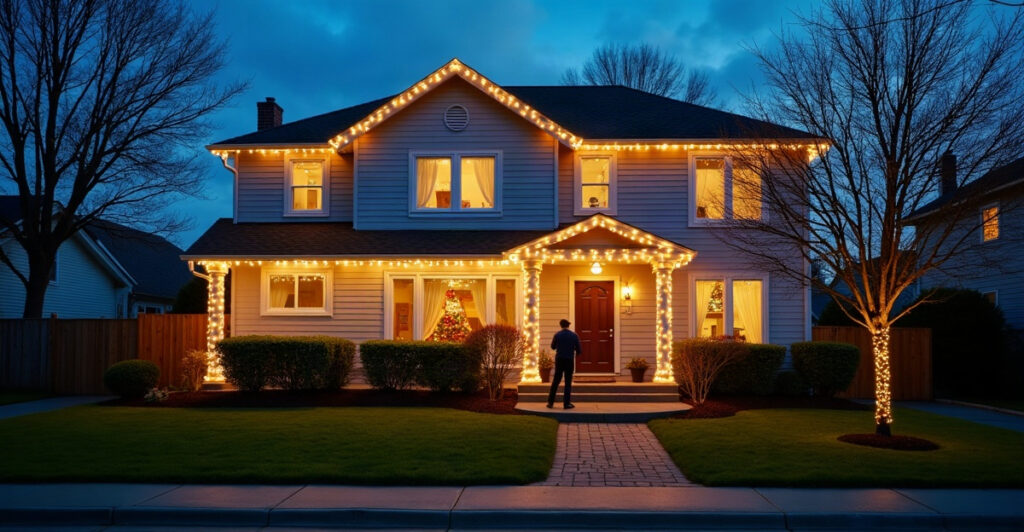
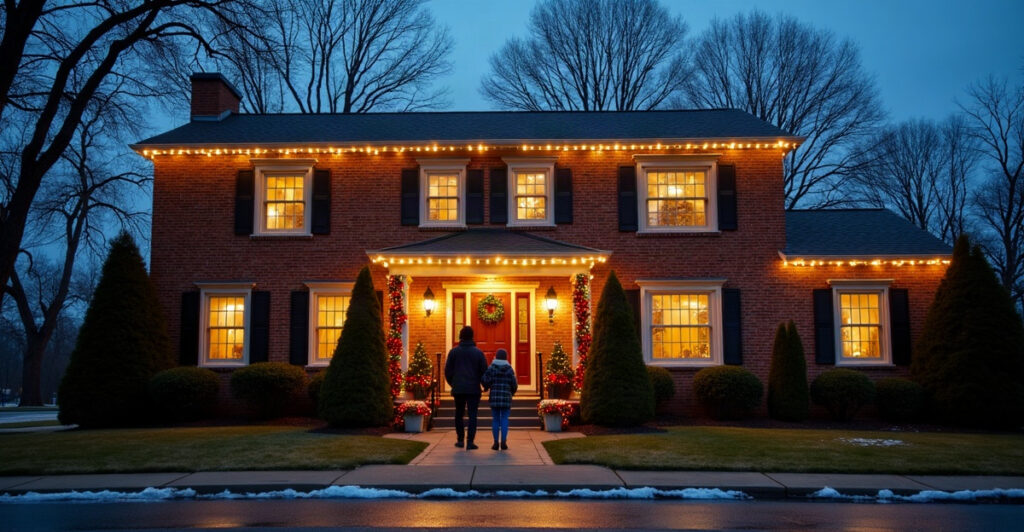
Permanent exterior lighting, including soffit and roofline lighting, serves a different role from low-voltage path lights, spotlights, floodlights, deck lights, and security fixtures. Roofline lighting can create clean architectural outlines, seasonal color themes, and year-round accents. Path and deck fixtures support movement. Flood and security fixtures cover broader safety needs.
We set realistic expectations about daytime visibility. Fixture visibility depends on the home’s architecture, trim color, product profile, mounting method, viewing distance, and installation details. Professional installation can improve integration, but no system should be described as universally invisible. Review examples in our lighting gallery to compare styles across different home designs.
Patio, Deck, Pool, and Entertaining-Area Lighting Ideas
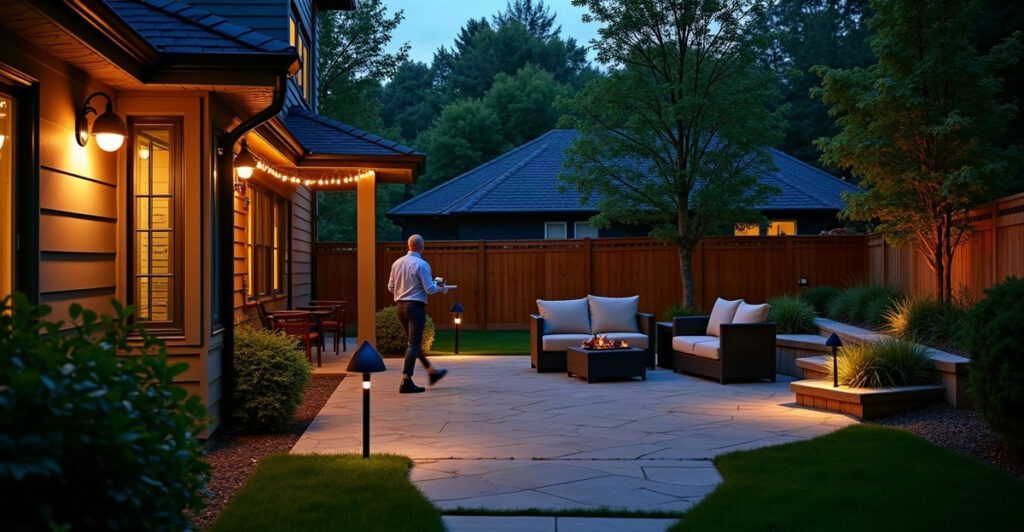
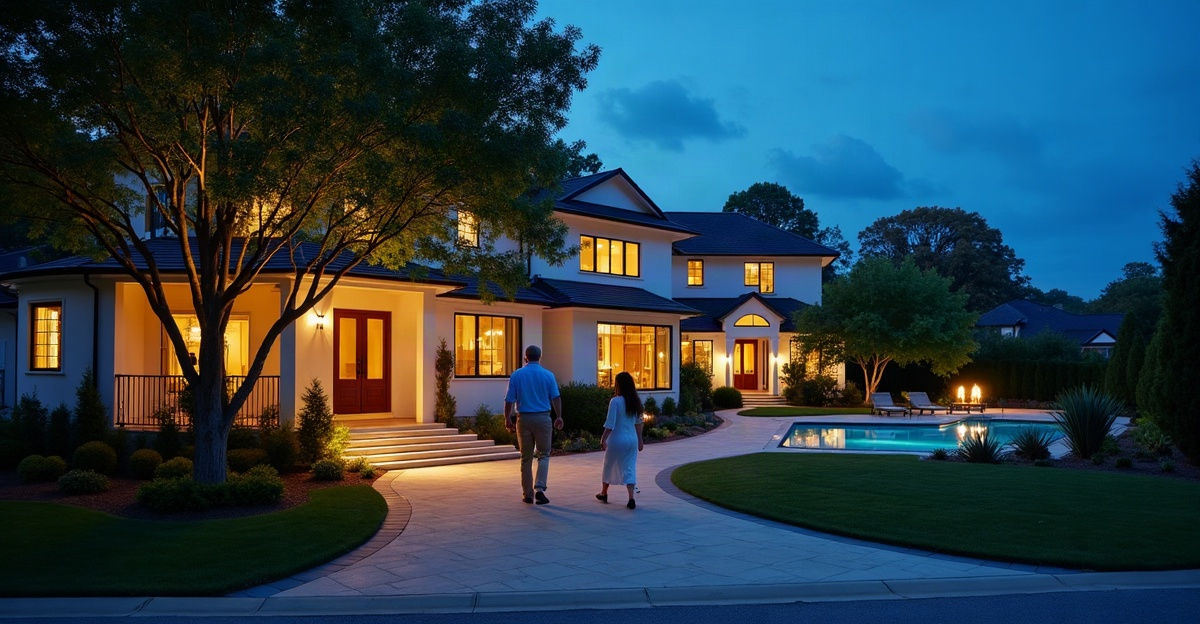
Backyard lighting ideas should support the way we use the space. A patio needs comfortable ambient light for dining and conversation. A grill station needs clearer task lighting. Stairs, transitions, and access points need visible edges. Deck lights, rail lighting, pergola lighting, wall sconces, and landscape spotlights each fill a distinct role.
Patio lighting ideas often combine practical white-light settings for daily use with softer ambient settings for entertaining. We use controlled lighting around seating areas so guests can see faces and move comfortably without feeling like they are under a floodlight. Patio string lighting can suit casual spaces when securely mounted and used as part of a broader plan rather than as the only source of light.
Deck lighting should prioritize railings, stairs, level changes, and perimeter boundaries. Recessed lights, post-cap fixtures, and under-rail lighting can add useful guidance while preserving the deck’s open feel. For pool landscape lighting, we keep water-adjacent equipment, pathways, seating zones, and access routes appropriately visible and plan the system around applicable electrical requirements.
Permanent lighting has practical uses well beyond the holidays. It can provide welcoming entry lighting, architectural accents, outdoor gathering area lighting, seasonal colors, event scenes, and improved nighttime curb appeal. Still, permanent lighting may not replace dedicated task lighting, pool-area lighting, safety fixtures, or security fixtures where those functions are required.
For whole-property results, we often coordinate permanent outdoor lighting with the patio, deck, landscape, and entry plan from the start.
Smart Controls, Zones, and Seasonal Lighting Without Everyday Clutter
Smart outdoor lighting gives us practical control over when each area operates and how it looks. Useful features include scheduling, dimming, separate zones, white-light settings, color selection where available, holiday scenes, and automation. These controls prevent one setting from trying to serve every part of the property.
We recommend separate outdoor lighting zones for the front entry, walkways, architectural accents, patio, backyard, and any dedicated security areas. A pathway may run at a modest level each evening. Patio lighting may operate later on weekends. Architectural accents may use warm white as a regular setting, while color-changing exterior lights can shift for holidays or events.
Landscape lighting timers create consistency and reduce the need for daily manual adjustment. Automation can also support predictable routines, but we should confirm how the system behaves if internet access is interrupted. Before choosing app-controlled outdoor lighting, verify how the app works, whether manual overrides are available, how schedules are stored, and which features depend on an active connection.
Color-changing permanent holiday lighting can make seasonal decorating simpler and keep temporary cords and clips off the exterior. Everyday architectural lighting usually looks best in warm or neutral white. Color scenes work best as an optional layer, not the default setting for every night. Explore outdoor holiday lighting ideas for seasonal approaches that complement year-round lighting.
We install systems with practical control in mind through smart lighting automation, helping each area operate at the right time and brightness.
How to Choose the Right Fixtures, Installation Plan, and Long-Term Solution
Every fixture type should match a clear purpose. Low-voltage path lights support navigation. Spotlights and uplights draw attention to focal features. Deck lights improve visibility on elevated outdoor areas. Floodlights provide broad coverage. Security fixtures serve specific safety, monitoring, or access needs.
Before selecting products, we recommend reviewing placement, brightness, color temperature, daytime fixture visibility, year-round versus seasonal use, weather exposure, maintenance needs, electrical requirements, mounting methods, concealment options, warranty coverage, service access, app setup, local code, and HOA requirements. This planning stage protects the appearance and function of the complete landscape lighting design.
Durable outdoor lighting depends on sound product selection and correct installation, but every property has different exposure, mounting surfaces, electrical conditions, and access limitations. We avoid broad promises about energy use, lifespan, weather performance, maintenance, or property value without evaluating the specific system and installation environment.
Professional landscape lighting installation matters most for new electrical work, extensive hardscaping, complex layouts, code requirements, and coordinated whole-property designs. A qualified landscape lighting professional, electrician, or landscape designer can identify proper fixture locations, suitable mounting methods, electrical needs, and service access before installation begins.
Our residential lighting installation process focuses on clean placement, dependable operation, and a finished appearance that fits the property. For a clear next step, review our installation process and plan an outdoor lighting solution built for the way we use the home.