Christmas Light Color Combinations for Smart Holiday Lighting
The best Christmas light color combinations pair a dominant color with a supporting accent and clear lighting zones for a polished outdoor display. Smart permanent lighting helps us repeat these looks with saved scenes, color zoning, and scheduling features, where available.
Key Takeaways
- Warm white and red complement traditional homes, while blue and white deliver a clean, crisp style for modern exteriors and storefronts.
- We match the color palette to exterior materials, architectural style, landscaping, and the holiday atmosphere we want to create.
- We use the roofline as the main outline, then apply accent colors to entryways, windows, columns, and landscape features.
- Three-color and multicolor displays require distinct color zones to prevent a cluttered or uneven look.
- Professional installation provides even spacing, concealed wiring or track placement, and dependable performance season after season.
Best Christmas Light Color Combinations for Outdoor Displays
A planned palette gives an outdoor display a polished, intentional appearance. Randomly mixed lights can make even a well-kept property look busy.
For most homes and buildings, we recommend one dominant color and one accent color. Three-color and multicolor displays work best when each color has a clear zone, such as the roofline, entryway, or landscape.
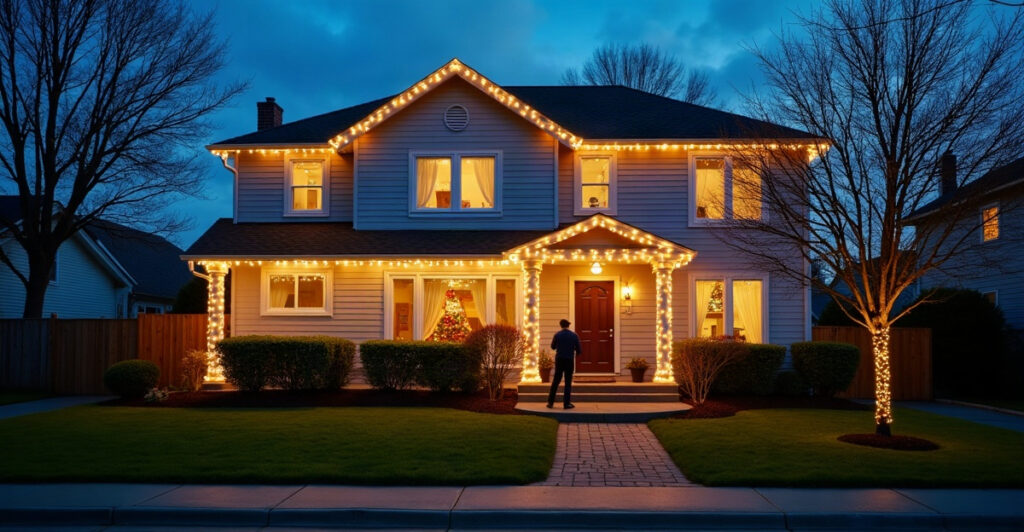
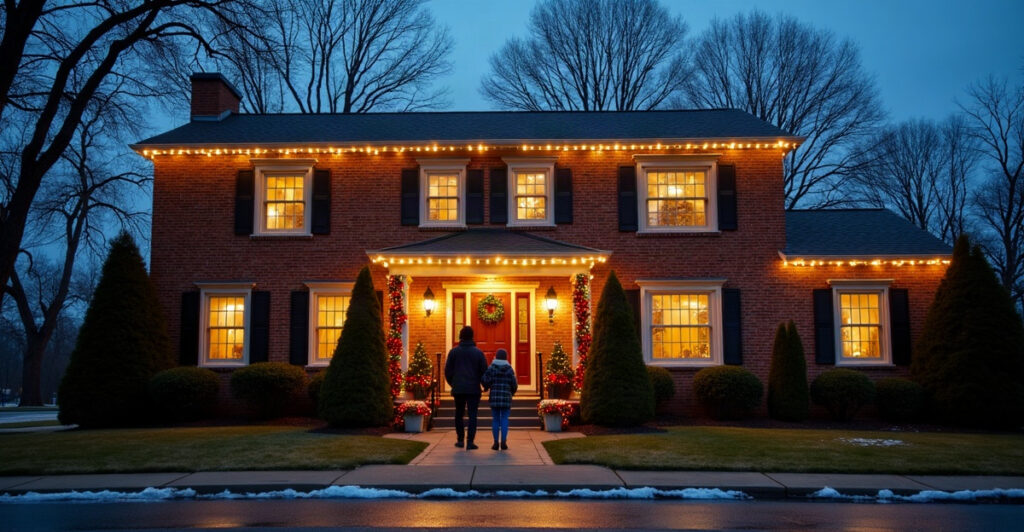
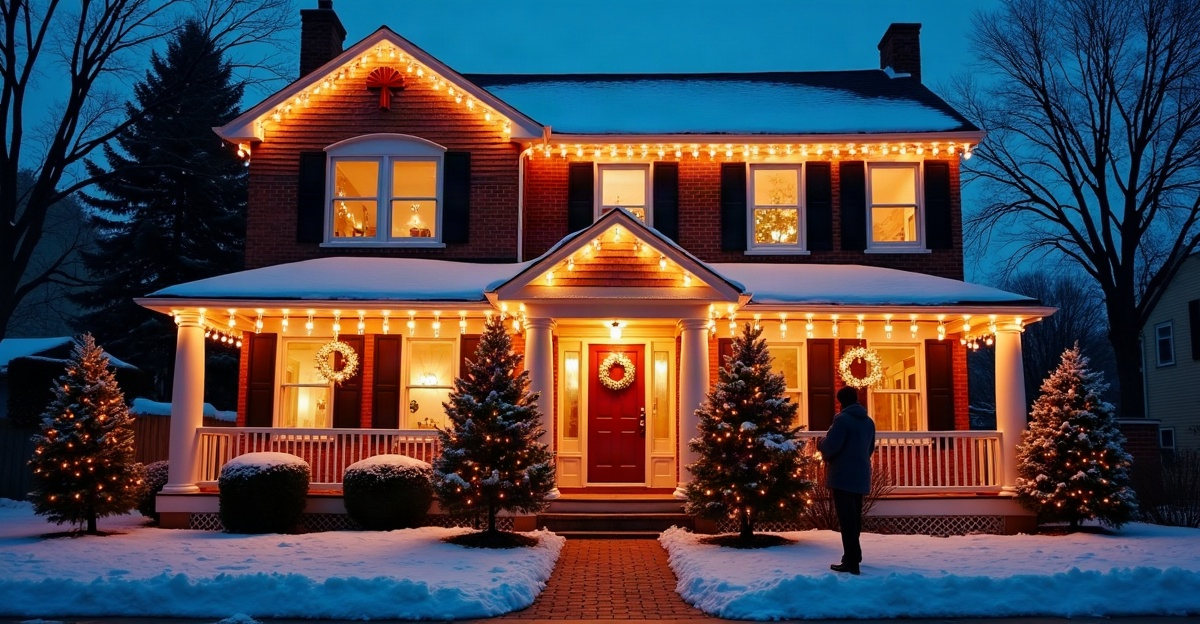
Warm white and red create a classic, welcoming look. This combination works especially well for traditional homes, brick exteriors, entryways, and rooflines. Use warm white as the main outline, then add red to columns, wreaths, windows, or a front-door feature.
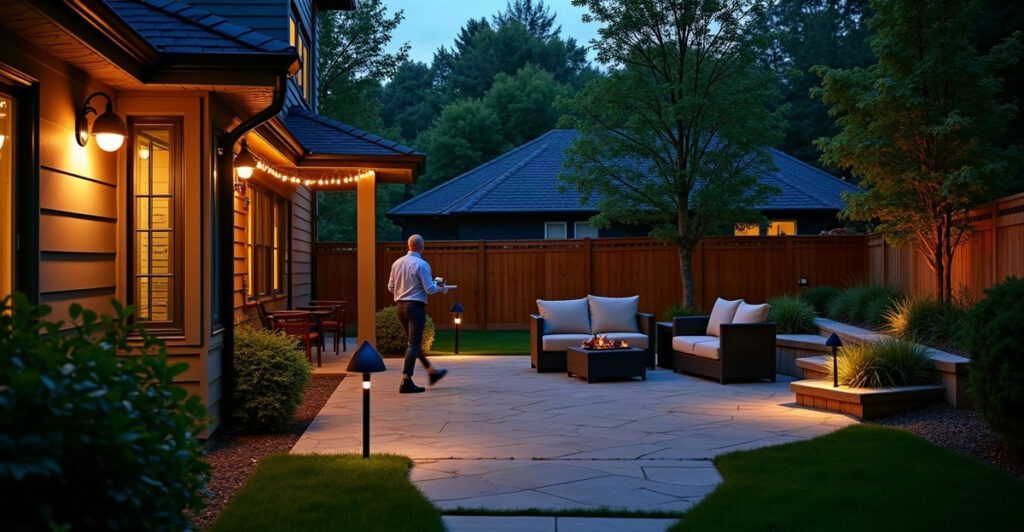
Warm white and green feel subtle, natural, and refined. We often recommend this palette for landscaping, mature trees, craftsman homes, cabins, and rustic properties. Green supports the natural surroundings while warm white keeps the structure visible.
Blue and white provide a crisp winter look. This pairing suits modern homes, white or gray exteriors, and commercial storefronts that need a clean, high-contrast holiday presentation. Blue creates the mood, while white keeps the display bright and structured.
Red, green, and warm white offer a traditional multicolor display with better visual order than random mixed strands. Assign one color to the roofline, another to landscaping, and the third to the entry area for a clean result. We cover additional structured ideas in our smart holiday display guide.
Multicolor lighting feels playful and family-friendly. It works well on trees, borders, or a single roofline, but it needs defined boundaries. Avoid spreading multicolor lights across every surface.
Red and white create a bold, highly visible display. This palette fits clean rooflines, storefronts, business districts, and properties that need strong curb appeal from a distance.
Green and white offer an understated, elegant alternative. Use this combination around mature trees, dark exteriors, shrubs, and pathways where the white lighting can define the property without overwhelming it.
Jewel tones combine deep red, emerald, blue, purple, and gold. They create a dramatic, formal mood for larger homes, hospitality properties, and distinctive architectural façades. Keep warm white on the main outlines so the deeper colors remain accents.
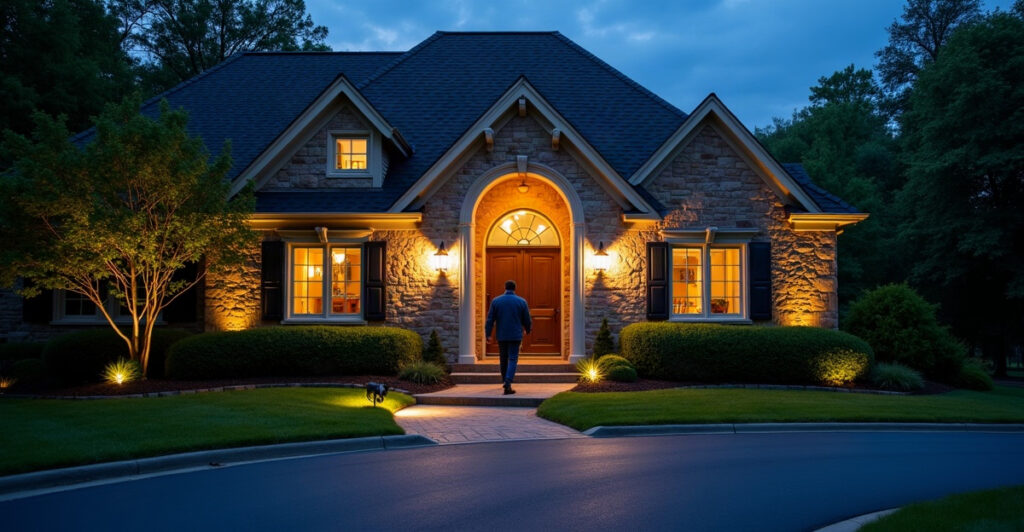
Single-color warm white is not a color combination, but it remains one of the strongest choices for upscale, minimalist, and HOA-conscious properties. It creates a clean holiday presentation that complements almost any exterior.
Choose Colors That Fit Your Home, Building, and Holiday Mood
The best Christmas light color combinations depend on the property itself. Siding, brick, stucco, roof color, trim, landscaping, and architectural lines all affect how lighting appears after dark.
Modern and contemporary homes usually suit blue and white, carefully controlled cool-toned displays, or warm white with a restrained red accent. Straight rooflines and simple façades benefit from crisp color placement rather than heavy decoration.
Traditional, colonial, and brick homes look natural with warm white and red. Red, green, and warm white can also work well when each color has a separate purpose. For example, warm white can outline the home while red and green define the entry and landscape.
Craftsman, cabin, and rustic properties benefit from warm white and green. We recommend focusing green around trees, garlands, shrubs, and natural wood features while using warm white to define the architecture.
White, gray, black, and dark-painted exteriors can support stronger contrast. Blue and white create a wintery look, while green and white work well around trees. Jewel tones add depth for properties that support a more dramatic style.
Desert, coastal, and southwestern-inspired homes generally need a warmer foundation. Start with warm white, then add limited red, green, or jewel-tone accents that complement the exterior instead of competing with stone, stucco, or natural landscape colors.
Commercial buildings, storefronts, and multifamily properties need consistency across large areas. Red and white or blue and white provide visibility while keeping façades, signage areas, and entrances organized. A display should also fit the surrounding neighborhood, business district, HOA rules, or property-management requirements.
No palette fits every property. A blue-and-white display that looks sharp on a modern white home may feel out of place on a rustic cabin or a warm brick storefront. For additional planning ideas, review our holiday lighting design ideas.
Place Colors for a Clean, Balanced Display
The roofline should usually serve as the primary visual outline. It establishes the shape of the property and creates the strongest view from the street.
Use accent colors on peaks, columns, dormers, trim, windows, or entryways. Trees, shrubs, pathways, and landscape lighting should support the home rather than become the main focal point. Commercial properties can use dedicated façade and signage zones to create a consistent presentation.
Two-color palettes work best with one dominant color and one supporting accent. A warm white roofline with red entryway columns is a reliable example. Blue-and-white rooflines also look clean when white-lit trees carry the brightness into the landscape.
Alternating individual lights can work on smaller, simple outlines if spacing remains consistent. Larger homes and commercial façades benefit more from separate color zones. Zoning creates stronger visual order and makes each color easier to read at a distance.
A three-color display needs a clear assignment. We might use warm white along the roofline, red at the entryway, and green in the landscape. Jewel-tone façade accents paired with warm white architectural outlining create another balanced approach for formal displays.
Avoid competing colors on the same architectural edge. Uneven spacing, incomplete roofline coverage, and excessive flashing effects can distract from an otherwise attractive property. Our outdoor holiday lighting ideas show how coordinated layers can create better curb appeal.
Use Smart Permanent Lighting to Repeat Favorite Holiday Designs
Permanent smart lighting is one implementation option for holiday displays, not the only option. Traditional seasonal lights can still create excellent results, especially for simple designs or properties that change decorations every year.
Compatible permanent systems may allow us to select colors, create zones, save scenes, and schedule displays. Features vary by product and installation, so we recommend confirming system capabilities before making a decision.
A professionally planned layout can provide a consistent roofline appearance without the annual work of hanging and removing temporary strands. It can also reduce ladder use, storage needs, tangled lights, and uneven DIY spacing. Depending on the system, saved scenes may make it easier to move from Christmas colors to other holidays or everyday architectural accents.
Professional installation matters. Clean wire management, consistent spacing, discreet track placement, and careful alignment help the system look polished both at night and during the day. Explore permanent outdoor lighting to see how this approach can fit a home, multifamily property, or business.
Compare Seasonal and Permanent Lighting Before Choosing
The best choice depends on budget, property layout, desired convenience, and long-term plans. Seasonal and permanent options serve different needs.
- Installation effort: Seasonal lighting requires annual setup and removal. Permanent lighting requires an initial professional installation, then reduces recurring seasonal setup.
- Storage: Seasonal lights need off-season storage and organization. Permanent systems remain installed, which can reduce storage demands.
- Customization: Seasonal displays allow physical decorations to change each year. Compatible permanent systems may allow color changes, zones, saved scenes, and scheduling through available controls.
- Appearance: Seasonal lighting can look excellent with careful installation. Permanent systems can provide a consistent roofline layout with discreet track placement and trim-color matching where available.
- Maintenance: Both options require attention. Seasonal lights should be checked before use, while permanent systems depend on installation quality, system components, use patterns, and property conditions.
- Upfront investment: Seasonal lights usually have a lower initial cost. Professionally installed permanent lighting generally requires a larger initial investment.
- Year-round use: Seasonal lights primarily serve holiday periods. Permanent lighting may also support everyday accent lighting and other celebrations.
Traditional seasonal lighting may suit properties with limited budgets, simple display goals, or a preference for changing physical decorations each year. Permanent lighting may suit owners who value repeatable designs, cleaner installation, reduced seasonal work, and app-based controls where available.
Permanent lighting does not automatically save money or perform the same way on every property. Long-term value depends on the system, installation quality, maintenance, use patterns, and property needs. We explain the planning steps in our lighting installation process.
Avoid Common Design Mistakes and Plan a Safer Display
Busy displays often result from using too many colors without a hierarchy. Mixing cool white and warm white by accident can also make a display feel inconsistent. Choose one white temperature on purpose.
Consider exterior colors and materials before selecting lights. Avoid over-lighting landscaping compared with the home, and keep spacing consistent across rooflines. Plan for daytime visibility as well. Wires, clips, tracks, and unused strands should not distract from the property during daylight hours.
The best Christmas light color combinations fit the exterior, architectural style, desired mood, and scale of the display. Outdoor Christmas lights should complement the house rather than match it exactly.
Warm white generally feels traditional and welcoming. Cool white creates a crisper, wintery appearance and works best when used intentionally. One dominant color and one accent color usually create the cleanest result; add more colors only in defined zones.
Compatible permanent outdoor lighting systems may display Christmas colors, saved scenes, zones, and schedules. Capabilities differ by system. Daytime visibility also depends on track placement, trim matching, wire management, and installation quality.
Businesses should consider visibility, brand fit, façade size, signage, local guidelines, and consistent coverage across the property. For temporary lights, use outdoor-rated products, avoid overloading circuits, follow manufacturer instructions, use safe ladder practices, and check HOA, municipal, or property-management rules.
See how permanent holiday lighting could look on a home or property, or schedule a lighting consultation with our team.