Holiday Lighting Safety Tips Every Homeowner Should Know
Holiday lighting brings excitement to a home, yet safety must guide every step. We approach each installation with a clear plan that protects our property, our families, and our neighbors.
Key Takeaways
- Ladder misuse is a leading cause of holiday injuries; we follow stable placement guidelines, avoid overreaching, and never work alone in unsafe conditions.
- We prevent electrical hazards by using outdoor-rated products, GFCI outlets, respecting manufacturer connection limits, and keeping loads below 80% of circuit capacity.
- We inspect and secure lights with purpose-built clips, and we avoid nails or staples that can damage wiring and roofing materials.
- We account for weather risks such as snow, ice, wind, and moisture during installation and removal to reduce fall and shock hazards.
- For multi-story or complex homes, we consider professional or permanent lighting solutions to reduce ladder use, improve load planning, and strengthen long-term safety.
Why Holiday Lighting Safety Matters More Than Most Homeowners Realize
Holiday lighting safety deserves serious attention every season. Decorating often feels routine, yet the risks are very real.
The U.S. Consumer Product Safety Commission reports thousands of ladder-related injuries each year during the holiday season. Many of those injuries happen while homeowners hang lights on roofs and trees. Fire departments also consistently warn that decorative lighting and extension cords contribute to seasonal home fires.
Tangled lights and storage frustrations are minor inconveniences. Falls from a second story roof, electrical shock, overloaded circuits, and attic or exterior wall fires are serious hazards. Snow, ice, and wet conditions add another layer of risk, especially in regions with winter storms or wide temperature swings.
We regularly see common homeowner challenges:
- Multi-story homes with steep rooflines
- Limited outdoor outlets, leading to heavy use of extension cords
- Icy gutters or slick driveways during installation
- Fatigue from setting up and removing lights year after year
The goal of following clear holiday lighting safety tips is straightforward: reduce accidents, protect property, and make confident decisions about whether a project is within our comfort and skill level or better left to professionals.
The Most Common Holiday Lighting Hazards Homes Face
Understanding the most frequent risks helps prevent them.
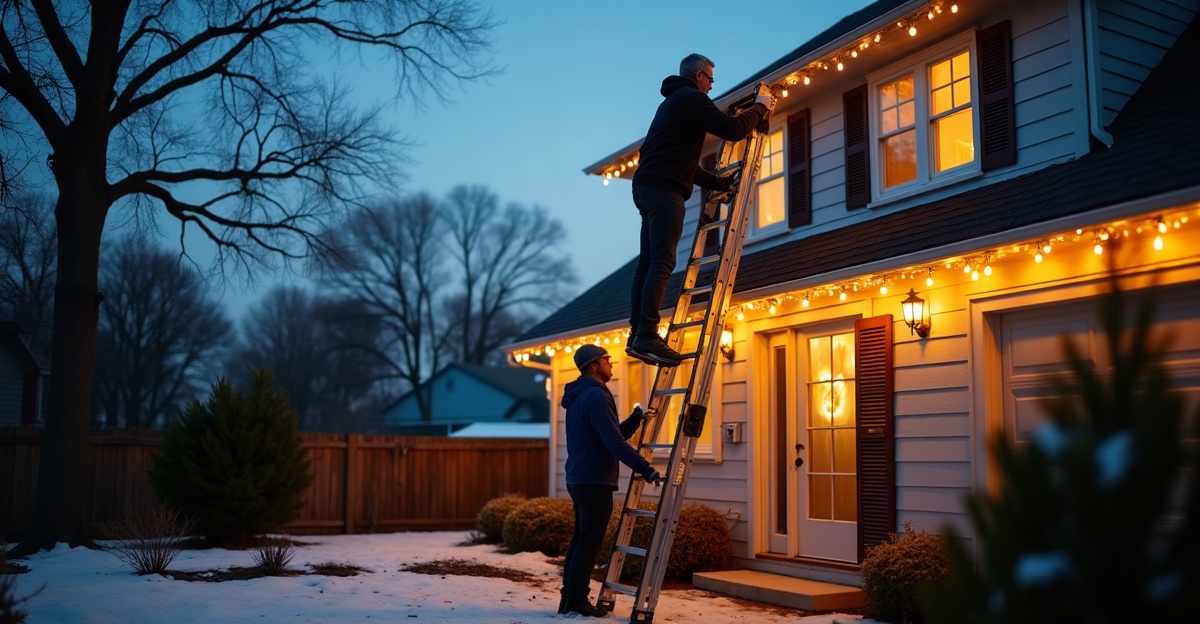
Ladder misuse leads the list. Incorrect ladder angles, unstable ground, and overreaching are common causes of falls. Working alone increases the danger because no one is present to stabilize the ladder or call for help if something goes wrong.
Electrical overload is another frequent issue. Plugging too many strings together, using indoor-rated extension cords outdoors, or daisy-chaining power strips can overheat wiring. That heat can damage insulation and increase fire risk.
Damaged equipment adds to the problem. Frayed wires, cracked sockets, brittle insulation, and loose bulb connections expose live conductors. Installing these without inspection raises the chance of shock or short circuits.
Improper securing methods also create hazards. Driving nails or staples through light strands can pierce insulation and energize metal gutters. Hanging lights directly from shingles or bending gutters to hold weight can damage roofing systems and lead to leaks.
Weather amplifies all of these concerns, especially in the Western U.S.:
- Snow and ice increase slip and fall hazards.
- Strong winds can pull loose strands free from mounting points.
- High elevation and intense sun degrade plastic and wiring over time.
- Rain and moisture increase shock risk without GFCI protection.
Effective holiday lighting safety tips for preventing electrical and fall hazards focus on planning, inspection, and proper equipment. Rushing the job is often where mistakes happen.
Ladder Safety Best Practices Every Homeowner Should Follow
Ladder work is where most injuries occur, so strict safety habits matter.
Checklist for Safer Ladder Use
- Use the 4-to-1 rule for extension ladders: for every 4 feet of height, place the base 1 foot away from the wall.
- Maintain three points of contact at all times.
- Avoid overreaching. Climb down and reposition the ladder instead.
- Set ladders on stable, level ground. Use ladder levelers on slopes.
- Have a partner hold the ladder and hand up materials.
- Never stand on the top rung of a step ladder.
- Avoid ladder use in high winds, icy conditions, or active precipitation.
These steps are simple but highly effective. Consistency prevents accidents.
Risk increases significantly with multi-story homes and steep roof pitches. Limited driveway or landscaping space can restrict safe ladder placement. At a certain point, the difficulty goes beyond typical DIY comfort levels. Evaluate whether the setup truly supports safe ladder angles and stable footing before proceeding.
Electrical and Fire Prevention: Safe Power Planning for Outdoor Displays
Safe power planning is central to holiday lighting safety.
Start by using outdoor-rated lights and extension cords labeled for exterior use and certified by a recognized testing laboratory. Indoor cords are not built to handle moisture or temperature swings.
Plug all exterior lighting into GFCI-protected outlets. These devices reduce shock risk by shutting off power quickly if a fault occurs.
Manufacturers specify how many strings can connect end-to-end. That limit varies between LED and incandescent lights. Follow those instructions precisely. Exceeding connection limits can overheat wiring.
LED lights typically use significantly less wattage and run cooler than incandescent bulbs. Lower wattage reduces load on circuits and decreases heat buildup, making LEDs a safer and more energy-efficient option for larger displays.
Avoid daisy-chaining extension cords together. Each connection point increases resistance, heat, and potential failure. Instead, plan layouts around properly rated outdoor receptacles.
A simple load awareness rule helps prevent overload. The total wattage of connected lights should not exceed 80% of the circuit’s capacity. For a standard 15-amp circuit at 120 volts, that means keeping continuous loads below 1,440 watts.
Timers and smart controls also improve safety. They prevent lights from running all night or while you are away for extended periods. For homeowners interested in automation, professionally installed smart lighting automation systems provide controlled scheduling and remote management.
Before installation, inspect every strand. Replace any frayed, brittle, or damaged cords. Keep connections off the ground using weather-resistant cord covers to reduce moisture exposure.
Is it safe to leave holiday lights on overnight? Even with LEDs, limiting unattended run time is recommended. Timers reduce fire risk and extend bulb life.
Weather, Removal, and Off-Season Storage Safety
Installation safety depends on the condition of the home itself.
Inspect shingles, fascia boards, and gutters before attaching lights. Loose materials cannot reliably support clips or fasteners. Secure lights with purpose-built clips rather than nails or staples that puncture wiring or roofing materials.
Regional weather patterns require careful planning:
- Heavy snow loads can pull down loosely installed strands.
- Strong wind corridors increase stress on attachment points.
- Freeze-thaw cycles loosen clips and create slippery conditions during removal.
Safe removal practices protect both people and property. Remove lights during dry daylight hours. Confirm ladders are stable and clear of ice. Lower strands carefully instead of tossing them down, which can damage wiring and create tangles.
Proper storage extends product life and supports long-term holiday lighting safety. Allow lights to dry completely before packing them away to prevent corrosion. Use reels or labeled bins to reduce tangling and wire stress. Store lighting in a dry, temperature-moderate space.
Removal and storage are part of the safety process. Damage often occurs during takedown and goes unnoticed until the following season.
When DIY May Not Be the Safest Option and How Professional or Permanent Lighting Reduces Risk
An honest assessment helps determine whether DIY makes sense.
Consider the following factors:
- Two-story or taller homes
- Steep or complex rooflines
- Limited safe ladder placement areas
- Physical limitations or prior injuries
- Tight timelines that may lead to rushed installation
A single-story home with wide eaves presents far less risk than a steep, multi-level roof with dormers and narrow side yards. The more complex the architecture, the more detailed the safety planning must be.
Professionally installed systems reduce many of these hazards. Annual ladder use decreases or disappears. Mounting methods help protect rooflines and gutters. Load planning prevents overloaded circuits, and year-round systems use durable components rated for exterior exposure.
For example, professionally installed Christmas light installation eliminates much of the seasonal ladder work. Year-round options such as permanent holiday lighting or permanent outdoor lighting minimize repeated installation and removal.
The focus should always be safety and long-term value. If avoiding ladders and seasonal setup is a priority, reviewing professional options and discussing what fits your home’s layout and electrical capacity may be the safest path forward.