Modern Landscape Lighting Ideas for a Stylish Outdoor Space
Modern landscape lighting shapes a refined outdoor setting through layered, low-glare path, accent, task, and architectural lighting around each property’s key features. We achieve a modern finish with warm, balanced illumination, concealed fixtures, accurate aiming, smart controls, and expert installation that reduces glare and unwanted light spill.
Key Takeaways
- Use targeted lighting to define paths, entrances, steps, patios, and driveway transitions without overlighting the space.
- Feature select trees, planting beds, walls, columns, and water elements to create depth and a clear visual hierarchy after dark.
- Layer ambient, task, and accent lighting rather than giving every landscape or architectural element the same level of illumination.
- Select warm color temperatures, appropriate beam spreads, shielding, and controlled output to improve comfort, visibility, and neighbor-friendly performance.
- Use permanent roofline lighting as a complementary architectural layer, and rely on professional planning for clean wiring, precise aiming, dependable operation, and property-specific results.
What Makes Outdoor Lighting Look Modern
Modern landscape lighting uses restrained, layered, and intentional illumination to highlight architecture, landscaping, and usable outdoor areas without glare or visual clutter. We create a modern result by directing attention to the features that matter most, then letting the rest of the property remain comfortably understated.
Black fixtures, LEDs, and sleek hardware can support the style, but they do not create it on their own. Balanced light levels, warm color temperature, concealed equipment, clean cable routing, careful aiming, and purposeful fixture placement make the difference.
Well-planned modern outdoor landscape lighting strengthens everyday curb appeal while improving visibility around walkways, entries, and outdoor living areas. It can make evening arrivals easier, extend patio and yard use, and give the property a polished appearance throughout the year. Lighting also helps a property feel welcoming and easier to navigate after dark, although it should never be presented as a guarantee against crime or intrusions.
Modern Landscape Lighting Ideas for the Areas That Matter Most
The strongest modern landscape lighting ideas balance visual impact with practical use. Each area needs the right fixture type, beam spread, brightness, and placement rather than a uniform approach across the entire property.
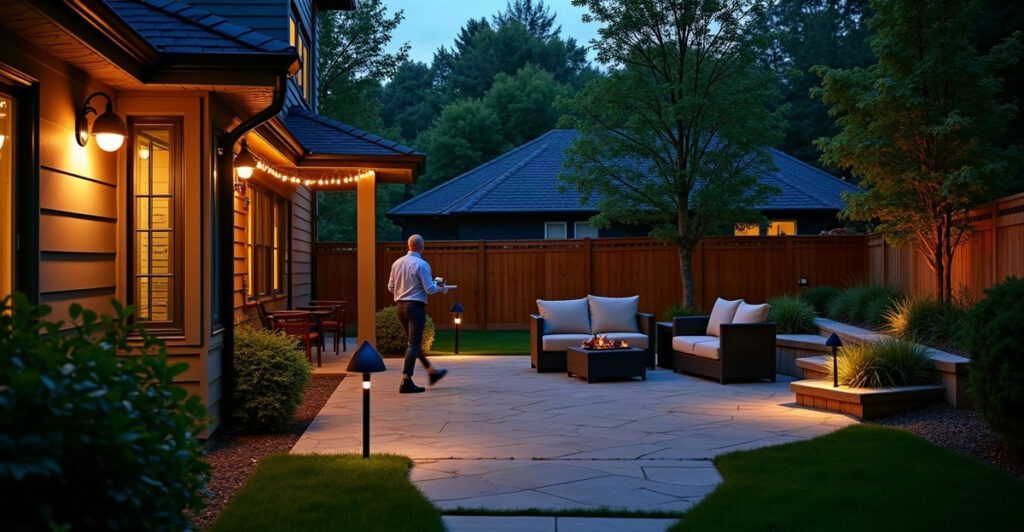
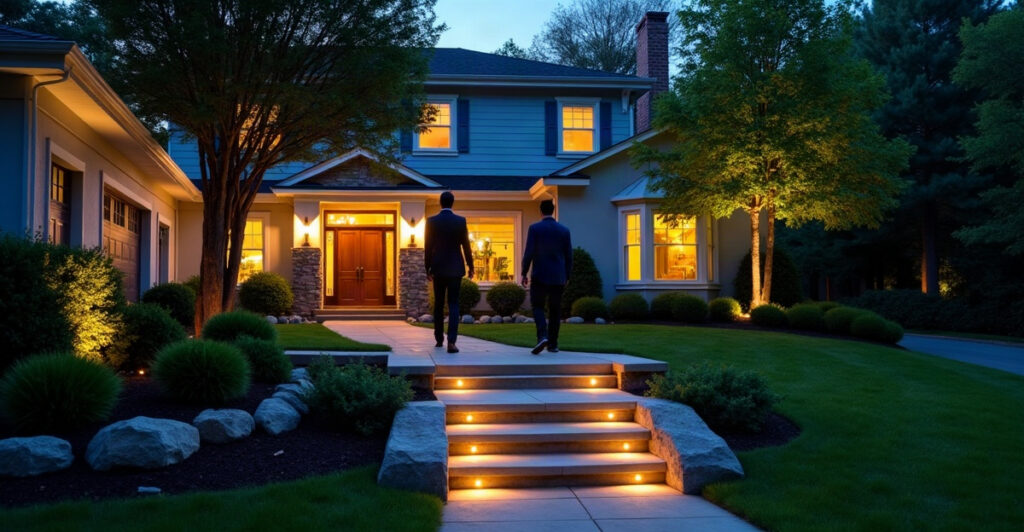
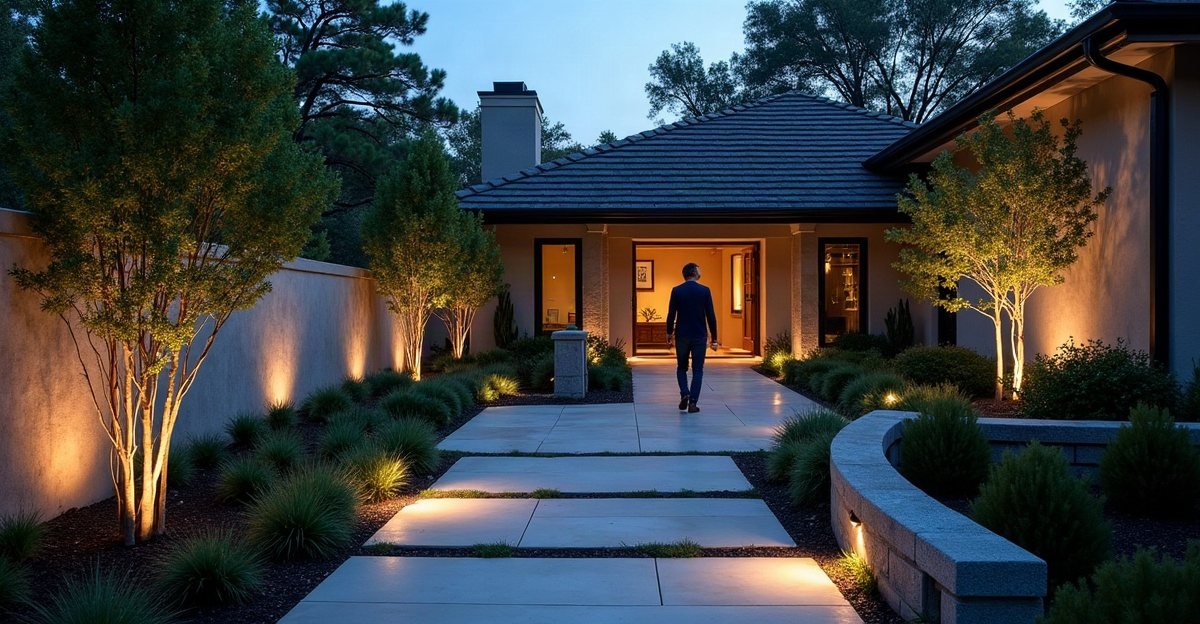
Pathways and walkways: Low-glare path lighting defines the route to a front entry, garden, patio, or side yard. We space fixtures to form a continuous visual guide without creating a runway effect. Downward-directed light should reach the walking surface at modest brightness. This is primarily landscape lighting, though it can support architectural routes and entry transitions.
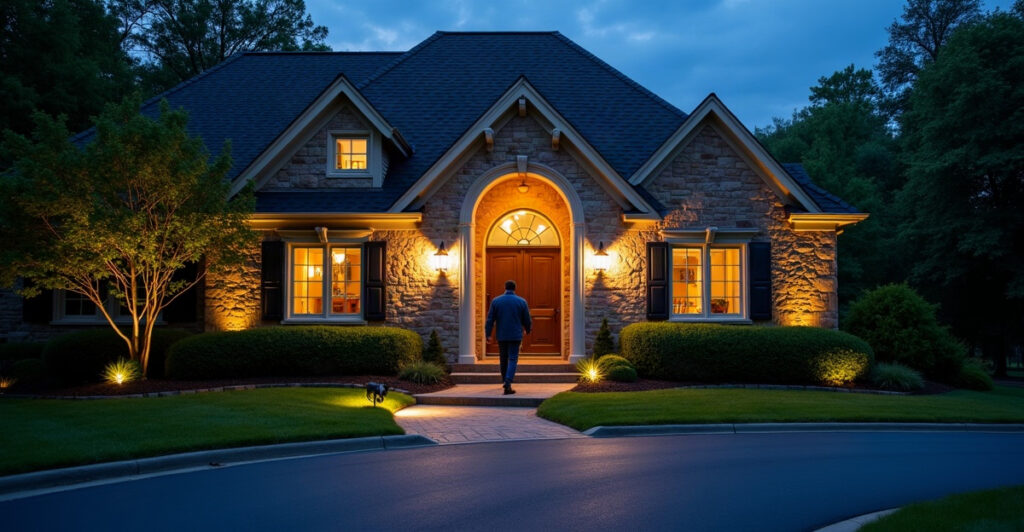
Front entry and driveway: Light address areas, changes in direction, columns, entry planting, and driveway edges where appropriate. This combines landscape and architectural lighting to create a welcoming arrival experience with clearer visibility near entrances. Fixtures should never shine into drivers’ sightlines, windows, roads, or neighboring properties. For additional inspiration, explore these front-of-house lighting ideas.
Trees, specimen plants, and garden beds: Subtle uplighting adds depth to mature trees, ornamental grasses, sculptural plants, and layered beds. Beam angles should match the height and width of each feature, with room for future landscape growth. This is landscape lighting at its most expressive.
Architectural walls, columns, and façade details: Grazing and washing techniques can emphasize stone, brick, textured walls, columns, and distinctive exterior details. We light focal surfaces instead of flooding every wall. This architectural lighting approach creates texture and dimension while preserving a clean nighttime composition.
Patios, decks, pergolas, and outdoor kitchens: Comfortable outdoor living requires ambient light for overall use, task light for cooking and dining, and accent light for planting or architectural features. Discreet downlighting can create a natural evening setting without exposed glare. These spaces usually benefit from both landscape and architectural lighting.
Steps, retaining walls, and elevation changes: Clear tread visibility and edge definition come first. Integrated lighting in walls, risers, railings, or nearby planting often looks cleaner than bright exposed fixtures. This combines functional landscape lighting with architectural detail.
Water features and focal points: Controlled lighting can draw attention to fountains, ponds, sculpture, or a signature landscape feature. Careful aiming prevents reflected glare from water surfaces and keeps the focal point visually calm. This is primarily landscape lighting, with architectural lighting added where the feature connects to the building.
For a complete approach, our landscape accent lighting planning focuses on features that add depth, function, and lasting visual value.
Create Depth With Lighting Layers, Focal Points, and Controlled Contrast
More fixtures and brighter fixtures do not automatically produce a better result. Modern landscape lighting design relies on layers, contrast, and restraint to make a property feel cohesive after dark.
Ambient lighting provides overall illumination that makes outdoor areas comfortable and navigable. Task lighting focuses on stairs, cooking areas, gates, and walking routes. Accent lighting directs attention to trees, plants, architecture, and selected focal points.
Layering architectural accent lighting, pathway illumination, landscape uplighting, patio lighting, and roofline illumination creates an outdoor environment that looks connected rather than pieced together. We establish focal points instead of giving every feature equal brightness. Controlled contrast creates depth and visual hierarchy, while the architecture and landscape layout determine whether symmetry or asymmetry feels more natural.
Fixture spacing and beam spread should prevent dark gaps, harsh hotspots, and repetitive visual clutter. Concealed fixtures and wiring also matter. The design should look refined during the day as well as at night.
Good lighting illuminates surfaces and focal points, not eyes, windows, roads, or adjacent properties. Shielding, accurate beam angles, appropriate fixture spacing, and modest brightness reduce glare and unwanted light spill. For examples of balanced exterior compositions, view our outdoor lighting gallery.
We can identify focal points, improve navigation, and develop a property-specific lighting plan through a professional lighting assessment.
Choose Warm Color Temperature, Appropriate Brightness, and Smart Controls
Color temperature describes whether white light appears warmer and softer or cooler and crisper. Warm white light suits most residential landscape applications because it complements natural planting, stone, wood, brick, and many exterior finishes. The best choice still depends on the materials, architectural style, intended use, and desired mood.
Brightness should support the task or feature being illuminated without overpowering the property or surrounding landscape. A path needs enough light for confident footing. A specimen tree needs enough intensity to show its form. Neither needs excessive output.
Smart controls make daily operation simpler through scheduling and automation. Depending on the installed system, app- or controller-based management may also support adjustment for holidays, events, seasonal changes, and separate lighting zones. Our smart lighting automation options can help organize these controls into a practical routine.
Product-specific details, including warranty terms, weather ratings, LED lifespan, energy use, app features, maintenance requirements, and installation practices, should always be confirmed through Bosso Smart Lighting’s verified specifications or manufacturer documentation. Actual performance depends on the selected equipment, site conditions, and installation quality.
Use Permanent Roofline Lighting as a Complementary Architectural Layer
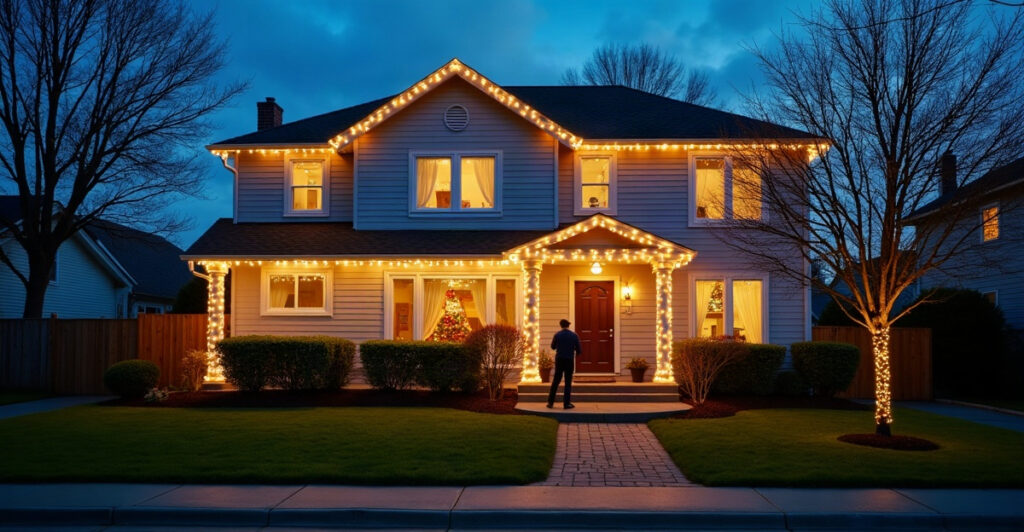
Landscape lighting generally illuminates ground-level features such as paths, planting beds, trees, patios, and focal points. Permanent roofline or soffit lighting is architectural lighting that defines the home or building exterior and can provide year-round programmable illumination.
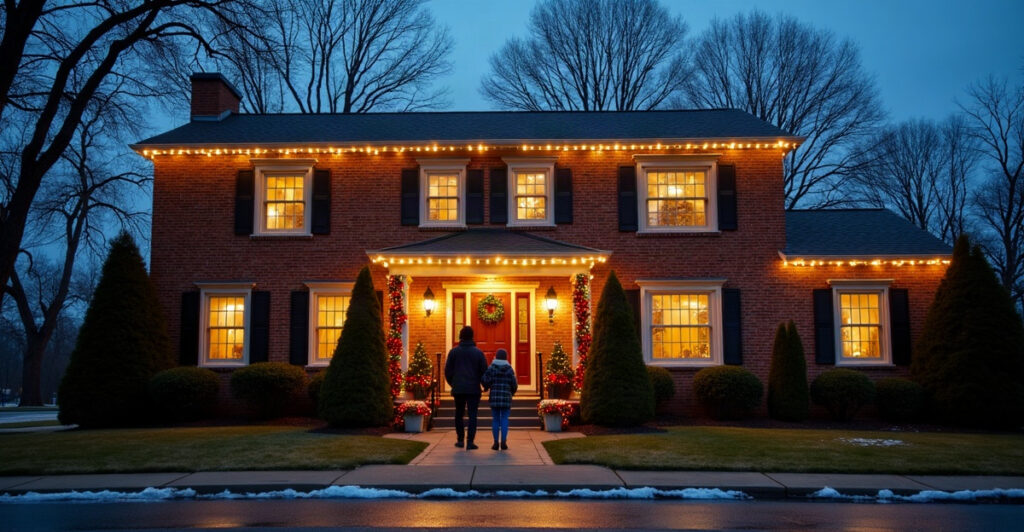
Roofline lighting does not replace ground-level lighting needs. It works alongside landscape lighting to create a complete modern outdoor plan. Discreet systems can highlight rooflines, eaves, building shape, and architectural rhythm while supporting everyday curb appeal. Programmable color options can add flexibility for holidays, events, and seasonal occasions, but they should remain an added benefit rather than the core purpose of the design.
Daytime fixture visibility varies by product profile, soffit or roofline construction, color matching, installation method, and viewing distance. We avoid blanket claims that fixtures are invisible. Property-specific planning should account for the architecture, landscape layout, local climate, intended use, electrical access, existing installation conditions, and nearby properties.
For complementary design inspiration, review these smart outdoor lighting designs alongside the landscape plan.
Plan for a Reliable, Professional Installation and Answer Common Questions
Professional design and installation improve the finished result through thoughtful fixture placement, precise aiming, clean wiring concealment, and components selected for site conditions and weather exposure. It also supports reliable operation, easier long-term service planning, and code-aware electrical work that considers local installation requirements.
DIY lighting can suit limited projects, particularly where the layout and site conditions are straightforward. Professional planning is valuable when a property needs glare control, integrated wiring, multiple lighting layers, smart controls, or a design that reflects the site rather than a one-size-fits-all layout. Our comparison of DIY versus professional installation can help clarify the decision.
Planning Checklist and Common Questions
Before selecting fixtures or approving a layout, we recommend reviewing these points:
- Which areas need safer navigation or better visibility?
- Which architectural and landscape features deserve emphasis?
- How will the property be used after dark for arrival, entertaining, dining, cooking, relaxing, or commercial access?
- Where can fixtures and wiring remain concealed?
- What glare, light spill, window, road, and neighboring-property concerns need attention?
- What scheduling, zoning, holiday, event, and smart-control needs should the system support?
- What verified product specifications, warranty details, maintenance expectations, and installation requirements apply?
What color temperature is best for modern landscape lighting? Warm white light works well for most residential properties. Material colors, architectural style, and the desired atmosphere should guide the final selection.
How do we make outdoor lighting look modern instead of overdone? Use fewer, better-positioned fixtures. Prioritize focal points, conceal equipment, control glare, and use balanced brightness rather than lighting every surface equally.
Is permanent roofline lighting visible during the day? Visibility depends on the fixture profile, mounting location, color match, building details, and viewing distance. A site review provides the clearest answer.
Can permanent outdoor lighting be used year-round, not just for holidays? Yes. It can support everyday exterior illumination and curb appeal, with programmable seasonal or event lighting available where the installed system supports it.
Why does professional landscape lighting installation matter? It helps achieve cleaner cable routing, accurate aiming, reliable operation, glare control, and a layout that fits the property’s architecture and landscape.
How can we reduce glare and light pollution from outdoor lighting? Aim fixtures at intended surfaces, use shielding, select suitable beam angles, avoid excessive brightness, and prevent light from reaching windows, roads, and neighboring properties.
Use original project photography whenever possible to show real installation quality, with captions such as “Low-glare path lighting defines the route to the front entry” and “Subtle uplighting adds depth to mature trees.”
Request a professional outdoor lighting assessment to explore a custom landscape and architectural lighting plan for your property.