DIY vs Professional Lighting Installation: Which Is Better?
DIY vs. professional lighting installation depends on property complexity, budget, safety confidence, desired finish quality, and the level of ongoing support we need. DIY can work well for small, accessible, temporary projects. Professional installation often delivers stronger long-term value for permanent lighting on complex rooflines or properties where clean placement and reliable service matter.
Key Takeaways
- DIY lighting can lower upfront costs, but it requires planning, ladder work, mounting, weatherproofing, setup, maintenance, and troubleshooting.
- Professional installation places elevated work, cable routing, protected connections, testing, and system setup in the hands of experienced installers.
- Complex rooflines, multi-story elevations, difficult access, and appearance-driven projects often benefit from professional planning and consistent installation.
- Permanent lighting systems may need periodic inspections, cleaning, repairs, or component replacement, regardless of the installation method.
- Smart controls can provide schedules, zones, dimming, and presets, though app features and connectivity differ by system.
The Practical Difference at a Glance
DIY vs. professional lighting installation depends on property complexity, budget, comfort with ladders and installation work, preferred finish quality, willingness to maintain the system, and need for service or warranty support. A simple single-story display may suit a capable DIYer, while a permanent system on a complex roofline often benefits from professional planning and installation.
| Criteria | DIY Installation | Professional Installation |
|---|---|---|
| Upfront cost | Usually lower product and labor cost, but tools and accessories may add expense. | Usually higher because it includes labor, planning, installation materials, and setup. |
| Long-term ownership cost | Depends on repairs, replacement parts, seasonal work, and personal time. | Depends on system selection, service needs, and available warranty coverage. |
| Time commitment | Requires measuring, planning, mounting, setup, troubleshooting, and upkeep. | Reduces hands-on work for property owners. |
| Ladder and installation safety | Requires comfort with ladder use, roof access, and safe work practices. | Installation crews handle elevated access and mounting work. |
| Electrical and weatherproofing | Property owners manage outdoor connections, load planning, and product instructions. | Teams plan cable routing, protected connections, and system testing. |
| Appearance and placement | Results depend on measuring accuracy, mounting consistency, and cable management. | Focuses on clean alignment, consistent spacing, and a refined roofline finish. |
| Daytime discretion | Varies by kit, trim color, mounting method, and installation quality. | Can provide a lower-profile result when product selection and placement suit the structure. |
| Product quality and design | Selection varies widely by brand, specifications, and mounting hardware. | Typically includes a property-specific system recommendation and layout. |
| Smart controls | Features vary by kit and may require independent setup. | May include app configuration, zones, schedules, and saved presets. |
| Maintenance and repairs | Property owners diagnose issues, source parts, and complete repairs. | Available follow-up service can simplify future support. |
| Warranty and service support | Often limited to manufacturer terms and product-specific coverage. | May include product and installation support, depending on provider scope. |
| Best fit | Small, accessible, temporary, removable, or budget-focused projects. | Permanent systems, difficult access, complex properties, and appearance-focused projects. |
DIY lighting kits can be a sensible option for small, accessible, temporary, removable, or budget-focused projects. Professional installation often delivers greater value for permanent outdoor lighting on complex properties, especially where clean roofline placement, dependable operation, property-specific design, and ongoing support carry weight.
The professional vs. DIY lighting installation decision should center on the ownership experience rather than purchase price alone. Compare the work required before installation, the expected appearance after installation, and the support available years later.
Not All Outdoor Lighting Projects Are the Same
Temporary plug-in holiday string lights serve a short seasonal purpose. They are typically removed, stored, and installed again each year. This approach works well for flexible displays, but it also creates recurring setup time and the possibility of replacement as strings, clips, or connections wear out. Our holiday lighting safety guidance can help property owners plan seasonal displays with care.
DIY permanent outdoor lighting kits are intended for long-term mounting. Their quality, mounting style, weather protection, control features, and warranty terms differ significantly. Some kits fit simple structures well. Others may be less suitable for challenging eaves, multiple roof levels, or projects where discreet cable routing matters.
Low-voltage landscape lighting serves a different purpose. Pathways, gardens, trees, and architectural features need carefully positioned fixtures and different power planning than roofline lighting. A professional landscape accent lighting plan can combine safety, curb appeal, and focused nighttime visibility without treating the property like a holiday display.
Professionally installed permanent exterior lighting is usually planned around rooflines, trim, architectural details, control needs, and year-round use. The work can include roofline measurements, layout and zone planning, consistent mounting, concealed cable routing, protected outdoor connections, controller setup, testing, and future service access. Installation scope varies by provider, as do products, setup assistance, warranty terms, and service options.
For design inspiration before selecting a system, review these holiday lighting design ideas and consider how the display should look during holidays, events, and ordinary evenings.
Cost, Time, and Safety: What We Actually Take On
Upfront price does not define total value. DIY owners commonly pay for the lighting product, mounting supplies, tools, ladders, replacement components, and personal installation time. Seasonal lights also require removal, storage, inspection, and reinstallation. A complicated roofline can turn a lower-priced kit into a larger time commitment than expected.
Professional installation commonly includes a property assessment, design guidance, mounting, cable management, weatherproofing, system setup, and testing. It does not always cost less than DIY. Instead, it shifts labor, technical planning, and available follow-up support to an experienced provider. Our overview of holiday lighting costs helps frame the budget factors that can affect a project.
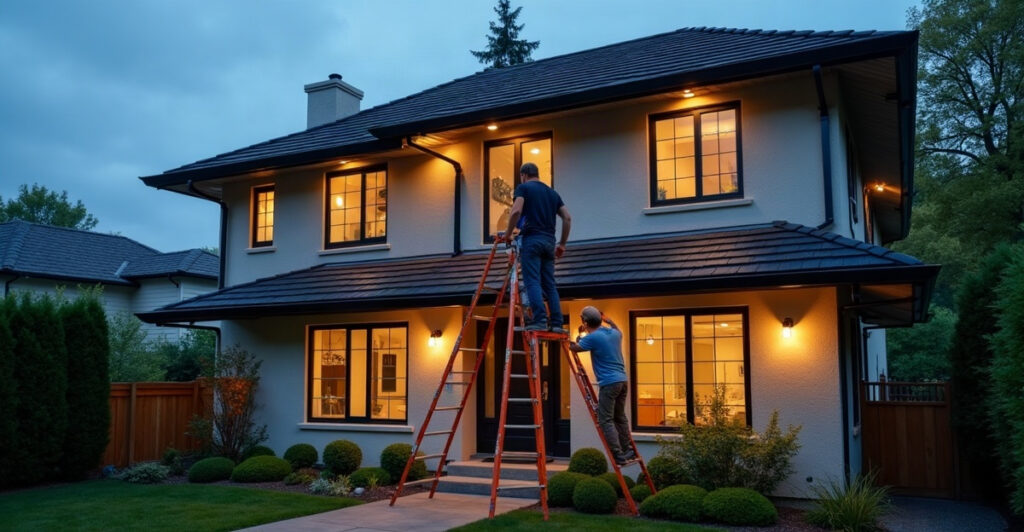
Ladder safety deserves serious consideration, particularly on multi-story homes, steep rooflines, uneven ground, and difficult access points. DIY work is not automatically unsafe, but it requires sound judgment, appropriate equipment, and confidence at height. Leave work outside personal skill or comfort levels to qualified installers.
Outdoor-rated equipment and protected connections matter in every project. Electrical loads must remain within equipment limits, and outlets should have GFCI protection where required. A GFCI-protected outlet helps reduce shock hazards by shutting off power when it detects a ground fault. Always follow manufacturer instructions and applicable local electrical requirements rather than improvising electrical connections.
Appearance, Durability, and Smart-Control Expectations
A strong finished result depends on consistent placement. Straight lines, even spacing, secure mounting, discreet cables, and well-positioned controllers all influence whether lighting looks intentional from the street and remains practical to operate.
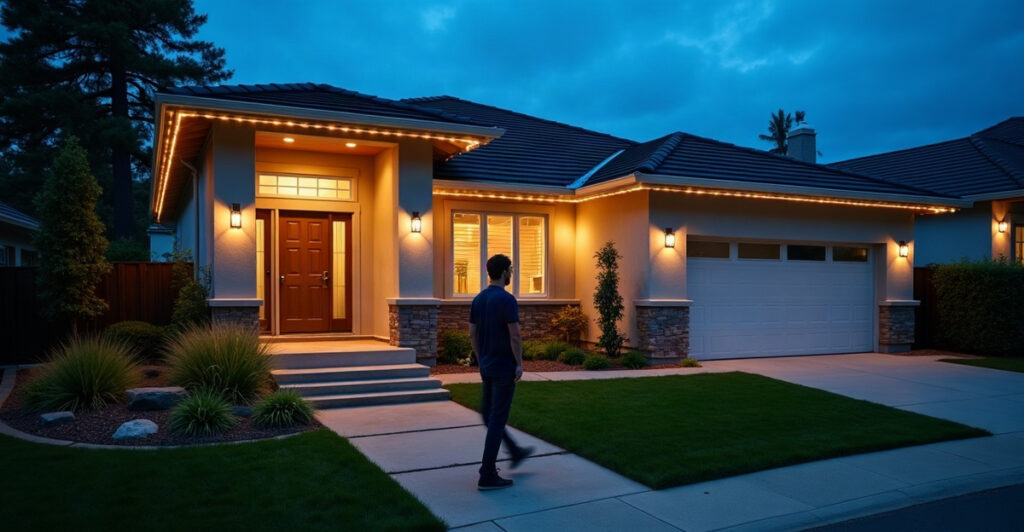
Permanent lights can sit low against a roofline and blend with trim. They are not guaranteed to disappear during the day. Trim color, roofline shape, mounting method, product profile, viewing angle, and installation craftsmanship all affect daytime visibility. For broader curb-appeal planning, these front-of-house lighting ideas show how lighting choices can support the home’s architecture.
Weather performance and service life vary with component quality, climate, UV exposure, mounting quality, electrical protection, normal use, and maintenance. Even a professionally installed system may need periodic inspection, cleaning, troubleshooting, or component replacement over time. Avoid product claims suggesting lighting is maintenance-free or suited to every condition without qualification.
Smart Lighting Should Feel Practical
Many permanent systems offer app-based color selection, dimming, timers, schedules, saved presets, holiday themes, and zones. Zones are separately controlled portions of a system, such as different rooflines, building sides, or property areas. This flexibility allows a subtle warm-white setting for everyday use and more colorful scenes for holidays or celebrations.
App experience, connectivity, and available features vary by brand and system. Most current options aim for straightforward everyday control, but review the control method before purchase if simple operation is a priority. A professional smart lighting automation setup can help establish schedules and scenes from the start.
When DIY Makes Sense—and When Professional Installation Provides Greater Value
Choosing the Best-Fit Approach
DIY may be a good fit in these situations:
- The project is small, accessible, and located on a single-story structure.
- The lighting need is temporary, short-term, or removable for a rental property.
- Budget is the main priority, and hands-on work is acceptable.
- We have experience with planning, mounting, ladders, product requirements, upkeep, and applicable safety requirements.
- We are prepared to handle future troubleshooting, replacement parts, and repairs.
Professional installation may be the better fit where multi-story elevations, steep rooflines, complex architecture, or difficult access are involved. It also makes sense when a clean, consistent roofline appearance is a priority and recurring ladder work is unwelcome. A professionally planned system can provide design guidance, discreet mounting, managed wiring, setup support, and a clear point of contact for available warranty or service support. Explore our residential lighting installation options for a property-specific discussion.
Small Businesses and Property Managers
Businesses and multi-property owners should weigh curb appeal during holidays, events, promotions, and seasonal changes against the recurring labor of temporary displays. A year-round installed system may simplify seasonal changes while keeping exterior presentation consistent.
Centralized or zone-based control can help manage different sides of a building or distinct property areas. Standardizing lighting systems across multiple locations can also simplify training, maintenance coordination, controls, and replacement planning. Commercial properties often benefit from professional planning because access, appearance consistency, and maintenance scheduling require closer coordination. Our commercial lighting installation service can help align the system with operational needs.
A Decision Checklist for Choosing the Right Installation Approach
Choose DIY when the project is small and accessible, the system must be temporary or removable, and we can safely manage ladders, installation requirements, maintenance, and troubleshooting. This route can offer flexibility and lower initial spending, especially for straightforward seasonal displays. For seasonal projects, review expected Christmas lighting installation costs before comparing product and labor choices.
Choose professional installation when the property is complex, low-profile placement matters, or support with design, mounting, cable management, weatherproofing, setup, and testing is preferred. It can justify a higher initial investment when long-term convenience, consistent appearance, available service support, and reduced installation labor are priorities.
Professional permanent lighting is worth considering where tailored design, safety considerations, appearance, and convenience matter most. Many capable homeowners can install permanent lights themselves on simple, accessible properties if they follow product instructions and local requirements. Permanent lights can be low-profile during the day, though trim, architecture, mounting, product design, viewing angle, and workmanship determine how noticeable they are.
Professional installation commonly includes assessment, layout planning, mounting, cable management, weatherproofing, setup, testing, and available service or warranty support. Permanent systems may still need periodic inspection, cleaning, troubleshooting, or replacement. Smart controls are often easy to use, but app reliability and connectivity differ by system. Rental and business properties can be suitable candidates when permissions, access, maintenance responsibilities, budget, and control needs align.
If we are considering a professionally designed permanent lighting system, we can request a property assessment to discuss layout options, controls, installation scope, and available warranty or service support.