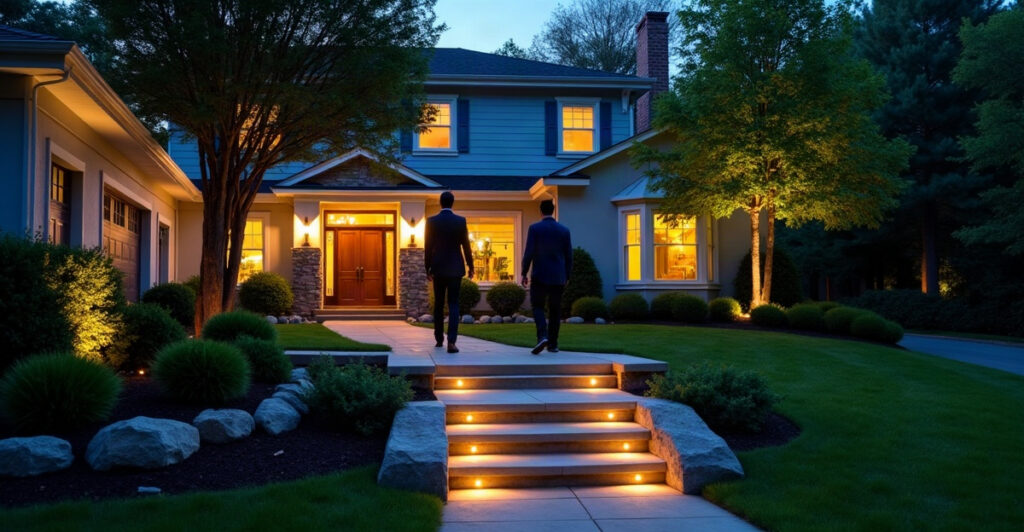
Christmas Light Design for Rooflines, Trees, and Walkways
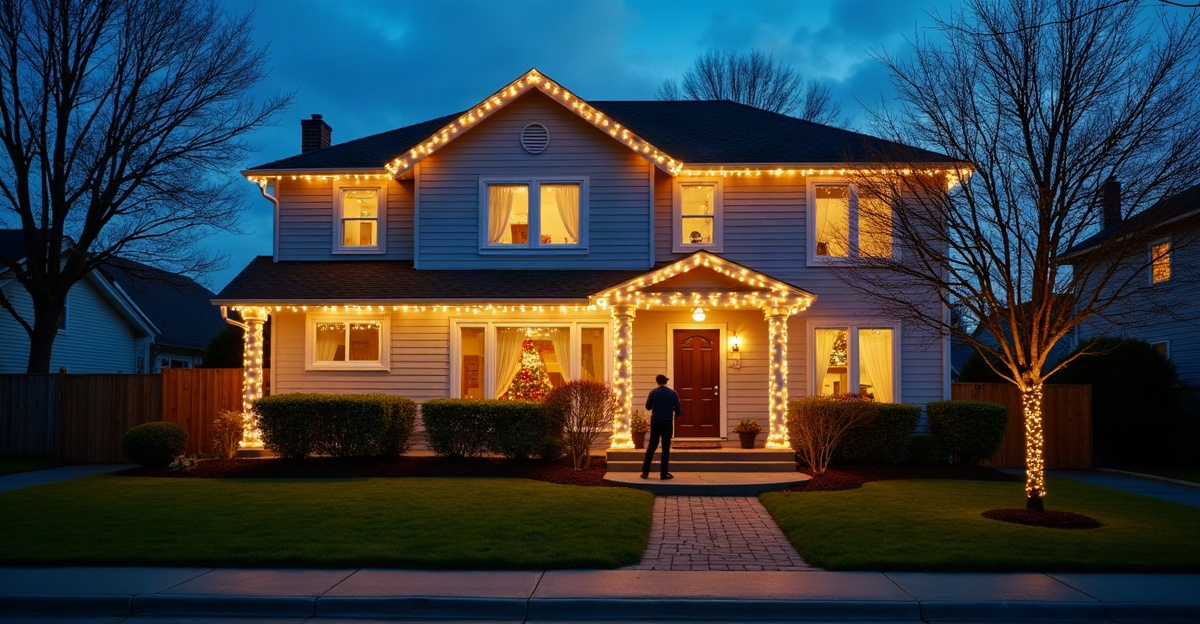
A well-planned Christmas light design uses the roofline as the main visual anchor. We then add selected trees and walkways to draw attention to the entry without creating clutter. Effective layouts consider the home’s architecture, viewing angles, brightness, color consistency, electrical access, weather exposure, and safe installation practices.
Key Takeaways
- We start with the primary roofline to establish structure. We then add only the trees, entry features, or walkways that reinforce the focal point.
- We use a limited color palette and consistent bulb spacing to create a clean, balanced look from the street and in daylight.
- We light one or two prominent trees with trunk wraps, branch lighting, canopy glow, or uplighting instead of covering the full landscape.
- We plan walkway lighting to improve visibility around paths, steps, and entrances without producing glare, trip hazards, or visual competition with the roofline.
- We compare temporary and permanent lighting by upfront cost, annual installation time, daytime appearance, controls, maintenance requirements, and year-round value.
Plan the Display Before Buying or Hanging Lights
A strong Christmas light design begins with visual hierarchy, not with the largest possible number of strands. We establish one clear focal point, use the roofline as the anchor, and support it with one or two secondary features such as an entry, select trees, or walkways.
Before choosing products or colors, we recommend working through a simple plan. Identify the best viewing angle from the street, decide which architectural feature should draw attention first, choose a restrained color palette, and confirm power and control access. We also assess how the display looks in daylight, since wires, clips, fixtures, and placement affect curb appeal long before the lights turn on.
Property details shape every outdoor Christmas light design. Roof pitch, roofline height and length, fascia condition, trim condition, access points, electrical capacity, landscaping layout, mature trees, walkway width, weather exposure, ambient light, lot size, and neighborhood context all influence the right approach. A display that looks balanced on a compact home can look sparse on a wide property. Conversely, a bright display that works on a dark rural lot may overwhelm a closely spaced neighborhood.
Color selection should support the home’s architecture and the intended mood. Warm white often creates a classic, traditional appearance. Cool white can feel crisp and contemporary. Multicolor lighting can feel festive and family-friendly, but it needs restraint. Limiting the palette keeps the display organized rather than visually busy.
Brightness also needs a practical plan. More lights do not automatically produce a better result. We account for property size, street traffic, nearby homes, existing landscape lighting, and the need to avoid glare for pedestrians, drivers, and neighbors.
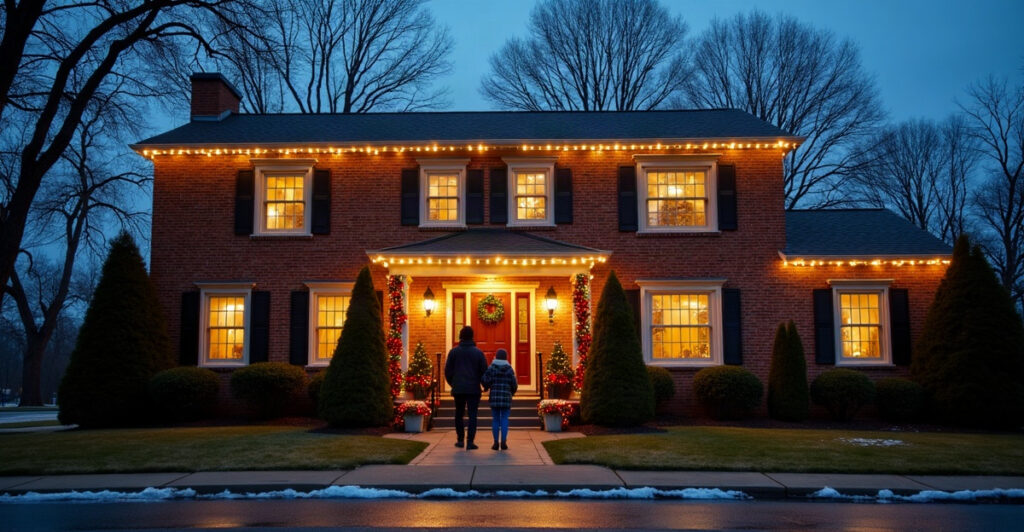
Christmas light design ideas can stay simple or become layered. A warm white roofline with subtle walkway accents creates timeless curb appeal. Red, green, and white work well for a family home. A modern home may suit a single-color or two-color display. Commercial properties benefit from entry-focused lighting in brand-appropriate colors. A roofline-only layout offers clean simplicity, while a layered display can combine rooflines, selected trees, and path accents with clear visual order. For additional inspiration, explore these holiday lighting design ideas.
Use Rooflines to Create Structure and Curb Appeal
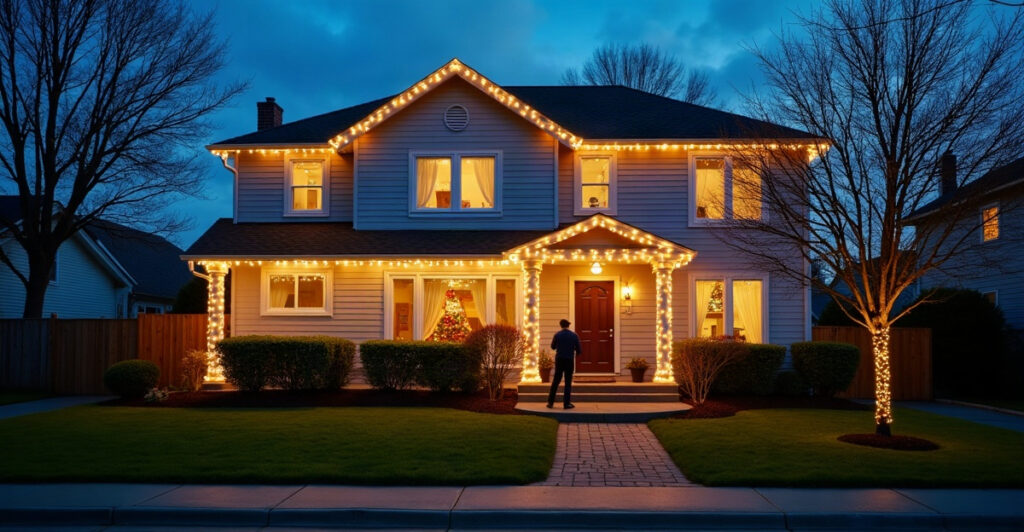
Roofline Christmas light design gives the display its structure. Cleanly outlining the main roofline frames the architecture, creates a clear focal point, and makes the property look finished from the street.
We usually begin with the primary roofline, then decide whether dormers, peaks, gables, eaves, columns, or entry features add value. Lighting every edge rarely improves the design. Selective outlining produces stronger contrast and keeps the entry and landscaping from competing for attention.
Consistent spacing, balanced brightness, clean alignment, and matching color temperatures matter more than sheer quantity. Common issues include uneven bulb spacing, mixed warm and cool whites, overly bright rooflines, loose wires, and excessive outlines that make the home appear cluttered. A polished display uses restraint.
Installation conditions require equal attention. Steep roofs, multi-story elevations, weather exposure, difficult access, damaged fascia, aging trim, and limited electrical capacity can affect both appearance and safety. We do not recommend unsafe ladder work, work near overhead power lines, overloaded circuits, or attachments that penetrate roofing materials and create potential damage.
Professional Christmas light design and installation can be especially useful for steep or complex roofs, large homes, commercial locations, and properties where discreet daytime appearance matters. Our Christmas light installation service helps create even placement, secure attachment, and a cleaner result without unnecessary visual distractions. We also share practical roofline and entryway lighting ideas for properties that need a focused seasonal layout.
Light Trees and Walkways Without Visual Clutter or Glare
Trees should support the home’s focal point rather than scatter attention across the yard. The right method depends on trunk size, canopy shape, branch density, tree maturity, distance from the street, and distance from the building.
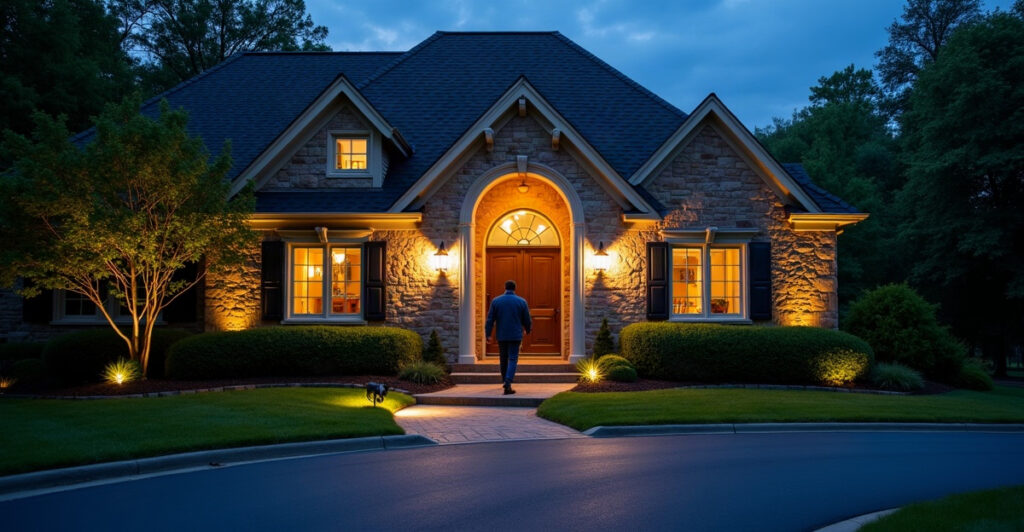
Wrapped trunks create vertical definition and work well on prominent trees near an entry or walkway. Branch lighting can add detail to open, sculptural trees, but dense branching may hide much of the effect. Canopy lighting can create a soft glow in larger trees, though it requires careful placement to avoid a tangled appearance. Uplighting highlights trunk texture and canopy form without covering the tree in strands, making it a useful complement to holiday lighting.
We recommend choosing one or two prominent trees or landscape features. Uneven wrapping, excessive brightness, tangled strands, and attempts to light every tree often make a yard look crowded. Our landscape accent lighting can also support a layered look that remains useful after the holiday season.
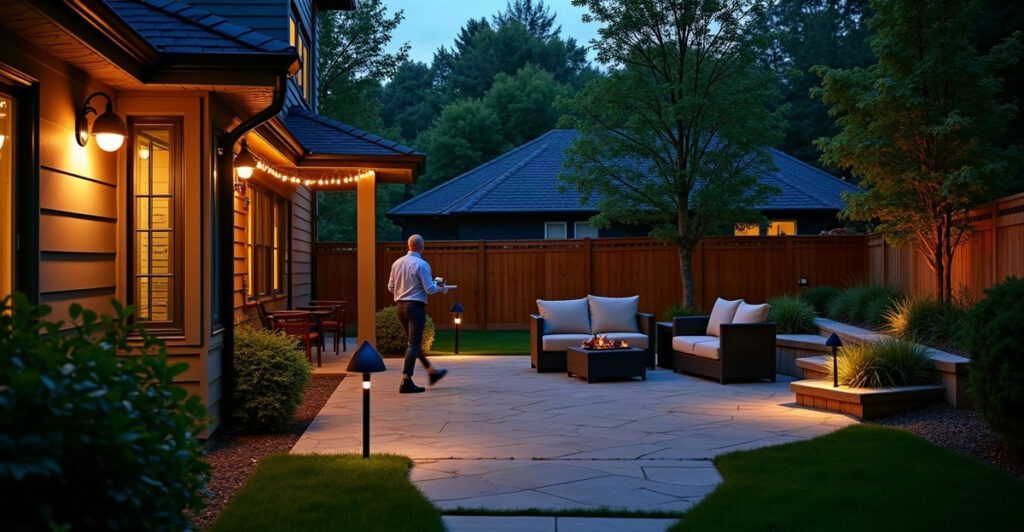
Walkway holiday lighting should improve atmosphere and visibility around entrances, paths, steps, and gathering areas. Fixtures and accents should define the route without creating glare, narrowing the walking surface, adding trip hazards, or competing with the roofline. A balanced path treatment leads the eye to the entry and keeps circulation clear.
For commercial properties, we prioritize visible entrances, safe pedestrian routes, durable placement, and color choices that fit the brand. Christmas light design ideas for trees and walkways work best when they serve a clear purpose within the overall display.
Compare Temporary Seasonal Lights With Permanent Outdoor Lighting
Permanent outdoor lighting typically uses professionally installed, low-profile tracks or fixtures integrated along rooflines or architectural features. These systems commonly operate through an app, timer, controller, or similar control system. They differ from traditional seasonal string lights in placement, controls, intended use, and ownership expectations.
| Consideration | Temporary Seasonal Lights | Permanent Outdoor Lighting |
|---|---|---|
| Upfront cost | Usually involves seasonal products and possible annual labor. | Requires a larger initial installation investment. |
| Setup and removal | Hanging and removal occur each season. | Eliminates annual hanging and removal. |
| Storage | Requires off-season storage space. | Remains installed on the property. |
| Daytime visibility | Strands and wires may remain visible during the season. | Depends on track profile, trim matching, placement, viewing angle, and installation quality. |
| Customization | Depends on the products installed each year. | Can offer control by zone, color, brightness, and schedule. |
| Controls | Often uses plugs, timers, or basic controllers. | Often includes app-based or timer-based controls. |
| Maintenance and repairs | Requires seasonal inspection, replacement, and storage care. | May require cleaning, controller troubleshooting, inspections, and occasional component service. |
| Year-round use | Mainly seasonal. | Can support celebrations, birthdays, game days, seasonal colors, events, accent lighting, and security-oriented visibility. |
| Property fit | Works for many simple seasonal displays. | Often suits recurring-use homes, large properties, and commercial sites. |
Long-term value depends on the initial installation cost, system quality, repair and replacement needs, current spending on seasonal products or installation labor, and how often the system is used throughout the year. Permanent systems can reduce seasonal effort, but they are not maintenance-free and should not be described as invisible in every daytime condition.
Decorative lighting can improve visibility around a property, but it is not a substitute for a purpose-built security system. For properties that value flexible controls, our permanent holiday lighting and smart lighting automation options support Christmas displays and year-round use.
Know When Professional Christmas Light Design and Installation Makes Sense
Professional installation is not necessary for every property. It can be a practical choice for homeowners, property managers, and business owners who value safety, consistent placement, convenience, durable components, and flexible controls.
Experienced installers assess roof pitch and height, fascia and trim condition, electrical capacity, access points, tree type and maturity, landscaping layout, walkway width, local weather exposure, ambient lighting, and neighborhood context. This assessment separates visual design from physical installation requirements.
Qualified Christmas light design services can help avoid unsafe ladder work, electrical issues, damaged materials, uneven spacing, and an awkward daytime appearance. This is especially useful for multi-story homes, difficult roof access, complex architecture, large lots, commercial locations, and properties that need recurring-use lighting.
We encourage reviewing a provider’s finished work before choosing a direction. Our lighting project gallery shows how professional planning can maintain visual consistency across different home styles and property layouts. We also explain what Christmas light designers do during planning, installation, and ongoing service.
Questions to Ask Before Choosing a System or Installer
A clear comparison process helps us choose the right Christmas light design services or permanent lighting installer. Before approving a system, we recommend asking:
Practical Questions for the Property Assessment
- What will the system look like during the day?
- How will lights fit around rooflines and architectural features?
- Which app, timer, scheduling, and zone controls are included?
- How are service, repairs, and warranties handled?
- What maintenance should we expect?
- Can colors and brightness change by zone?
- Is the electrical setup appropriate for the property?
- Can the system support uses beyond Christmas?
To design Christmas lights for a house, we begin with the roofline, then add trees or a walkway only where they strengthen the focal point. The roofline usually comes first because it establishes structure. One or two colors typically create the cleanest outdoor Christmas light design, although a controlled red, green, and white palette can work well for traditional holiday displays.
Permanent Christmas lights can remain visible during the day, depending on the track or fixture profile, trim color, placement, wire management, architecture, and viewing angle. Permanent outdoor lighting can operate year-round for holidays, celebrations, events, and accent lighting. It may also require periodic cleaning, inspections, controller support, and occasional repair.
Professional Christmas light design and installation is worth considering where safety, time savings, clean placement, recurring-use flexibility, and durable results matter. If we want a professionally planned holiday display that can also support year-round lighting, we can schedule a property assessment to discuss design options, controls, daytime appearance, and installation considerations.