How to Sync Christmas Lights to Music for a Holiday Display
Learning how to sync Christmas lights to music requires programmable LED lights, a compatible controller, and a sequence that matches colors, brightness, and movement to a specific song. A dependable holiday display also relies on safe outdoor power, weatherproof connections, tested audio playback, and adjustments for visibility, operating hours, and neighboring properties.
Key Takeaways
- Preset app scenes and sound-reactive modes create broad effects, while song-specific sequences produce repeatable light shows with precise timing.
- Confirm that the lights and controller support programmable sequencing before we buy equipment or plan the installation.
- Test lighting coverage, power distribution, signal stability, and controller placement before we program the full display.
- Select focused display areas, then assess timing, brightness, sightlines, and light spill from the street before regular operation.
- Permanent lighting can reduce seasonal installation work, but music-sync features vary by system and may need extra hardware, software, or professional programming.
How to Sync Christmas Lights to Music
Christmas lights sync to music when a compatible controller sends timed instructions to individual lights or lighting zones as the song plays. The result can range from a simple beat-responsive effect to a fully choreographed show where colors, brightness, and motion change at exact musical moments.
Learning how to sync Christmas lights to music starts with understanding the level of control involved. App-controlled lights may offer attractive colors, movement, and holiday scenes, but those presets do not automatically follow a specific song.
Preset holiday scenes create stored effects through an app. They work well for simple displays and quick seasonal changes. Sound-reactive modes use a microphone or audio input to react generally to nearby beats and volume changes. These effects can feel lively, but they do not usually repeat the same way with every performance.
Fully programmed music-synchronized Christmas lights use a sequence created for one specific song. The controller follows that sequence, triggering effects on beats, lyrics, transitions, and musical sections. This approach requires compatible programmable holiday lighting, a capable controller, and sequencing software or professional programming.
For inspiration before selecting effects, review these smart holiday display ideas. A clear plan helps us choose lighting that fits the property, the desired level of music sync, and the amount of ongoing work we want to manage.
What We Need for a Music-Synchronized Holiday Display
A true Christmas light music sync setup needs several components working together. Each part affects the display’s reliability, appearance, and programming options.
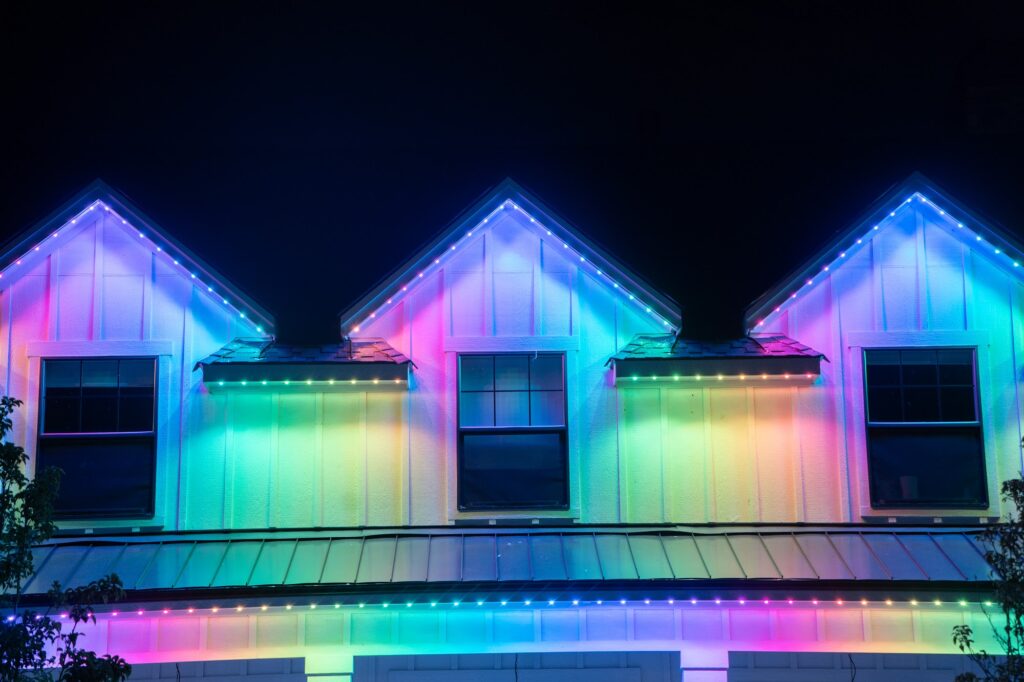
Programmable LED lights provide the visible effects. Some products control individual lights, while others control groups of lights called zones. Individual control creates greater detail, especially for rooflines, trees, windows, and large commercial features.
A compatible controller acts as the command center. It tells the lighting when to change color, brightness, pattern, or movement. Controllers vary widely. Some support app-based scenes only, while others can run song-specific sequences.
A sequence or program provides the timing. It maps lighting changes to a song’s beat, lyrics, chorus, instrumental breaks, or other musical moments. Without a sequence, lights may react to sound but will not perform a repeatable, song-accurate show.
Power and signal management keep the system operating safely outdoors. This includes properly placed power supplies, weather-appropriate connections, protected wiring, and reliable communication between the controller and lights. Music playback completes the experience through outdoor speakers, an FM transmitter where permitted, or another suitable audio source.
Sequencing means programming lighting events to match music. Pixel mapping assigns effects to individual lights or lighting zones. RGBIC lighting may allow several colors or effects along one lighting run, depending on the product. Larger custom displays may use DMX control and channels, which are advanced methods for managing separate lighting elements.
A homeowner may prefer simple app-controlled holiday scenes for a low-effort display. A more advanced display owner may commission song-specific sequences for a polished show that runs consistently each night. Before selecting hardware, we recommend reviewing smart lighting controller features so the controller matches the intended use.
Full song-specific synchronization requires compatible hardware and sequencing software or professional programming. Many permanent lighting systems offer app colors, patterns, and scheduling but do not support detailed song-based sequencing. Roofline access, permanent exterior mounting, electrical modifications, and weatherproof wiring should be handled by qualified professionals when needed.
A Practical Process for Syncing Lights to Music
Start by defining the display area. Rooflines, windows, trees, landscaping, entryways, and storefront accents each create different programming and installation needs. A focused display often delivers a cleaner result than trying to animate every surface at once.
Next, confirm that the chosen lights and controller support programmable sequencing. Preset scenes and sound-reactive modes can be useful, but they are not a substitute for a controller that can run a song-specific sequence.
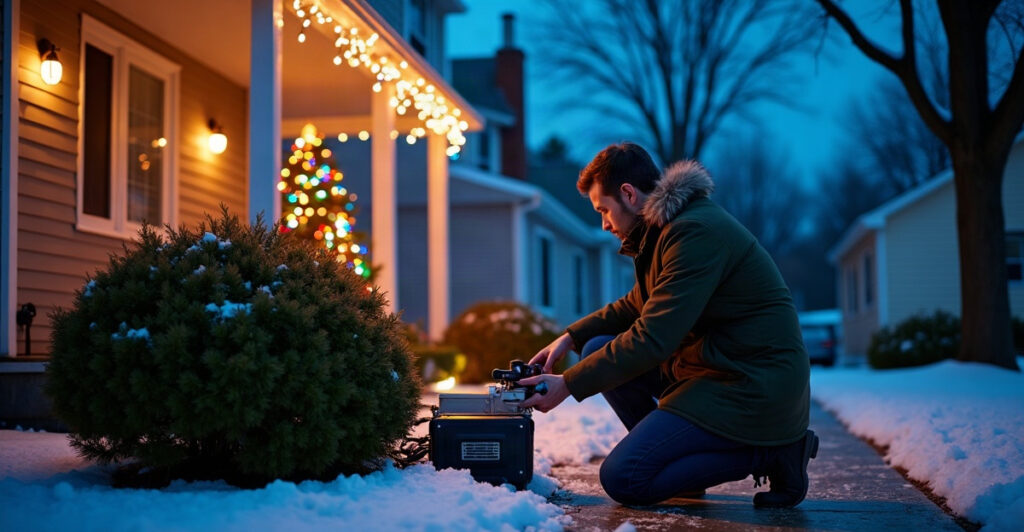
Install and test the lighting, power distribution, and controller placement before programming the full display. This step identifies coverage gaps, signal issues, overly bright zones, and wiring concerns before time is spent on sequencing.
Select a song, then create, import, or purchase a compatible sequence where available. Connect the audio through outdoor speakers or an FM transmitter where permitted. Afterward, test the show from the street at the distance most viewers will use.
We should adjust timing, brightness, operating hours, and sightlines before running the display regularly. Strong effects can look excellent from across the street but appear distracting or uneven at close range. Check that the show does not create excessive light spill or interfere with safe access around walkways and driveways.
A true synchronized show requires more equipment, setup time, and technical skill than a color-changing scene. For homeowners who want professional guidance with control, scheduling, and exterior placement, smart lighting automation can simplify the planning process.
DIY Seasonal Displays vs. Professionally Installed Permanent Lighting
Both temporary holiday lights and permanent outdoor systems can create memorable displays. The best option depends on how often we want to install lights, the desired daytime appearance, and whether the system supports the intended type of music synchronization.
| Consideration | Temporary DIY Holiday Lighting | Professionally Installed Permanent Lighting |
|---|---|---|
| Installation effort | Usually requires setup each holiday season. | Reduces recurring installation work after professional installation. |
| Ladder use | Seasonal roofline lighting often requires repeated ladder use. | Reduces the need for annual roofline installation. |
| Removal and storage | Requires removal, packing, and off-season storage. | Remains installed for holidays, events, and year-round color schemes. |
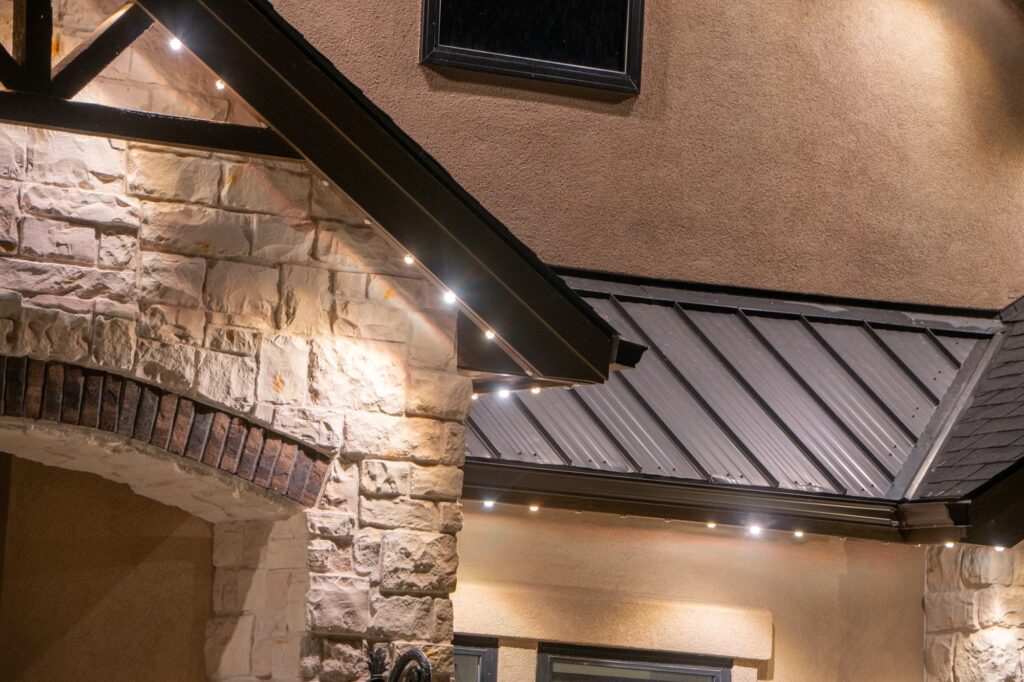
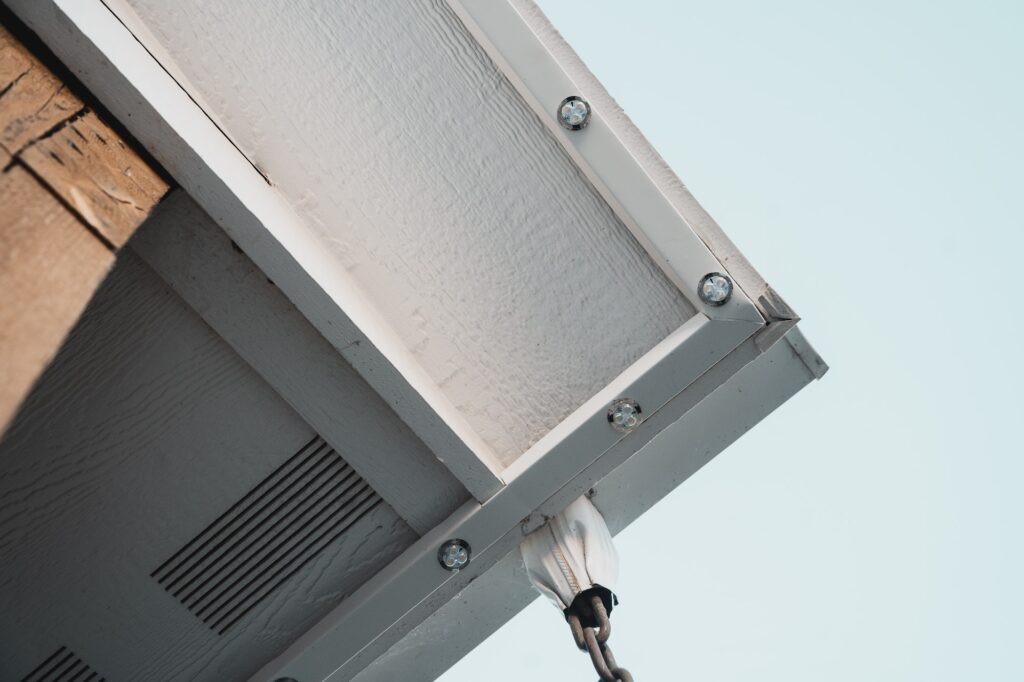
| Daytime appearance | Wiring, clips, and bulbs may be more visible. | Can be discreet, depending on trim color, mounting method, roofline design, and architecture. |
| Control options | Ranges from basic timers to apps and advanced controllers. | May provide app control, scheduling, colors, and patterns based on the product. |
| Music-sync capability | Can support music sync with compatible lights, controllers, and software. | Can support music sync, but song-specific programming depends on system capability and configuration. |
| Maintenance and design consistency | Results depend on annual installation quality. | Professional work can conceal wiring, align fixtures, and create a consistent finished appearance. |
| Year-round use | Generally used for seasonal holidays. | Can support holidays, celebrations, accent lighting, and seasonal color changes. |
Permanent lighting systems vary substantially. Some support app-controlled colors and patterns but not full song-specific synchronization. Others may require a particular controller, additional software, custom configuration, or separately programmed sequences.
The practical benefits are clear: cleaner rooflines, less seasonal labor, reduced ladder use, easier app control, and a polished appearance. We recommend exploring permanent holiday lighting when year-round use and a finished exterior design are priorities.
Questions to Ask Before Choosing a Music-Sync System
Before purchasing a system or scheduling an installation, we should confirm exactly what the equipment can do. The term music sync can describe anything from general sound response to detailed, repeatable choreography.
Questions That Clarify System Capability
Use these questions to compare options clearly:
- Can the system run true song-specific sequences, or does it offer only presets and sound-reactive effects?
- Is sequencing included, available as an add-on, or something we must create ourselves?
- How will music play: outdoor speakers, an FM transmitter, or another audio method?
- Can we control the system through an app and schedule it by time or day?
- What power, controller placement, and exterior mounting does the installation require?
- How visible will the lights, wiring, and mounting components be during the day?
- What warranty, service, and support are available after installation?
Considerations for Homes and Commercial Properties
We should verify music-sync capability with both the installer and manufacturer before buying. Product names and app screenshots do not confirm song-specific sequencing support.
Commercial properties need additional planning. Display visibility, business hours, nearby tenants, customer traffic, local requirements, and dependable operation all matter. A professionally managed design can help keep the lighting consistent while supporting a property’s appearance throughout the season.
For a clean permanent lighting design and guidance on available programming options, we can schedule a consultation with Bosso Smart Lighting.
Operate Music-Synchronized Displays Responsibly
A well-run display should feel festive without disrupting nearby homes or businesses. Set reasonable show hours, control speaker volume, and avoid excessive light spill into neighboring properties. Check HOA rules, local noise ordinances, and any restrictions that apply to exterior lighting or FM transmission. Local requirements differ, so we should confirm the rules that apply to the property.
Can Any Christmas Lights Sync to Music?
No. The lights and controller must support the intended level of control. Standard lights on a timer can turn on and off, but they cannot create a song-accurate show without compatible control equipment.
What Do We Need to Make Christmas Lights Dance to Music?
We need programmable lights or controllable zones, a compatible controller, a sequence or sound-reactive mode, safe outdoor power and connections, and a way for viewers to hear the music.
What Is the Difference Between Sound-Reactive Lights and Programmed Light Shows?
Sound-reactive lights respond generally to audio levels or beats. Programmed shows use a repeatable sequence built for a specific song, so the same lighting events occur at the same musical moments each time.
Can Permanent Outdoor Lights Be Synchronized to Music?
They may be, but we should confirm whether the specific system supports true song-specific sequencing. App-controlled colors and patterns alone do not guarantee that capability.
Do We Need Speakers for Music-Synchronized Christmas Lights?
Speakers are not always required if a legally compliant FM option is available. Viewers still need a way to hear the music for the show to feel fully coordinated.
Are Music-Synchronized Holiday Lights Allowed in Our Neighborhood?
Rules vary by HOA, municipality, operating hours, speaker volume, light spill, and local requirements. We should verify the applicable rules before operating a display.
Is It Better to Install Christmas Lights Ourselves or Hire a Professional?
Simple temporary displays may suit experienced DIY users. Professional installation is often the better choice for roofline access, permanent mounting, weatherproof wiring, electrical work, and a consistent finished appearance. For seasonal help, explore Christmas light installation.