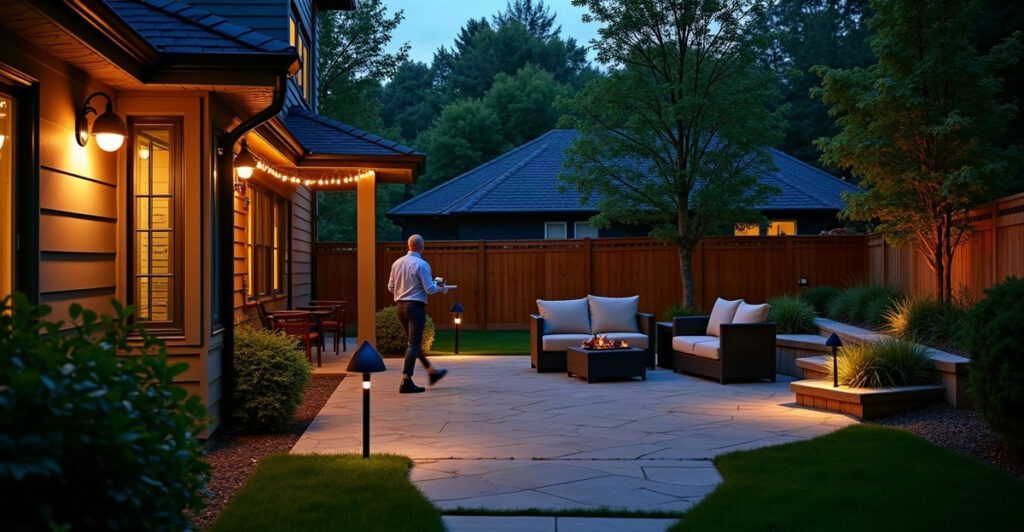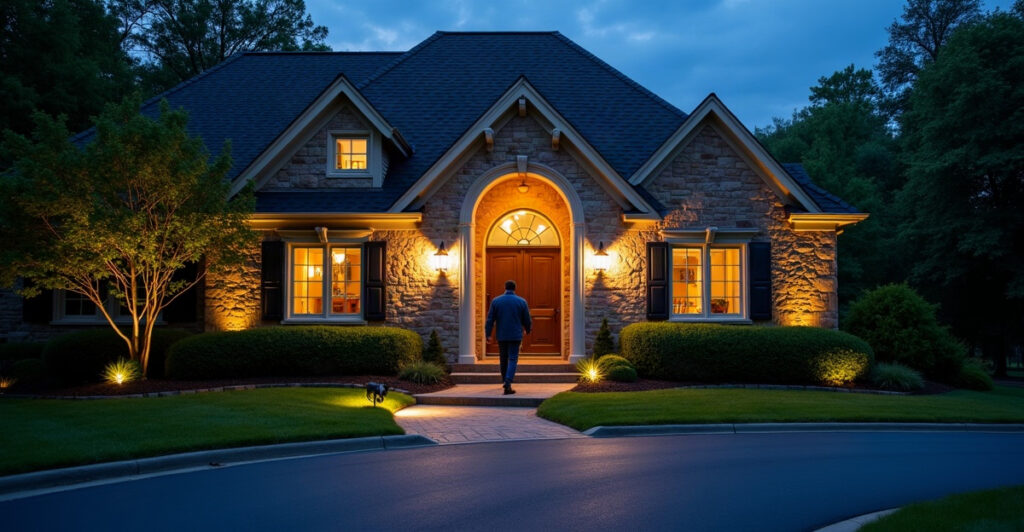
Types of Security Lighting and How to Choose the Right One?
The right security lighting matches each area’s coverage needs, visibility goals, control preferences, and power options instead of relying on maximum brightness. We recommend layered lighting: motion-sensor fixtures at access points, shielded wall lights at entrances, floodlights across wide areas, and spotlights at gates. This approach reduces glare, shadows, and unwanted light spill.
Key Takeaways
- Choose fixtures by location and purpose: use floodlights for large areas, spotlights for focused points, wall lights for entrances, and pathway lights for safe movement.
- Match controls to usage patterns. Use motion sensors in low-traffic zones and dusk-to-dawn photocells where consistent overnight visibility is needed.
- Use several correctly aimed fixtures rather than one oversized floodlight. This improves coverage and helps prevent glare-related blind spots.
- Select hardwired power for permanent, high-use locations. Use solar lighting only where dependable direct sunlight and battery performance can deliver the required output.
- Check outdoor durability ratings, mounting height, sensor sightlines, camera placement, local requirements, and light spill affecting neighboring properties before installation.
Choose Security Lighting Based on the Area, Not Just Brightness
Security lighting is exterior lighting that improves visibility, supports safe movement, reduces places to conceal activity, and helps cameras capture usable footage. It does not guarantee crime prevention, but it strengthens a broader security plan that includes reliable locks, cameras, alarms, controlled access, and maintained landscaping.
The best types of security lighting depend on coverage, placement, reliability, glare control, and sightlines, not raw brightness alone. First, define the goal: deterrence, safe navigation, facial visibility at an entrance, camera visibility, general exterior awareness, or outdoor ambiance. Each goal can call for a different fixture and control method.
Before comparing products, separate three categories. Fixture types include floodlights, wall-mounted lights, pathway or bollard lights, spotlights, area lights, and camera-integrated lights. Controls include motion sensors, dusk-to-dawn photocells, timers, smart controls, and manual switches. Power and lamp options include hardwired, plug-in, battery-powered, solar-powered, and LED technology.
Types of Security Lighting at a Glance
| Type | Best Locations | Primary Purpose | Benefits | Limitations | Power and Control Options | Best For |
|---|---|---|---|---|---|---|
| Motion-sensor light | Driveways, garages, side yards, rear doors | On-demand visibility | Saves energy and signals movement | Can trigger from pets, traffic, or trees | Hardwired, plug-in, solar; motion control | Low-traffic access points |
| Dusk-to-dawn light | Entrances, garages, parking areas | Consistent overnight light | Dependable all-night coverage | Higher energy use and spill risk | Hardwired or plug-in; photocell | Frequently used exterior areas |
| Floodlight or area light | Yards, driveways, perimeters, loading areas | Wide-area coverage | Broad illumination | Glare and shadows if poorly aimed | Hardwired, plug-in, solar; several controls | Large outdoor zones |
| Spotlight | Gates, sheds, signage, narrow approaches | Focused visibility | Targets vulnerable points | Limited coverage | Hardwired, plug-in, solar; motion or smart | Specific access points |
| Wall-mounted sconce | Doors, porches, garages, walkways | Entry and path visibility | Controlled, practical illumination | May not cover large areas | Hardwired; motion, timer, photocell, smart | Homes and commercial entrances |
| Pathway or step light | Walks, stairs, decks, garden paths | Safe navigation | Reduces trip hazards | Does not replace high-output coverage | Low-voltage, solar, hardwired, timer | Paths and elevation changes |
| Camera-integrated light | Entrances, driveways, monitored zones | Footage and alerts | Combines lighting with surveillance | Lens glare can reduce image quality | Hardwired, battery, solar; app controls | Connected security systems |
Security Lighting Types and Their Best Uses
Motion-sensor security lights work well at driveways, garages, side yards, rear doors, gates, and other low-traffic areas. A motion-sensor floodlight over a detached garage provides temporary illumination when vehicles or people approach. Sensor range, detection angle, mounting height, sensitivity, and run-time settings all affect performance. Trees, wildlife, pets, parked vehicles, and passing traffic can cause false activations, so adjust sensitivity and keep the sensor’s line of sight clear.
Dusk-to-dawn lights use a photocell, a sensor that turns lighting on at dusk and off at dawn. They suit entrances, parking areas, garages, and building exteriors that need steady overnight visibility. A shielded dusk-to-dawn wall light at a side entrance offers dependable coverage without blasting light across the property. Poor aiming can increase energy use, bother neighbors, and create glare.
Floodlights and area lights cover broad spaces such as yards, loading areas, garages, parking lots, and building perimeters. Beam spread, shielding, aiming, and mounting location matter. One extremely bright fixture often creates harsh glare and leaves the surrounding area darker by contrast. Better results often come from layering smaller, properly aimed fixtures.
Spotlights use a narrower beam than floodlights. They work best for gates, signage, sheds, detached structures, and specific vulnerable access points. Wall-mounted security sconces fit doors, porches, garages, and walkways, with motion, photocell, timer, or smart controls available. Pathway and step lights improve wayfinding on stairs, decks, walks, and garden paths, but they do not provide enough output for wide-area coverage or dependable camera visibility.
Solar, Smart, and Camera-Integrated Security Lighting
Solar-powered security lights suit remote areas where wiring is not practical and direct sun is reliable. Their performance depends on panel orientation, daily sun exposure, battery quality, seasonal conditions, and fixture output. Shade, short winter days, cold weather, and aging batteries can reduce run time and brightness. Solar may be insufficient for a shaded or high-traffic area.
Smart security lights add app control, scheduling, alerts, grouping, remote operation, and integration with cameras or security systems. Confirm Wi-Fi coverage, compatibility, account security, manufacturer app support, and manual control options. Smart lighting automation gives larger homes and commercial properties more consistent control across multiple zones. For planning ideas, review these smart outdoor lighting benefits.
Camera-integrated lights can improve footage and issue movement alerts. Still, never aim a bright fixture directly at the camera lens. Glare or overexposure can hide faces, vehicles, and activity.
Hardwired fixtures offer dependable power for permanent, high-use locations, though installation may require electrical work. Plug-in fixtures are practical near an outdoor-rated outlet. Battery-powered products serve temporary or limited applications but need routine battery checks. Solar avoids wiring but relies on site conditions. LED is energy-efficient lamp technology used across these options; it is not a separate fixture category. An LED retrofit upgrade can improve efficiency while retaining appropriate light levels.
How to Choose Security Lighting by Location
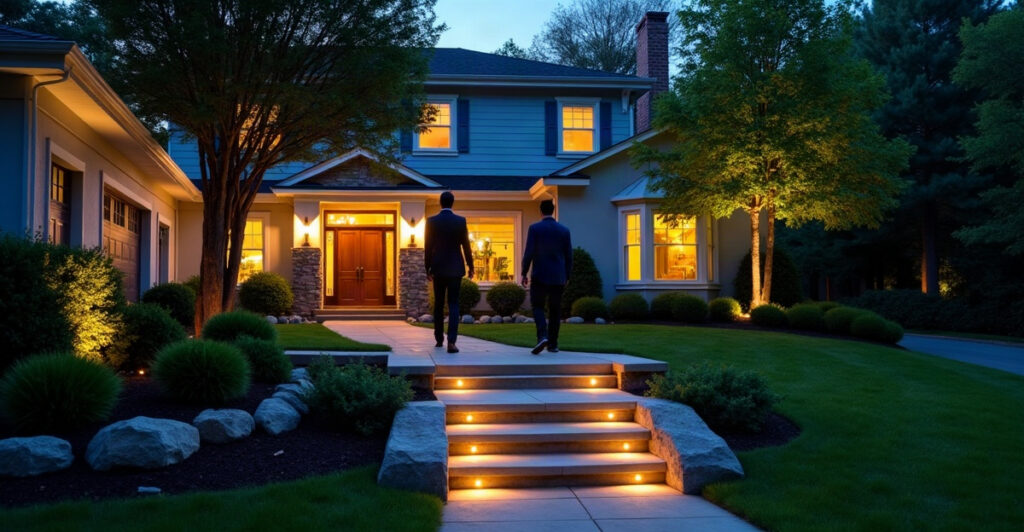
Front doors and commercial entrances need clear facial visibility, safe visitor access, and controlled glare. Shielded wall-mounted fixtures, dusk-to-dawn lighting, or smart-enabled lights usually provide the right balance. For a coordinated entry appearance, consider these front-of-house lighting ideas.
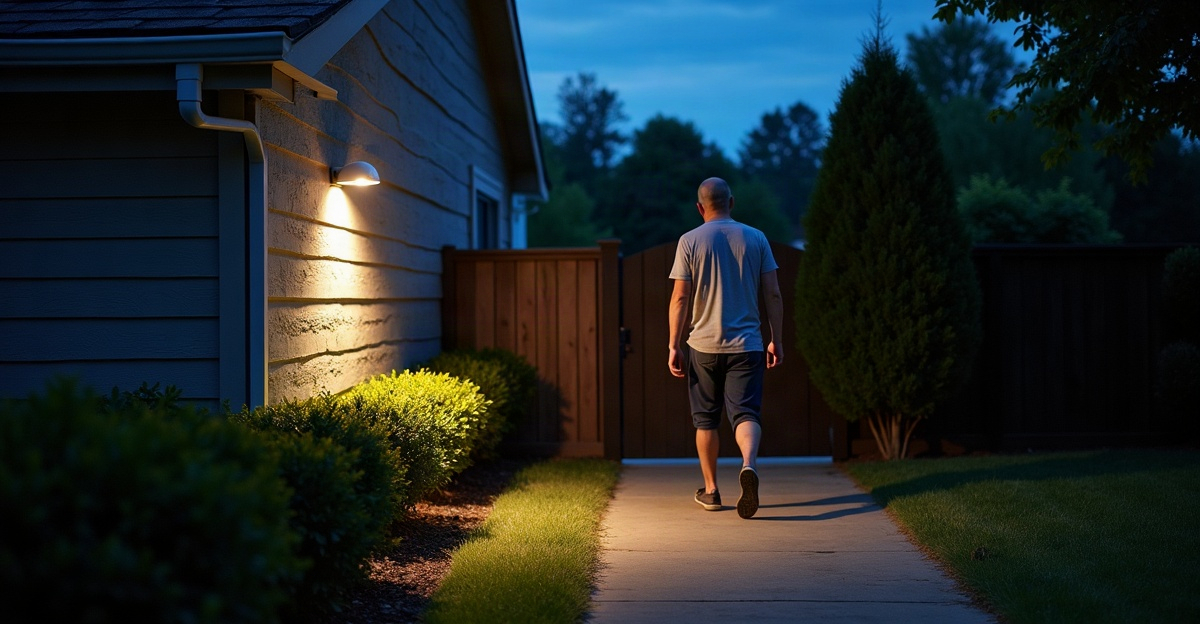
Side and rear doors need coverage of the lock, doorway, and immediate approach without shining into nearby windows. Wall-mounted fixtures or motion-sensor lights work well here.
Garages and driveways benefit from motion-sensor floodlights or wall lights for vehicle access and deliveries. Large driveways need multiple controlled fixtures rather than one oversized floodlight. Walkways, stairs, decks, and garden paths need pathway or step lighting, plus a wall light, spotlight, or motion-triggered fixture where stronger visibility is necessary. Pair safety lighting with landscape accent lighting to create clear paths without excessive brightness.
Backyards and side yards often need motion-sensor floodlights for occasional activity and focused spotlights for gates, sheds, or fence lines. Keep shrubs trimmed and reduce deep shadows around doors, gates, and other hiding places. Gates, detached structures, and signs benefit from narrowly aimed spotlights.
Parking areas, loading areas, and building perimeters require durable area lights, floodlights, or dusk-to-dawn fixtures rated for outdoor exposure. A layered plan provides more dependable coverage than a single oversized fixture. For complex sites, professional commercial lighting installation helps align coverage, access, and maintenance needs.
Match Output, Controls, Durability, and Placement to the Site
Evaluate the area’s size and shape, the lighting goal, always-on versus on-demand operation, available power, solar exposure, weather conditions, mounting height, neighbor proximity, budget, and maintenance needs.
Lumens measure visible light output. Higher lumens are not automatically better; the right amount depends on the area and purpose. Color temperature is measured in Kelvin. Warmer light often feels more comfortable at entrances, while neutral or cooler light can improve perceived detail for some task and camera-use situations. Beam angle describes light spread: wide beams suit broad areas, while narrow beams suit gates and other targets.
An IP rating or wet-location rating indicates protection from water and dust. Select outdoor-approved fixtures rated for the exposure they will receive. Mount lights high enough to discourage tampering and spread light effectively, but not so high that faces, locks, and walking surfaces remain poorly lit. Use shields and downward-facing optics where possible. Avoid sending light into windows, roads, or neighboring properties.
Trees, rooflines, fences, landscaping, and parked vehicles can block light or trigger sensors. A professional security lighting installation can identify these issues before fixture placement becomes expensive to correct.
Avoid Common Security Lighting Mistakes and Installation Problems
Common Security Lighting Mistakes
Use this checklist before committing to fixture locations:
- Relying on one very bright floodlight for the whole property.
- Creating glare that makes it harder to see beyond the bright zone.
- Positioning motion sensors where vegetation, wildlife, or traffic activates them.
- Using solar fixtures in persistently shaded locations.
- Ignoring maintenance for batteries, lenses, sensors, and fixtures.
- Lighting only the front of the property.
- Leaving deep shadows near doors, gates, shrubs, and access points.
- Assuming lighting alone guarantees security.
Check HOA rules, local dark-sky requirements, electrical codes, commercial-property rules, road-glare concerns, and neighbor impact before installation. Local building departments, manufacturer instructions, dark-sky guidance organizations, electrical-code resources, and utility efficiency programs can help confirm requirements.
Simple solar or plug-in products can often be installed when permitted and appropriate. Hardwired fixtures, new circuits, outdoor junction boxes, and code-sensitive work require a qualified electrician. Compare DIY and professional installation before choosing the installation approach.
Choose the fixture for the location and purpose, then select the control method and confirm the power source. Match output and beam angle to the coverage area, verify outdoor durability ratings, and test for glare, shadows, sensor reliability, and neighbor-facing light spill.