
Why Attachment Beats Acquisition
Winning a remodel or a new build is expensive. Bidding, estimating, and following up consume weeks before a contract is signed, and the margin on the job has to carry all of it.
Adding scope to a signed project carries almost none of that cost. The client is already committed, the schedule is already built, and your crews are already on site.
Who Is This Program For?
The fit is strongest for firms doing exterior work rather than interior-only remodelling.
- Exterior remodelling and renovation contractors
- Custom home builders
- Roofing and siding contractors
- Outdoor living and deck builders
- Design build firms
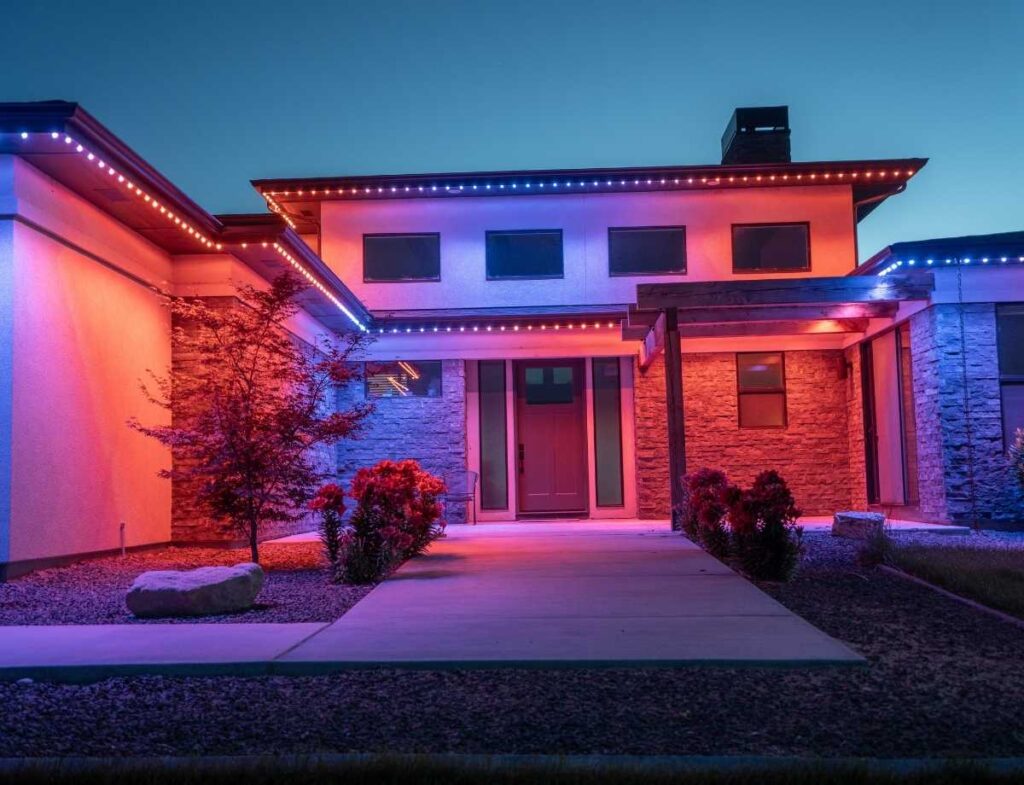
What the Work Involves
Permanent lighting mounts along the fascia or soffit and connects to the property’s electrical supply. For a general contractor, both elements sit comfortably within work your trades already perform or coordinate.
The advantage over other trades is timing. Specifying lighting while a roofline is being replaced or a house is being framed is significantly simpler than retrofitting it years later.
Where It Attaches Best
Certain project types create a natural opening for the conversation.
- Roof and fascia replacement - The roofline is already exposed and already being worked on, which is the ideal moment to install.
- Siding and exterior renovation - Clients investing in how the building looks are receptive to completing the effect after dark.
- New build construction - Specifying at design stage avoids retrofit entirely and lets wiring be planned in.
- Outdoor living and deck projects - Clients building entertaining space are already thinking about evening use of the property.
- Whole home remodels - Exterior lighting is a visible finishing element on a project the client wants to feel complete.
How It Runs Alongside a Build
Adding the line rarely disrupts an existing project workflow.
- It can be quoted as an optional line item - Presenting it during estimating avoids a change order conversation later.
- Installation is short relative to the build - Most residential installations occupy a crew for a working day.
- It coordinates with trades already scheduled - Roofing, siding, and electrical are usually on site anyway.
- It is visible on handover - Lighting is one of the few additions a client can see and demonstrate immediately.
What Adding the Line Does for a Contracting Business
General contracting margins are squeezed by competitive bidding on comparable scopes. When three firms quote the same renovation, the differences are frequently reduced to price.
A product no competing bidder is offering changes what the client is comparing, which is a more durable advantage than sharpening a number.
What Contractors Notice
The effect shows up in bidding and in what happens after handover.
- Bids become harder to compare directly - Including something competitors have not proposed shifts the conversation away from price.
- Average project value rises - Scope is added without additional acquisition cost or additional bidding.
- Handover is more memorable - A lit exterior is the element clients photograph and show people.
- Referrals become more visible - Neighbours see the finished property at night as well as during the day.
- The relationship can continue - Clients return for additions, commercial properties, or second homes.
Adding Permanent Lighting Through Bosso
Bosso supplies permanent, professional-grade outdoor LED systems designed for year-round installation on residential and commercial buildings. Homeowners control colours and settings through a proprietary app, which makes it a finishing element clients engage with long after handover.
Dealers sell and install under their own company name. Your firm, your client relationships, and your project pipeline stay yours, and Bosso supplies the product, the installer training, and the technical support behind the work.
Contractors have a choice about how to deliver the work. Some train an in-house crew to install directly, while others coordinate it the way they coordinate any specialist trade on a build. Both approaches are workable, and the right one usually depends on how much exterior volume the firm runs.
Frequently Asked Questions
Can I offer permanent lighting without installing it myself?
Many contractors start by training a small crew rather than restructuring their operation. How you deliver the work is a question worth raising during the dealer conversation, since the answer depends on your project volume and how your trades are organised.
When in a project should lighting be specified?
As early as possible, ideally at estimating or design stage. Specifying it upfront avoids a change order and allows electrical provisions to be planned rather than retrofitted.
Does this work on new construction as well as remodels?
New builds are often the easiest application, because the roofline is accessible and wiring can be planned into the build. Retrofit on existing properties is entirely workable but takes more coordination.
Will this compete with the electrical subcontractor I already use?
It does not have to. Some contractors have their existing electrical partner handle the connection portion while a trained crew manages mounting and configuration.
Is there enough client demand to justify quoting it?
Demand is strongest among clients already investing in the exterior of their property, which describes most exterior remodel and new build customers. Presenting it as an option during estimating is a low-risk way to gauge interest across your own pipeline.
Find Out Whether Your Market Is Open
If your firm is already winning exterior work, permanent lighting adds scope to jobs rather than adding leads to chase. The first step is confirming your territory is available.