
Why Holiday Lighting Companies Convert Fastest
No other trade starts this far ahead. Your installers already work at height on rooflines, your trucks are already equipped, and your customers have already paid for exterior lighting at least once.
The only genuinely new element is the product itself. Everything else your business needs to sell and install permanent lighting is already sitting in the yard.
Who Is This Program For?
The fit is strongest for established seasonal operators rather than first-year outfits.
- Christmas light installation companies
- Seasonal decor and display businesses
- Holiday lighting franchisees looking to diversify
- Event and venue lighting contractors
What Changes in the Way You Operate
The seasonal model forces every decision into a narrow window. Hiring, training, scheduling, and cash flow all compress into the run-up to December, then unwind almost overnight.
Adding permanent systems spreads that load across the calendar, which changes how the business is run more than it changes what the crews do on site.
How the Work Itself Compares
Crews familiar with seasonal installation adapt to permanent systems quickly, though the job runs differently.
- Installations are permanent, so there is no removal visit - The take-down labour that consumes January disappears from the schedule entirely.
- Storage stops being a constraint - Warehousing strands, reels, and customer-labelled bins is no longer part of the operating model.
- Jobs can be booked in any month - Installation is not tied to a weather window or a holiday deadline, so the calendar fills differently.
- Failure callbacks change character - Systems are fixed installations rather than temporary runs, which alters the maintenance conversation with the customer.
- The sale is an improvement, not a service - Customers evaluate permanent lighting the way they evaluate a roof or a deck, so the pitch is a longer conversation.
Converting Your Existing Seasonal Customers
The list you already own is the most valuable asset in this transition. These are homeowners who have demonstrably paid for exterior lighting and know your crews by name.
- They have already cleared the price objection once - Someone paying annually for installation and removal has established that exterior lighting is worth money to them.
- The frustration is already articulated - Seasonal customers routinely mention the scheduling, the waiting, and the repeat cost without being prompted.
- Access and site knowledge already exist - Your team knows the roofline, the power access, and the quirks of the property.
- Trust is established - The hardest part of selling an exterior improvement is credibility, and repeat customers have already granted it.
What This Means for the Business Through the Year
The structural problem with seasonal lighting is not demand. It is that demand arrives all at once and then vanishes, which makes it difficult to keep good installers and difficult to plan.
Permanent systems give you something to sell in the months when the phone would otherwise be quiet, without asking your crews to learn an unrelated trade.
What Operators Tell Us Changes
The differences show up in scheduling and staffing before they show up anywhere else.
- Crew retention gets easier - Offering work outside the season makes it more realistic to keep experienced installers rather than rehiring each autumn.
- Quoting continues in the off months - Sales activity is no longer confined to a short window before the holidays.
- Marketing spend works harder - Advertising can run across more of the year because there is a product to sell in every month.
- Installed systems advertise themselves - A permanent system on a visible street stays lit long after a seasonal display would have come down.
- Commercial conversations open up - Restaurants and retail properties want exterior lighting for reasons that have nothing to do with December.
Adding Permanent Lighting Through Bosso
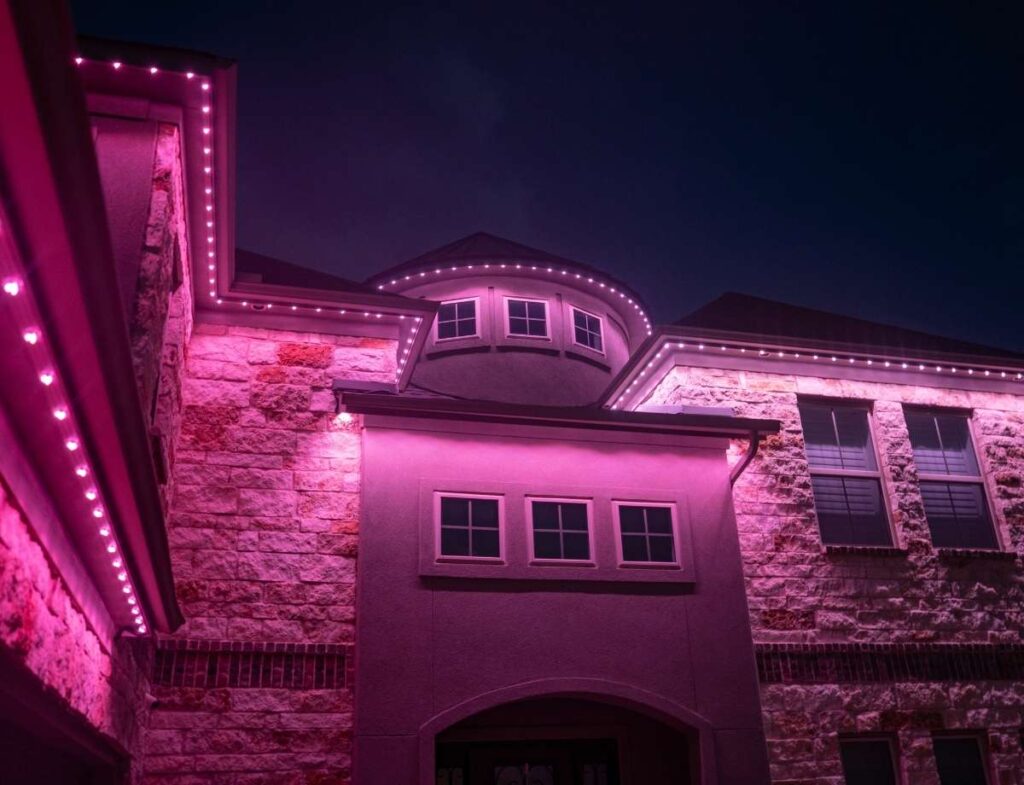
Bosso supplies permanent, professional-grade outdoor LED systems designed for year-round installation on residential and commercial properties. The systems are controlled through a proprietary app that lets the customer change colours and settings themselves, which is often the feature that closes the sale.
Dealers sell and install under their own name. You keep your company, your brand, and every customer relationship you have built, and Bosso supplies the product, the installer training, and the technical support behind it.
The programme is structured for contractors who already do this kind of work rather than newcomers being taught from scratch. For a holiday lighting company, that means training focused on the parts of the install that are genuinely different rather than the basics your crews already know.
Frequently Asked Questions
Will permanent lighting cannibalise my seasonal installation business?
Some seasonal customers will convert, which is generally the intention rather than a loss. Permanent systems remove the annual install and removal revenue from that account, but they replace it with a larger single sale and a customer who no longer has a reason to shop competitors each autumn.
Can I keep running seasonal installations alongside permanent systems?
Yes, and most operators do during the transition. Traditional installation continues to suit customers who want changing displays or who are not ready for a permanent improvement, so the two lines usually run together for several seasons.
Do my existing installers need retraining?
They need training on the product, not on the trade. Crews already comfortable working at height on rooflines have the difficult part covered, so onboarding focuses on installation method, system configuration, and app setup.
When in the year should I add the line?
Adding it outside your peak season gives crews time to train and complete first installs without the pressure of the holiday run. Many operators use late winter or spring, when the schedule has capacity and quoting can begin ahead of the following autumn.
How do I sell a permanent system to someone used to paying per season?
The conversation shifts from annual cost to one-time improvement, which is a different sale than the one your team is used to making. Customers who have paid for installation and removal for several years are usually the most receptive, because they can already see the pattern they are paying into.
Find Out Whether Your Market Is Open
f your crews are already on rooflines every autumn, permanent lighting asks very little of your business that is genuinely new. The first step is checking whether your territory is available.