
Why the Exterior Is the Gap in Most Installations
A well-specified smart home covers climate, security, entertainment, and interior lighting. The building exterior is usually handled by whatever floodlight or timer was already there when the project started.
That inconsistency is noticeable to the kind of client who commissions automation in the first place. An app-controlled exterior completes a system that otherwise stops at the threshold.
Who Is This Program For?
The fit is strongest for installers already deploying connected systems in residential properties.
- Home automation and control system integrators
- Residential AV installers
- Security and surveillance installers
- Low voltage and structured wiring contractors
What the Work Involves
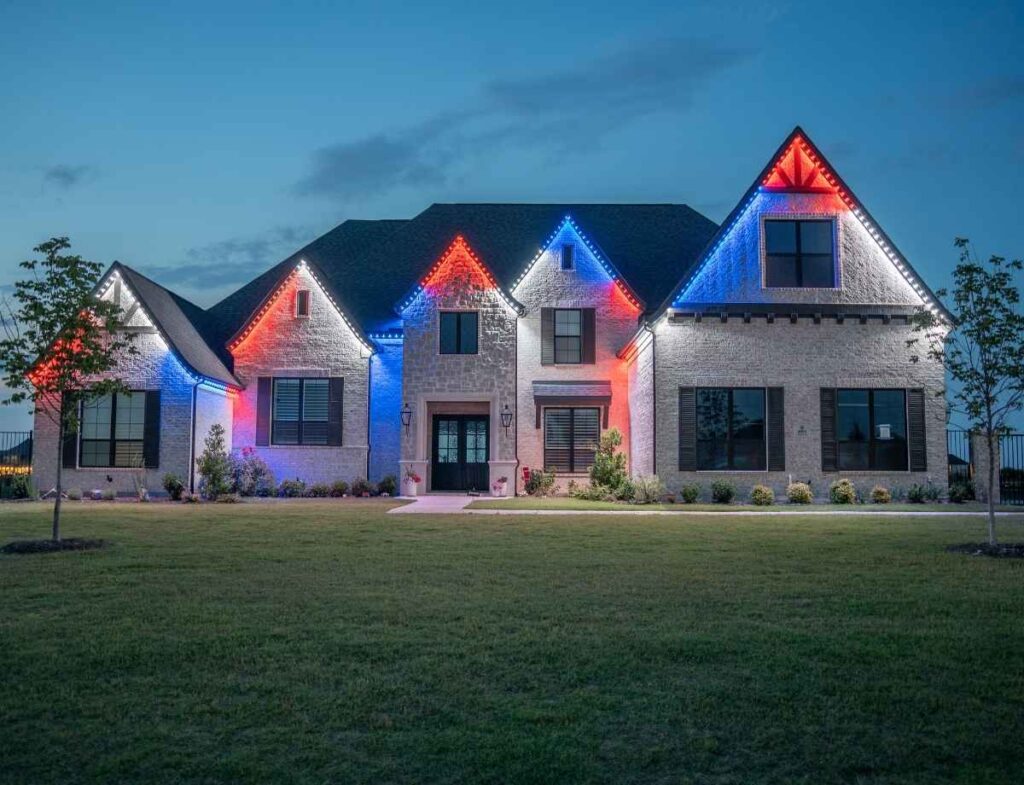
The system mounts along the roofline and connects to the property’s electrical supply, then is configured through a proprietary app that lets the client set colours, scenes, and schedules. Configuration is the familiar part for an automation installer.
The unfamiliar part is exterior mounting at height, which is closer to trade work than to rack building. Crews without ladder experience need to develop that capability before taking on installations.
How It Fits an Automation Practice
The product slots into the way integration work is already sold and delivered.
- It is specified at design stage - Exterior lighting can be included in a system proposal alongside interior lighting and security.
- Configuration is a familiar workflow - Scene setting, scheduling, and zone control map onto skills your team already applies indoors.
- The client demo is immediate - Colour change from a phone is the kind of tangible demonstration that sells an automation package.
- It supports security conversations - Exterior illumination has a practical role alongside cameras and access control.
- It extends the recurring relationship - Clients return with scene requests, additions, and seasonal changes.
Where the Demand Comes From
Automation clients arrive at exterior lighting from a different direction than most homeowners.
- They already control everything else by app - Manual exterior lighting stands out as the exception in an otherwise connected property.
- They value scenes and scheduling over novelty - Automation clients tend to use lighting programmatically rather than decoratively.
- Property presentation matters to them - Homes with substantial automation investment are usually homes where appearance is a priority.
- Seasonal use is a bonus, not the driver - Holiday display is one use case among several, which broadens the year-round conversation.
What Adding the Line Does for an Integration Business
Integration revenue is concentrated in the project itself, and once a system is commissioned the work largely stops until the client expands or upgrades. Finding legitimate reasons to return to a completed property is a persistent business problem.
An exterior product creates a defined addition you can propose to every past client whose system stopped at the wall.
What Installers Notice
The changes are usually visible in how past clients are re-engaged.
- The back catalogue becomes a pipeline - Every completed installation is a candidate for an exterior addition.
- Proposals gain a visible component - Exterior lighting is easier to show a hesitant client than a control processor.
- Project scope widens at design stage - Including the exterior increases the size of new system proposals.
- Referrals become more visible - A lit exterior demonstrates your work to a street rather than to a single household.
- Support contact stays warm - Clients adjusting scenes and schedules maintain an ongoing reason to be in touch.
Adding Permanent Lighting Through Bosso
Bosso supplies permanent, professional-grade outdoor LED systems built for year-round installation on residential and commercial buildings. Control runs through a proprietary app that lets the client adjust colours and settings directly, which is the element automation clients respond to most.
Dealers sell and install under their own name. Your integration business, your brand, and your client relationships stay yours, while Bosso supplies the product, the installer training, and the technical support behind it.
Training covers installation method, system configuration, and app setup. For an integration firm, the configuration side will feel familiar, and the honest prerequisite is building safe exterior installation practice for work at height.
Frequently Asked Questions
Does the system integrate with the platforms I already deploy?
The lighting is controlled through Bosso’s proprietary app rather than a third party controller. Whether it connects to broader automation platforms is a question to raise directly during the dealer conversation, as integration capability determines how it is specified within a larger system.
Do my technicians need to work at height?
Yes, since the system mounts along the roofline of the building. This is the main practical difference from interior integration work, and firms without exterior experience should plan for the equipment and safety practices it requires.
Can I propose this to clients whose systems are already installed?
Completed installations are often the best starting point. The exterior is typically the part of the property that was never automated, which makes it a straightforward addition to propose rather than an upsell that competes with existing equipment.
Is this a lighting product or a security product?
It is primarily an exterior lighting system, though illumination has an obvious role alongside cameras and access control. Positioning depends on the client, and both angles are legitimate.
Do I need an electrical licence to install it?
Requirements vary by state and by the scope of the electrical connection. Low voltage contractors frequently partner with a licensed electrician for that portion while handling mounting and configuration themselves.
Find Out Whether Your Market Is Open
If your installations currently stop at the exterior wall, permanent lighting is the piece that completes them. Checking territory availability takes one enquiry and carries no obligation.