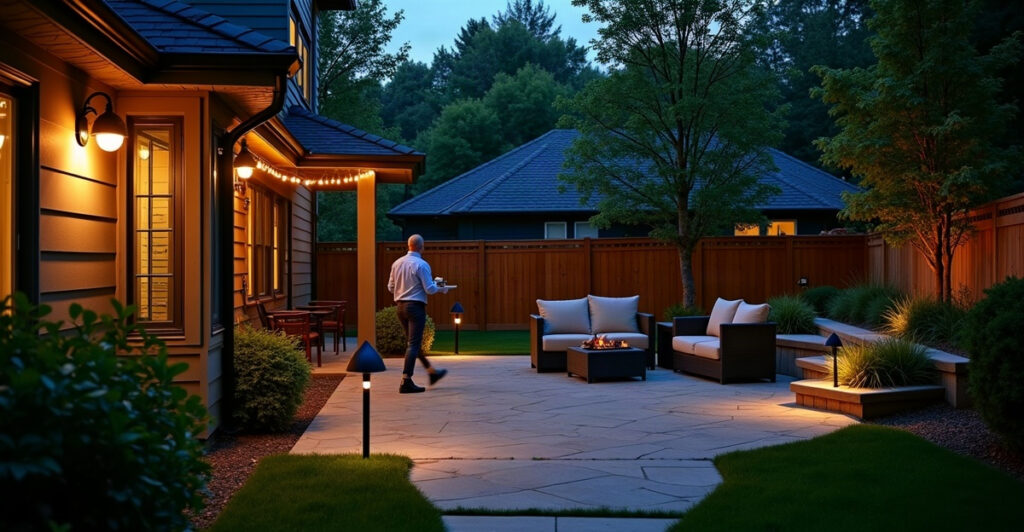
Dusk to Dawn Outdoor Lights: How They Work and When to Use Them
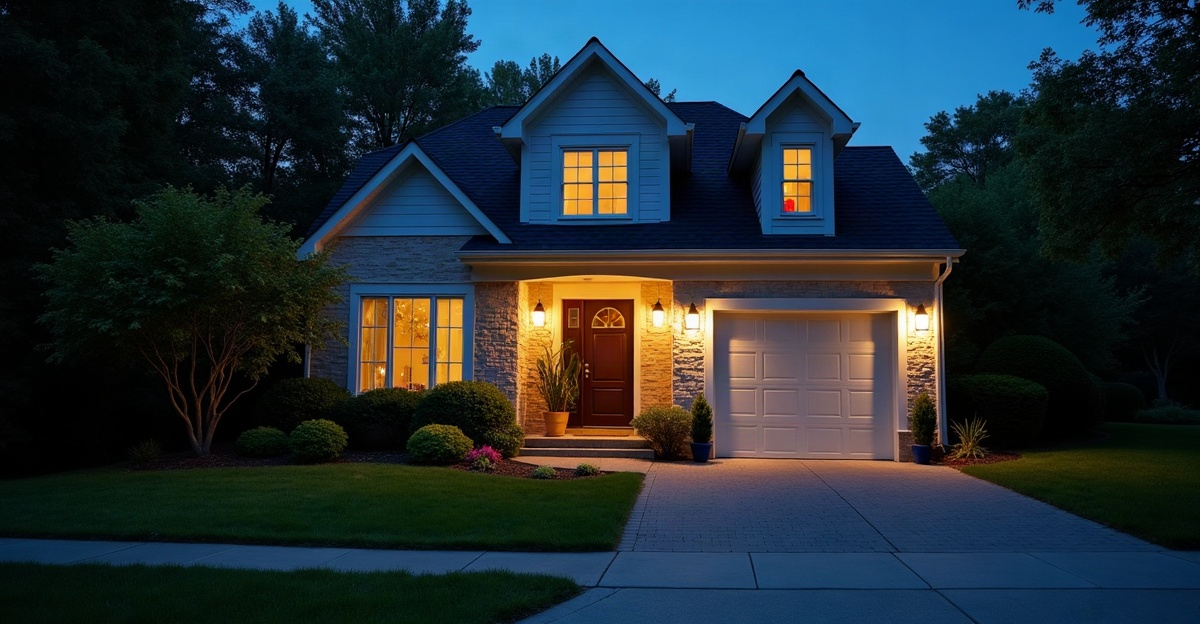
Dusk-to-dawn outdoor lights use photocells to turn fixtures on as natural light fades and off as daylight returns. They provide dependable visibility for entries, driveways, walkways, garages, and access areas. This approach works well for locations that need overnight illumination. Correct sensor placement, efficient LED fixture selection, effective shielding, and professional installation support consistent, responsible performance.
Key Takeaways
- Dusk-to-dawn lighting is an automatic control approach, not a specific fixture type. It usually relies on a photocell sensor.
- Photocells require a clear view of natural daylight. Keep them free from fixture glare, vehicle headlights, foliage, eaves, and other artificial light sources.
- Choose dusk-to-dawn controls for reliable overnight visibility. Use motion sensors, timers, or smart controls where lower runtime or added flexibility is the main goal.
- LED fixtures use less energy than older lighting technologies. Total operating cost still depends on wattage, fixture count, nightly operating time, and local electricity rates.
- Select correctly rated, shielded fixtures and direct light downward. This supports safety, comfort, fixture longevity, and respect for nearby properties.
What Dusk-to-Dawn Lighting Does Best
Dusk-to-dawn lighting is an automatic control method, not a specific fixture type or permanent lighting system. It usually uses a photocell to sense ambient daylight, turning lights on as evening arrives and off when daylight returns.
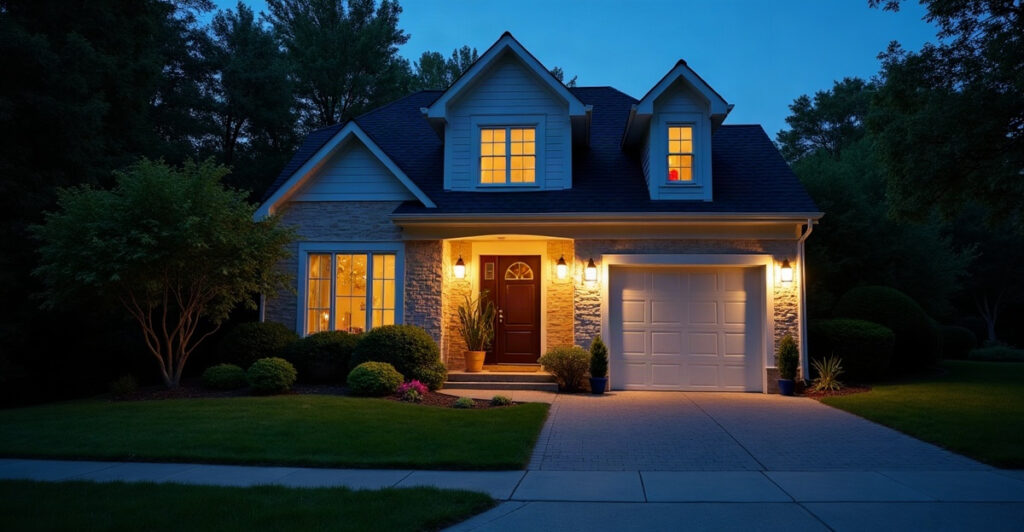
Dusk-to-dawn outdoor lights provide dependable nighttime illumination without daily manual operation. We recommend them for areas that need to remain visible throughout the night, including front entries, driveways, walkways, garages, side yards, parking areas, loading points, multifamily common areas, and business entrances.
This consistent lighting improves visibility during arrivals and departures. It also supports safer movement around access areas and increases awareness of activity around the property. Exterior lighting can discourage unwanted activity in some situations, although it cannot guarantee crime prevention or complete security. Proper fixture placement remains essential, as explained in our guide to security lighting placement.
Automatic outdoor lights work best where darkness itself creates a problem, rather than where lighting is needed only during occasional activity. Dusk-to-dawn LED lights are especially practical because LEDs provide efficient, long-lasting illumination for extended nightly runtime.
How Photocell Outdoor Lighting Works—and Why Placement Matters
Photocell outdoor lighting uses a light-sensitive sensor to measure ambient daylight. As natural light drops below the sensor’s activation point, the photocell turns the fixture on. Once morning daylight reaches the sensor’s shutoff threshold, it turns the fixture off.
Exact operating times can vary with weather, seasonal daylight, surrounding shade, and nearby artificial light. Some fixtures contain built-in photocells. Other systems use a separate photocell that controls one fixture or several lights.
Photocells are generally dependable, but sensor placement directly affects performance. We place sensors where they can read natural ambient light without receiving interference from the fixture or other light sources.
For reliable operation, the sensor needs a clear view of daylight. Keep it away from eaves, covered porches, signs, trees, foliage, snow buildup, dirt, and decorative objects. Avoid placing it where vehicle headlights frequently strike the sensor. We also test the system at dusk and after nearby exterior lights operate.
Several common issues point to sensor placement or equipment concerns. Rooflines, dense trees, and shaded porches can make a light activate too early. A fixture that runs during the day may have a failed sensor, loose wiring, power issue, or incorrectly positioned photocell. Cycling on and off often happens when the fixture’s own light reaches the sensor. Streetlights, porch lights, headlights, reflective siding, windows, and landscape lighting can also create false readings.
Aging bulbs or LED drivers, damaged sensors, and unsuitable fixture ratings can reduce reliability. Manufacturer documentation, U.S. Department of Energy guidance, ENERGY STAR recommendations, and local electrical code requirements can help confirm appropriate equipment and installation methods.
When All-Night Lighting Makes Sense—and When Another Control Is Better
We recommend dusk-to-dawn operation when an area needs steady visibility all night. Entries, walkways, driveways, parking areas, garages, and commercial access points are common examples.
All-night operation may not suit decorative fixtures, low-traffic locations, patios, or backyard entertaining areas. Properties focused on lower runtime and precise control may benefit from another approach. Our guide to warm, safe backyard lighting explains why comfort-focused spaces often need more flexible controls.
A photocell provides automatic, dependable nighttime visibility, but it can run for many hours each night. Motion sensors reduce runtime and add light when activity occurs, though they can activate inconsistently and leave an area dark until motion is detected. Timers provide predictable operation but often need seasonal adjustment unless connected to smart controls.
Smart lighting automation allows schedules, zones, scenes, dimming, and remote control. It requires compatible products, initial setup, and dependable connectivity. Permanent outdoor lighting serves a different purpose: it provides professionally installed, year-round architectural accents, holiday displays, event lighting, and curb appeal through app-based scenes and schedules. It is not synonymous with photocell operation.
The best choice depends on the priority:
- Choose photocell control for all-night visibility.
- Choose motion sensing for activity-based operation.
- Choose smart controls for flexibility and remote management.
- Choose permanent lighting for lasting exterior presentation.
Energy Use, Fixture Selection, and Responsible Light Placement
LED fixtures typically use substantially less electricity than older incandescent, halogen, or HID products. Still, dusk-to-dawn LED lights can run roughly 10 to 14 hours per night, depending on season and location. Total operating cost depends on fixture wattage, the number of fixtures, nightly runtime, local electricity rates, and selected controls.
Monthly energy use equals fixture wattage divided by 1,000, multiplied by hours used per night, multiplied by days per month. Multiplying that result by the local electricity rate per kWh provides an estimated monthly cost.
We select fixtures based on the task, mounting location, and exposure conditions. Appropriate lumen output matters more than simply choosing the brightest available fixture. Warm color temperatures often create a more comfortable residential appearance, while cooler light may suit some functional work areas. Exposed fixtures need wet-location ratings, while protected covered locations may only require damp-location ratings.
Durable materials, weather-resistant finishes, warranty terms, replaceable components, and integrated LED service requirements also affect long-term value. For existing systems, LED retrofit upgrades can reduce energy use while improving light quality and consistency.
Responsible light placement protects comfort on the property and nearby properties. DarkSky guidance supports using only the brightness needed, selecting shielded fixtures, and directing light downward. Avoid aiming fixtures into neighboring windows or at the street. Effective lighting depends on output, shielding, aiming, and placement, not excessive brightness.
Installation, Daytime Appearance, and the Role of Permanent Outdoor Lighting
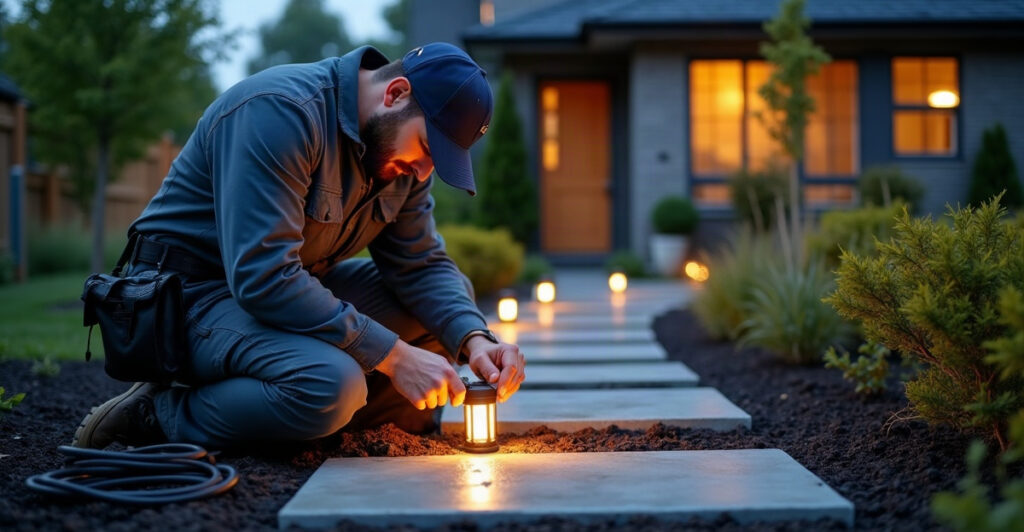
Plug-in and solar lights can work for limited applications. Hardwired fixtures, new circuits, junction boxes, outdoor electrical connections, and multi-fixture layouts often require a licensed electrician or qualified lighting professional.
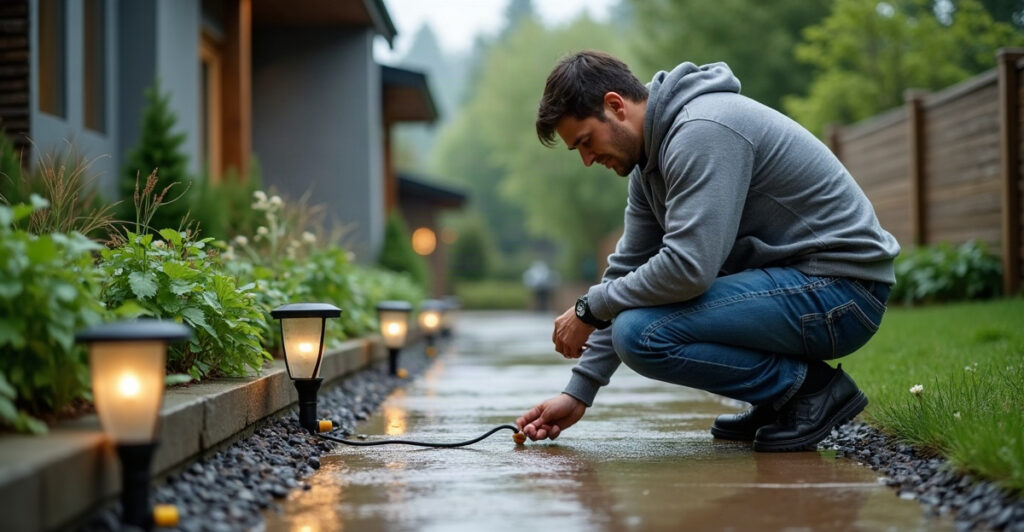
Professional installation helps protect weatherproof connections, sensor placement, wire routing, fixture spacing, and code compliance. We also account for the property’s daytime appearance. Visible wiring, poorly chosen mounting points, mismatched finishes, and oversized fixtures can affect curb appeal even when the lighting performs well at night.
How Dusk-to-Dawn Lighting Fits With Permanent Outdoor Lighting
A photocell is useful for functional lighting at an entry, driveway, garage, or service area. Permanent outdoor lighting supports broader goals, including architectural accent lighting, seasonal displays, events, and everyday curb appeal.
A permanent system may use app-based schedules, dimming, zones, color control, and scenes instead of relying exclusively on photocell activation. Automatic nighttime scheduling may be part of the design, but permanent outdoor lighting is not simply a dusk-to-dawn product. We recommend permanent outdoor lighting for properties that need a clean-looking, year-round lighting solution with greater visual flexibility. A consultation can help determine the right layout, controls, and fixture locations.
For a complete project, we also recommend starting with an outdoor lighting plan that considers safety, appearance, fixture visibility, and everyday use.
Frequently Asked Questions About Automatic Outdoor Lights
How Do Dusk-to-Dawn Outdoor Lights Work?
A photocell detects reduced ambient daylight and activates the light at dusk. It shuts the fixture off after daylight returns.
Do Dusk-to-Dawn Lights Use a Lot of Electricity?
LED fixtures use less electricity than older lighting technologies, but operation for roughly 10 to 14 hours per night means wattage, fixture quantity, and local utility rates still affect cost.
Why Does a Dusk-to-Dawn Light Turn On During the Day or Cycle On and Off?
Common causes include blocked sensors, reflected light, headlights, streetlights, interference from the fixture’s own output, wiring issues, and sensor failure.
Are Dusk-to-Dawn LED Lights Reliable?
Properly rated LED fixtures and photocells can provide dependable service when installed correctly and kept clear of interference.
Where Should a Photocell Be Placed?
Place it where natural ambient light reaches it consistently. Keep it separated from fixture output, other lights, eaves, foliage, dirt, and frequent vehicle headlights.
Is Dusk-to-Dawn Lighting Better Than Motion-Sensor Lighting?
Dusk-to-dawn lighting is better for consistent all-night visibility. Motion sensors may be better where reduced runtime is the primary goal.
Can Permanent Outdoor Lighting Turn On Automatically at Night?
Many permanent systems use app-based schedules, zones, dimming, scenes, and color controls for automatic operation without functioning exclusively through a photocell.