How Does Lighting Improve Security Around Your Property?
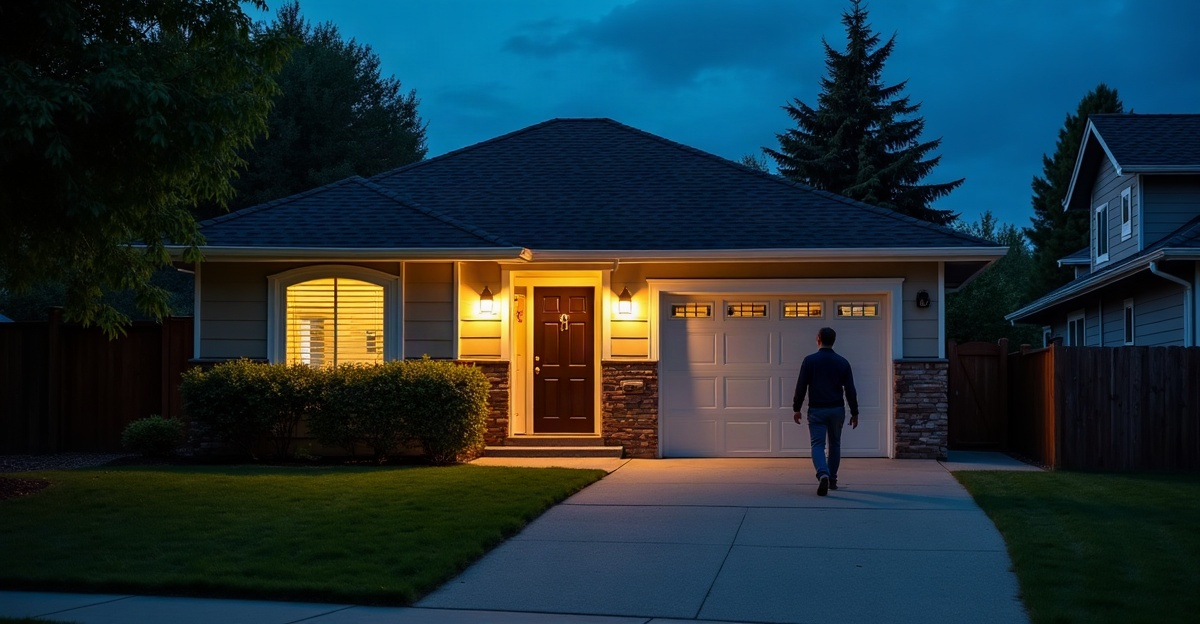
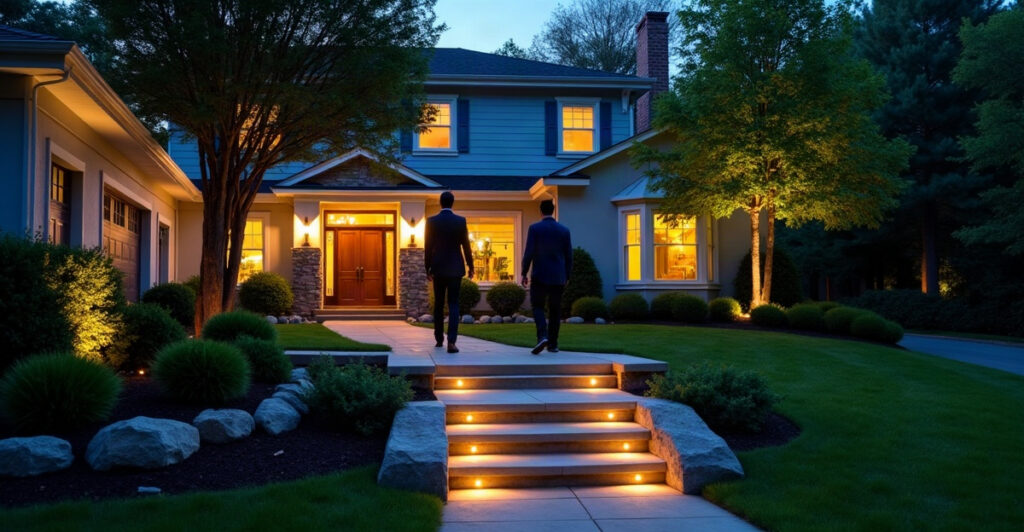
Lighting improves property security by increasing visibility at entrances, walkways, driveways, gates, and camera zones. It helps occupants spot activity, identify potential hazards, and move safely after dark as part of a layered security plan.
Key Takeaways
- Focus lighting on access points, travel routes, parking areas, side yards, rear doors, gates, and storage locations instead of flooding the entire property.
- Use consistent low-level lighting for paths, stairs, entrances, and camera areas. Add brighter motion-activated lighting at priority doors, gates, and driveways.
- Choose shielded, correctly aimed fixtures to reduce glare, avoid deep shadows, support clear camera footage, and limit light spill onto neighboring properties.
- Use dusk-to-dawn controls, timers, schedules, zones, and dimming to deliver dependable coverage while controlling energy use and maintaining comfort.
- Treat outdoor lighting as one part of a complete security strategy. Combine it with secure locks, cameras, alarms, access controls, maintained landscaping, and durable expert installation.
What Outdoor Lighting Can—and Cannot—Do for Property Security
Outdoor lighting can improve security support by making people, paths, entrances, and exterior activity easier to see after dark. It provides useful visibility around doors, garages, gates, driveways, walkways, side yards, parking areas, and other locations where activity may otherwise go unnoticed.
How does lighting improve security in practical terms? It reduces dark areas that can offer concealment, helps occupants notice movement, and makes nighttime travel safer for residents, visitors, employees, and tenants. Consistent illumination can also help cameras capture more usable footage, although camera placement, lens quality, glare, and viewing angles still affect results.
Scheduled lighting can make a property appear occupied and cared for. A front entry, driveway, or shared walkway that remains reliably lit also communicates that the property receives regular attention. For additional planning ideas, review these security lighting ideas for a safer, smarter home.
Lighting does not prevent crime, guarantee safety, stop break-ins, or replace secure locks, cameras, alarms, access controls, maintained landscaping, and responsible property practices. We treat lighting for security as one part of a layered plan. It supports awareness, safe access, and visibility without making unrealistic promises.
Where Security Lighting Makes the Biggest Difference
Security lighting for outdoors works best when we focus on access points and low-visibility areas instead of flooding the entire property with light. Effective placement directs attention to the places where people enter, travel, park, work, or store valuable items.
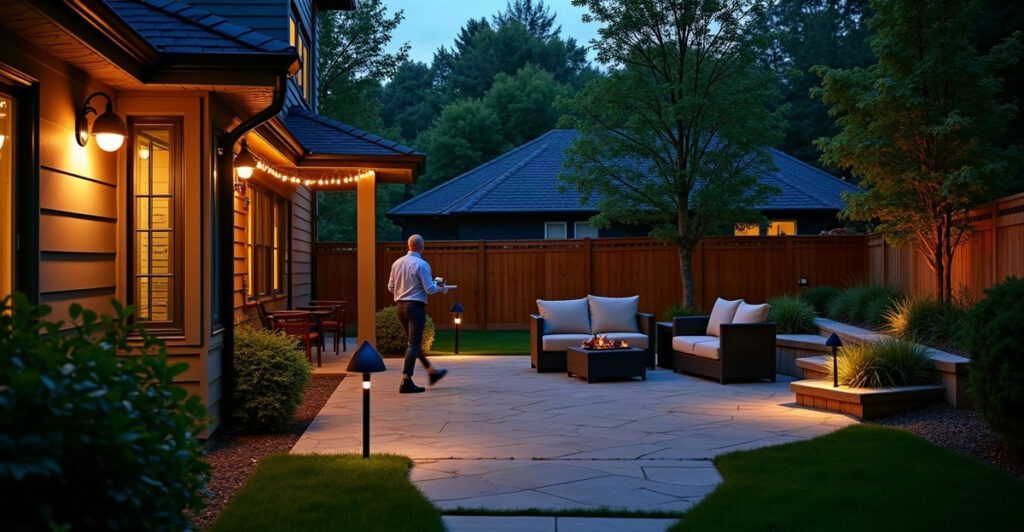
For single-family homes, priority areas usually include front, side, and rear doors; garage doors; driveway approaches; side yards; gates; detached garages; sheds; and storage spaces. Walkways, stairs, patios, decks, pools, and changes between outdoor areas also need dependable visibility for safe movement after dark.
Commercial and managed properties need similar planning on a larger scale. Building entrances, accessible paths, shared stairways, tenant parking, service doors, loading zones, trash areas, dumpster enclosures, and storage locations should receive focused coverage. A clear route from parking to the entrance helps people move confidently and gives property managers a better view of exterior activity.
A dark side yard behind a home can benefit from low-level continuous lighting paired with motion-responsive illumination near a gate or rear door. A rear service entrance may need a shielded fixture that lights the lock, threshold, and approach without shining into neighboring windows. A driveway camera affected by backlighting may need the fixture moved or aimed differently. Meanwhile, a primary walkway often needs dependable low-level light rather than intermittent motion activation.
For front-facing placement and appearance, our front-of-house lighting ideas can help balance visibility with a clean exterior design.
Use Layered Lighting Instead of Relying on Bright Floodlights
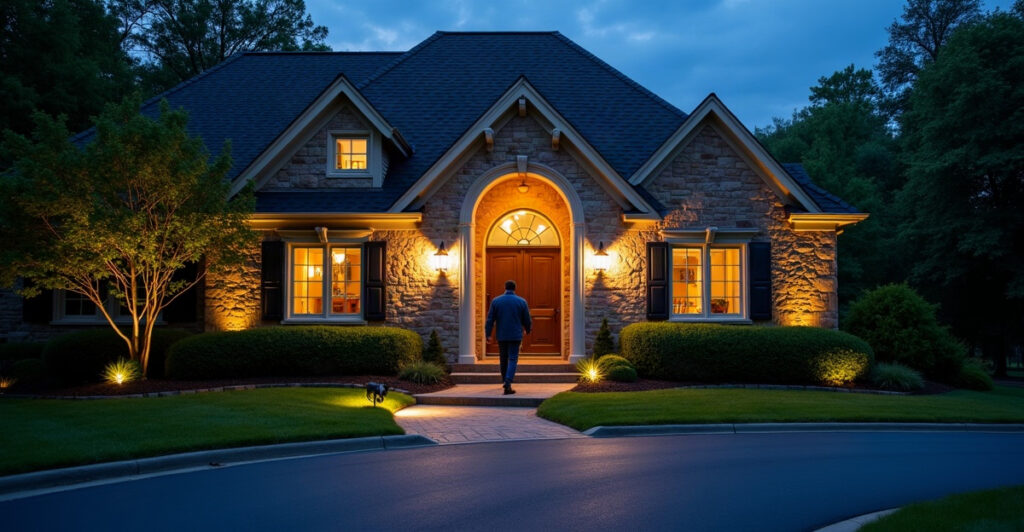
Architectural, decorative, and security-oriented fixtures serve different purposes. Permanent accent lighting can improve general property awareness, navigation, and curb appeal. Focused security fixtures may be necessary at gates, driveways, high-priority doors, and other locations that need stronger targeted illumination.
The most effective approach often combines both. We can use steady low-level lighting for paths and broad property visibility, then add motion-triggered or brighter task lighting at priority zones. This layered method supports practical security lighting for outdoors while keeping the property comfortable and visually balanced.
Brighter isn’t automatically better. Even, targeted light is generally more useful than indiscriminate floodlighting. Excessive brightness can create glare and harsh contrast, leaving deep shadows outside the brightest area. It can also shine into bedroom windows, neighboring properties, or roadways. For cameras, poorly aimed fixtures may cause lens flare, washout, and weak image quality.
Placement That Protects Visibility
We prioritize coverage before intensity. Shielded fixtures and careful aiming help direct light where it is needed while limiting glare and light trespass. Trees, shrubs, fences, eaves, vehicles, and architectural features can block light or create shadows, so placement should account for how the property changes through the year.
Camera zones need special attention. A fixture placed directly in a camera’s field of view can reduce image quality even if the area looks bright to the eye. Instead, we aim light across the monitored area or from an angle that supports the camera without shining into its lens.
Color temperature also affects comfort and performance. Warm-to-neutral white light often suits residential properties, while the best choice depends on fixture design, visibility needs, camera performance, and local expectations. HOA rules, dark-sky guidance, local ordinances, and commercial property standards may also affect fixture selection and aiming.
A professional landscape accent lighting plan can provide attractive low-level illumination while supporting safe movement and greater awareness around the property. For broader design examples, explore these outdoor landscape lighting ideas.
Choose Controls That Provide Consistent, Practical Coverage
Controls determine whether outdoor lighting for security features works when it is needed. The right system should provide dependable coverage without keeping every fixture at maximum output all night.
Motion sensors can alert occupants to movement and provide temporary brighter illumination. They can also conserve energy in areas that don’t need continuous lighting. However, pets, wildlife, wind-blown vegetation, precipitation, and passing vehicles can trigger them. Motion-only lighting is rarely the best plan for paths, stairs, parking areas, or camera zones that need steady low-level visibility.
Dusk-to-dawn operation works well for entrances, walkways, camera areas, and parking spaces. Timers and schedules create consistent routines, while zoned controls allow entrances, side yards, driveways, and architectural fixtures to operate independently. Dimming helps balance visibility, comfort, energy use, and neighbor impact.
App-based controls make seasonal adjustments and daily changes easier. Compatible smart-home, camera, and security-system connections can add useful coordination without making the system difficult to use. Our smart lighting automation service can help organize lighting into practical zones and schedules.
For many properties, we recommend low-level dusk-to-dawn lighting for navigation and awareness, with motion-triggered brighter lighting at key doors, gates, or driveway areas. Security lights may stay on all night in selected locations, but every fixture does not need to run at full brightness throughout the night. Learn more about the benefits of smart outdoor lighting for everyday control and long-term flexibility.
Match the Lighting Plan to the Property and Assess Gaps
Each property needs a plan based on its layout, surrounding homes, roadways, landscaping, camera locations, and local requirements. We don’t recommend one fixture type or brightness level for every situation.
Single-family homes usually need a strong focus on doors, garage areas, walkways, side yards, patios, navigation, and curb appeal. Rental and managed residential properties should prioritize shared entries, stairways, walkways, parking areas, trash locations, tenant comfort, and consistent maintenance. Commercial properties often require focused coverage for entrances, accessible paths, parking lots, service doors, loading areas, storage zones, and maintenance access.
Security Lighting Checklist
Use this checklist to identify common visibility gaps:
- Can we safely walk from the street or driveway to every entrance after dark?
- Are side yards, rear doors, gates, and detached structures visible?
- Do glare sources or deep shadows make it harder to see?
- Do cameras have usable light at key monitoring points?
- Are controls consistent and easy to adjust?
- Can fixtures and wiring withstand local weather year-round?
- Has vegetation grown enough to block fixtures, sensors, or camera views?
A lighting review should include daytime and nighttime observations. A layout that seems clear during the day may reveal blocked paths, uneven coverage, or camera glare after dark. Architectural systems can help address these concerns while supporting a refined exterior. See our smart lighting design ideas for examples of how permanent lighting can support both appearance and practical visibility.
Why Professional Installation and Ongoing Reliability Matter
A qualified lighting professional can assess coverage, shadows, glare, wiring routes, mounting locations, zones, controls, camera compatibility, local requirements, and long-term maintenance needs. We recommend consulting licensed electricians or qualified lighting professionals for electrical work, complex controls, code compliance, and commercial installations.
Reliable security lighting for outdoors depends on weather-rated fixtures, protected wiring, dependable power connections, durable components, and periodic checks. Sensors, schedules, app connectivity, damaged lenses, and overgrown vegetation all need attention over time. A well-planned system should remain dependable through changing weather and seasonal use.
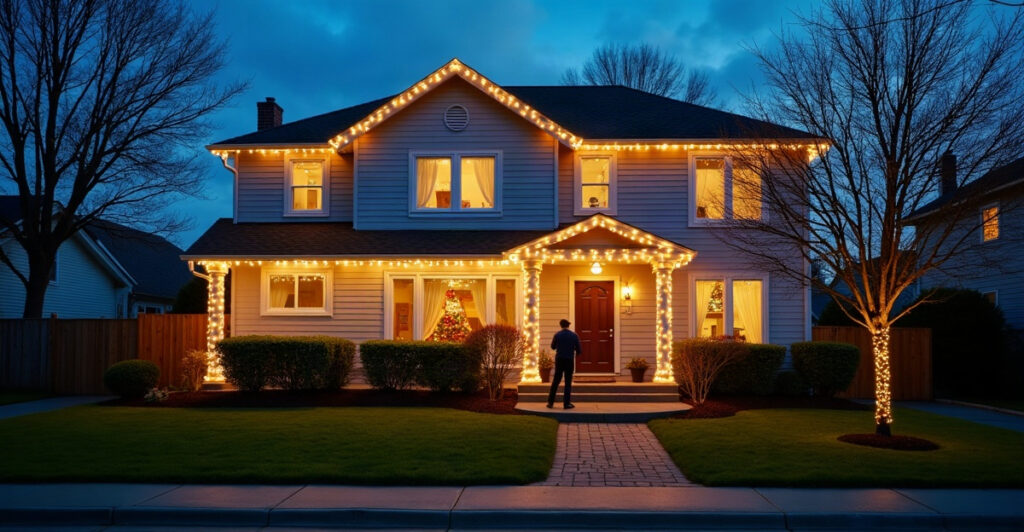
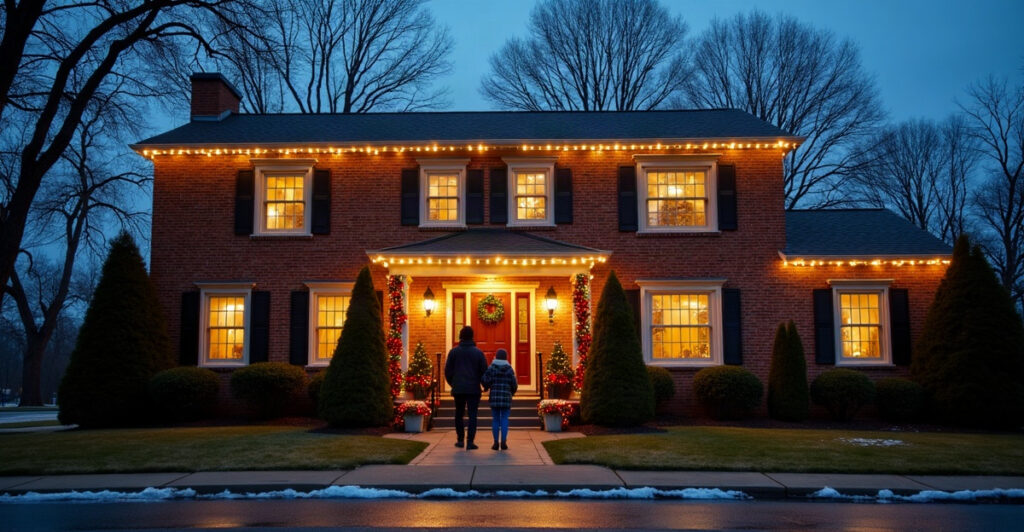
Professionally installed permanent lighting can provide year-round illumination, clean installation, durable components, and flexible zones and schedules. It is especially useful for homeowners and property managers who want a polished appearance, reliable operation, safer installation, and a system that does not need seasonal removal. Permanent architectural lighting alone is not the same as dedicated security lighting, but it can serve as a flexible part of a complete lighting plan.
Before choosing between self-installation and professional work, compare the practical differences in our guide to DIY versus professional lighting. For properties that need dedicated coverage at vulnerable locations, our security lighting installation service can help identify appropriate placement, controls, and illumination levels.
By Bosso Smart Lighting | Reviewed by our lighting installation team, with experience in exterior fixture placement, permanent lighting systems, controls, and long-term outdoor performance.