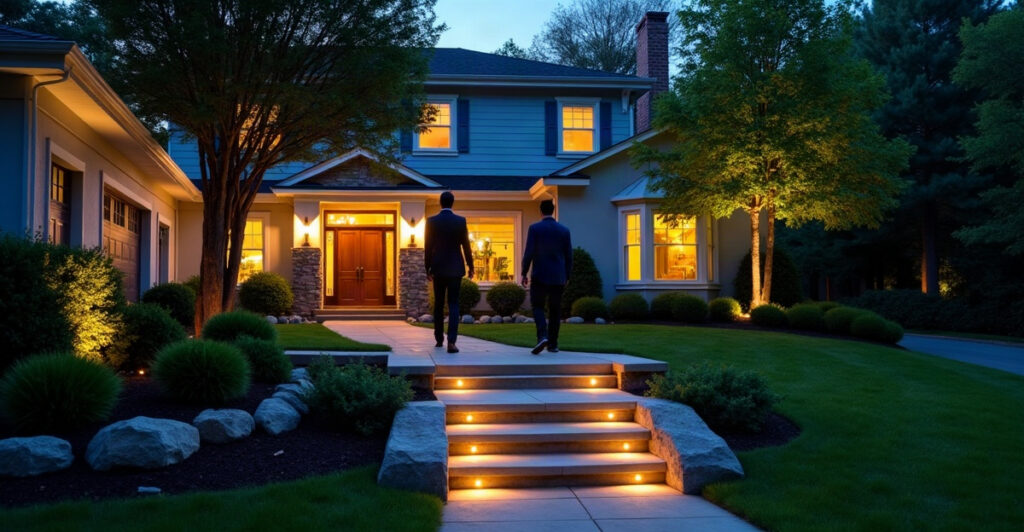
Outdoor Accent Lighting for Your House: Expert Tips
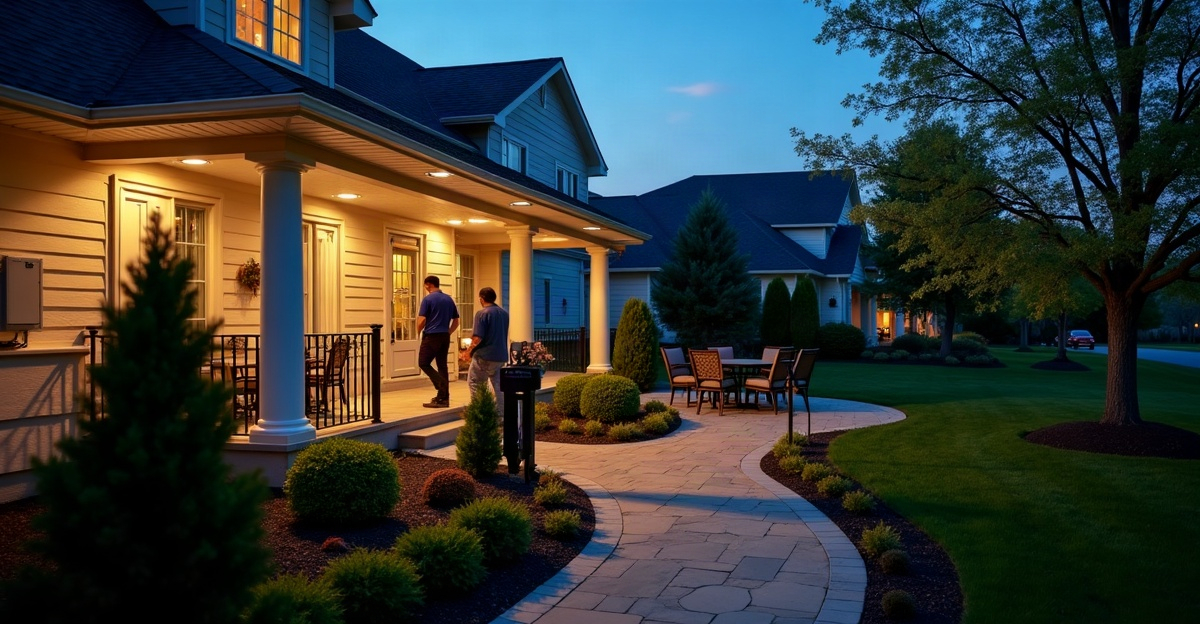
Outdoor house accent lighting projects perform best when we plan fixture placement, brightness, beam direction, and controls around the property’s architecture, landscape, active outdoor areas, and neighboring homes. A professional lighting plan layers illumination across rooflines, entries, pathways, patios, and landscape features. It also preserves a discreet daytime look and dependable performance throughout the year.
Key Takeaways
- Define each lighting zone by its purpose, including architectural accents, entries and paths, gathering areas, landscapes, and optional holiday or event displays.
- Use focused, dimmable fixtures with suitable spacing and beam angles to limit glare, hotspots, window intrusion, and light spill.
- Choose warm white light for daily architectural illumination, and reserve programmable colors for holidays, celebrations, and occasional events.
- Prioritize trim-matched tracks, concealed wiring, secure mounting, and precise fixture alignment to keep permanent lighting discreet during the day.
- Compare installers based on system durability, local climate performance, zoning, app controls, warranty coverage, service support, and future expansion options.
What Is the Best Outdoor Accent Lighting for a House?
What is the best outdoor accent lighting for a house? The best choice is not the brightest system. It is a balanced, well-integrated lighting design that fits the property’s architecture, landscaping, intended use, nearby homes, and budget.
Effective outdoor accent lighting improves curb appeal, supports nighttime use, and adds useful visibility around exterior spaces throughout the year. It can help us see entries, steps, pathways, driveways, and outdoor gathering areas. It does not prevent crime or guarantee safety, so lighting should be part of a broader approach to property awareness and exterior maintenance.
We start by defining the goal for each area. Architectural accent lighting highlights rooflines, eaves, façades, stonework, columns, gables, and trim. Landscape lighting brings attention to trees, planting beds, hardscapes, retaining walls, fences, and garden features. Pathway and entry lighting improves visibility around walkways, stairs, doors, driveways, and patios.
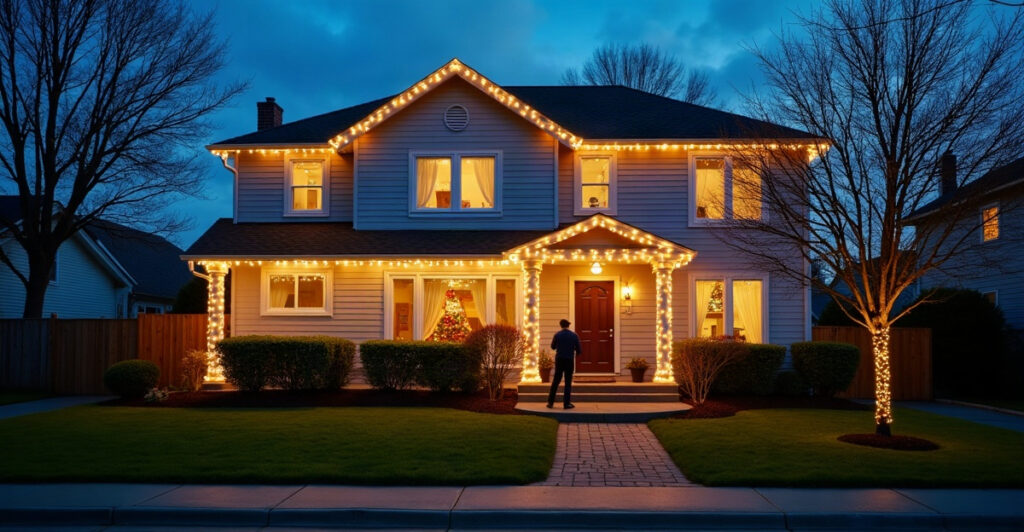
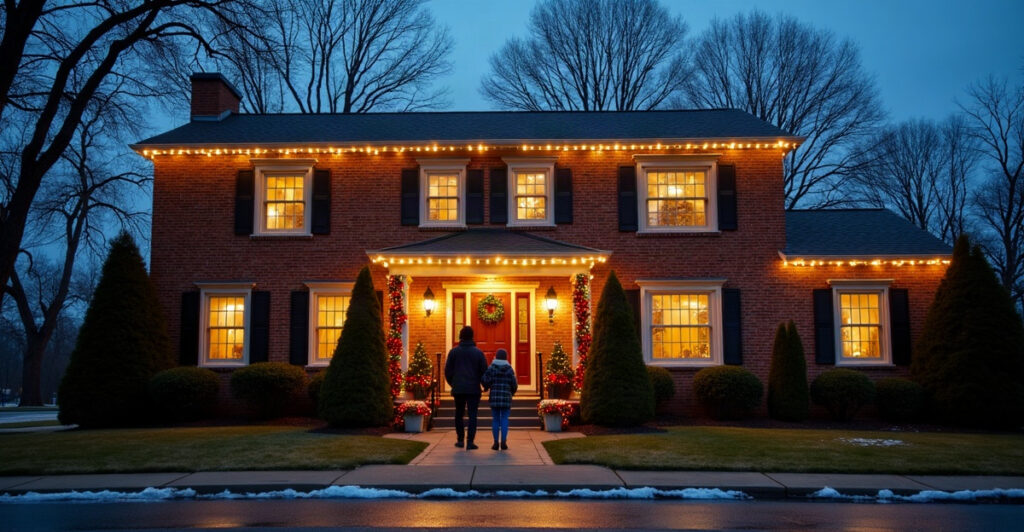
Permanent lighting can support several goals at once. It can provide subtle everyday white lighting, architectural definition, and programmable color options for holidays, events, and game days. Fixture selection, placement, brightness, and controls must match how the property is used after dark. Our permanent outdoor lighting systems help create a clean, year-round lighting plan without relying on seasonal clips and temporary wiring.
Where Outdoor Accent Lighting Has the Greatest Impact
Outdoor accent lighting delivers the strongest results when it defines important architectural features and makes active exterior areas easier to use. Rather than flooding every surface with light, we use focused layers of illumination that give the property depth, balance, and a clear nighttime presence.
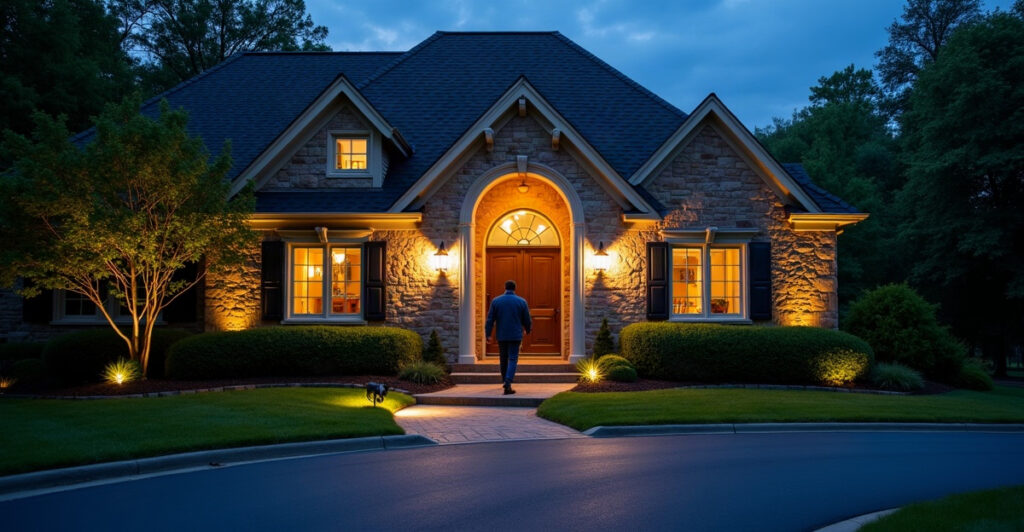
Rooflines and eaves can frame the home from the street. Front entries and porches benefit from welcoming, controlled illumination around doors and covered areas. Stonework, columns, gables, and textured façades often look stronger with carefully aimed fixtures that reveal material and form without creating harsh shadows.
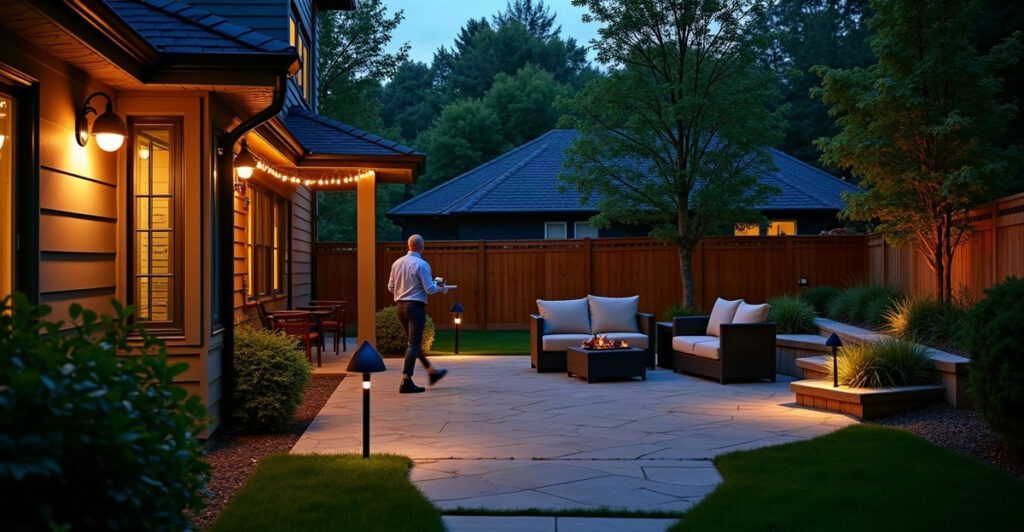
Driveways, walkways, and steps need consistent visibility. Patios, decks, pools, and outdoor kitchens need lighting that supports conversation, dining, and movement without overpowering the setting. Trees, retaining walls, fences, and planting areas can add depth beyond the home itself. For commercial properties, storefronts, signage areas, and customer entrances benefit from the same disciplined approach.
A practical lighting plan usually separates the property into an architectural zone, entry and path zone, patio or gathering zone, landscape zone, and optional event or holiday zone. This makes dimming, scheduling, and adjustments much easier. Our guide to outdoor lighting planning explains how these layers work together before installation begins.
Placement depends on roofline geometry, soffit and trim placement, fixture spacing, landscape growth, property size, neighboring properties, and desired brightness. Beam direction and beam spread matter as much as the number of fixtures. Proper fixture spacing, glare control, dimming, zoning, and light-spill management prevent hotspots, uneven lines, direct light into windows, and excess brightness near neighboring homes.
For landscape elements, we match the technique to the feature. Uplighting can give trees and stonework dramatic height, while softer downlighting can define paths and gathering spaces. Explore common landscape lighting types to see where each approach works best.
Designing Lighting for Everyday Use, Holidays, and Entertaining
Permanent lighting is a year-round property improvement, not a holiday-only feature. During normal evenings, warm-white architectural lighting can give rooflines, eaves, and outdoor living spaces a natural, welcoming appearance. For entertaining, a separate patio zone can provide the right brightness without turning the entire exterior into a display.
Smart systems add practical control. App-based controls can support scheduling, dimming, zones, colors, presets, and timers. We can adjust the system for everyday white lighting, quiet outdoor dinners, seasonal color themes, celebrations, holidays, events, and game days without climbing ladders or installing temporary clips.
Color temperature has a major effect on the finished look. Warm-white lighting is often the better choice for everyday architectural lighting because it complements many exterior materials and feels less severe than cooler light. Programmable color options work best for occasional displays, team colors, parties, and holiday themes. Constantly bright or heavily colored lighting can distract from the architecture and reduce curb appeal.
The best outdoor accent lighting uses color with restraint and gives us easy control over brightness. Our smart lighting automation options make it easier to change settings as the season, event, or routine changes. We can also review completed installations in our lighting gallery for practical design inspiration.
How Permanent Outdoor Lighting Stays Discreet During the Day
Daytime appearance is a central concern with permanent outdoor lighting. A system should complement the home in daylight as well as create the desired effect after sunset. The finished appearance depends on the property, trim color, roofline shape, component selection, and installation quality.
Professionally installed outdoor accent lighting can remain discreet through trim-matched tracks, concealed wiring, clean transitions around corners, careful fixture placement, and secure mounting. Components should follow the home’s lines instead of interrupting them. Fixture colors and track placement should complement the trim and architecture wherever possible.
Professional installation helps prevent loose wires, uneven alignment, visible clutter, and temporary clips that draw attention away from the property. Permanent systems can also reduce the inconvenience of seasonal installation, removal, storage, and repeated setup. Consistent placement year after year creates a more polished result than temporary lighting methods.
For front-facing architectural features, our collection of front-of-house lighting ideas shows how restrained placement can create a stronger visual result than excessive brightness.
Durability, Professional Installation, and Long-Term Value
For outdoor accent lighting for house Austin projects, durability starts with an honest evaluation. We consider component quality, secure mounting, wire management, installation methods, manufacturer warranty coverage, and available service support. Outdoor-rated components matter, but system suitability also depends on how those components are installed and maintained.
Austin and similar Western climates bring strong sunlight, UV exposure, prolonged heat, rain, wind, dust, temperature changes, and frequent outdoor entertaining use. These conditions affect fixture placement, mounting methods, wire concealment, controller location, and long-term appearance. Varied residential architecture also requires systems that look clean on the home throughout the year.
Professional installation is especially valuable for complex rooflines, difficult access, controller access, accurate spacing, clean wire concealment, dimming zones, and a finished appearance that fits the property. Our residential lighting installation service focuses on these details from layout through final setup.
Project cost varies by property size, roofline linear footage, architectural complexity, number of zones, fixture type, control system, accessibility, installation requirements, and warranty or service coverage. Long-term value comes from reduced seasonal setup, consistent appearance, easier control, manageable maintenance needs, and a system built for continued outdoor use. A well-planned system also allows for future additions, such as landscape accent lighting around trees, beds, and hardscape features.
Questions to Ask an Outdoor Lighting Installer
Before selecting outdoor accent lighting for a house, we should compare system design, installation practices, controls, service expectations, and the daytime appearance of the finished work. Clear answers help identify the best outdoor accent lighting for house projects of every size.
Installer Comparison Checklist
Use these questions during a lighting assessment:
- How will the system look during the day, and how will it integrate with trim and architecture?
- Will the design include zoning and dimming for separate exterior areas?
- What warm-white and color-lighting options are available?
- How does the system address heat, UV exposure, rain, wind, dust, and temperature changes?
- What manufacturer warranty coverage applies, and what installation coverage is available?
- Who provides service if a fixture, controller, or connection needs attention?
- How will brightness, glare, window intrusion, and light spill near neighbors be controlled?
- Can the system expand later if landscaping, patios, or property use changes?
Permanent outdoor accent lighting can be designed for a discreet daytime appearance through trim matching, concealed wiring, clean transitions, and careful placement. It can serve year-round needs, including subtle warm-white architectural lighting, outdoor entertaining, seasonal themes, and event lighting.
The appropriate color temperature depends on architecture, exterior materials, atmosphere, and intended use. Warm-white lighting is often used for everyday architectural lighting. Brightness should define features and improve visibility without glare, hotspots, window intrusion, or spill light toward neighboring homes.
Architectural lighting highlights the home or building itself. Landscape lighting focuses on trees, planting beds, hardscapes, retaining walls, and garden features. Maintenance needs vary with system quality, installation methods, environmental exposure, and service support. Many smart systems offer phone-based app controls, scheduling, dimming, zones, colors, presets, and timers, though available features should be confirmed for the selected system.
For outdoor accent lighting for house Austin properties, suitability in heat and sun depends on verified outdoor-rated components, secure mounting, wire management, UV exposure, rain, dust, and warranty coverage. A professional lighting assessment can help us determine the right placement, brightness, control options, and system design for the property. Contact Bosso Smart Lighting to schedule an assessment.