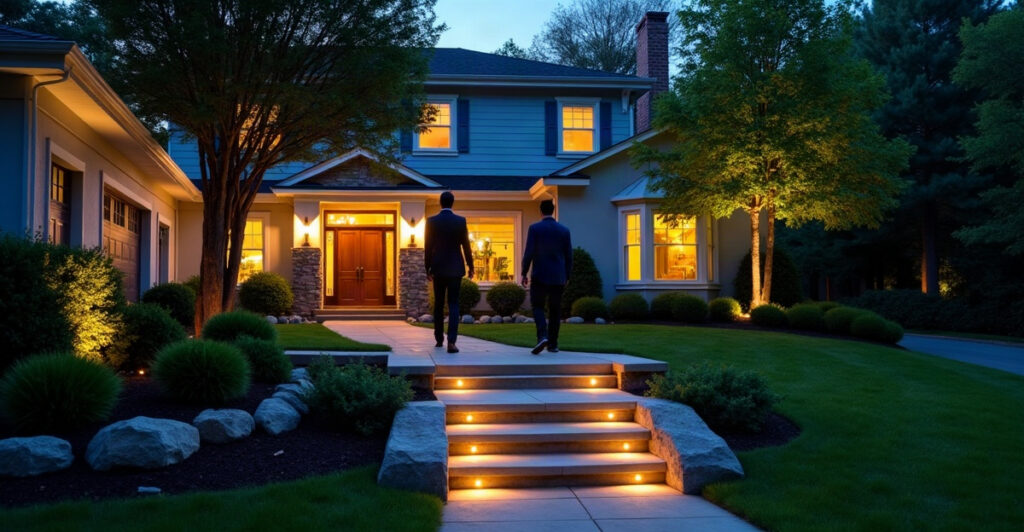
Types of Landscape Lighting and Where to Use Them?
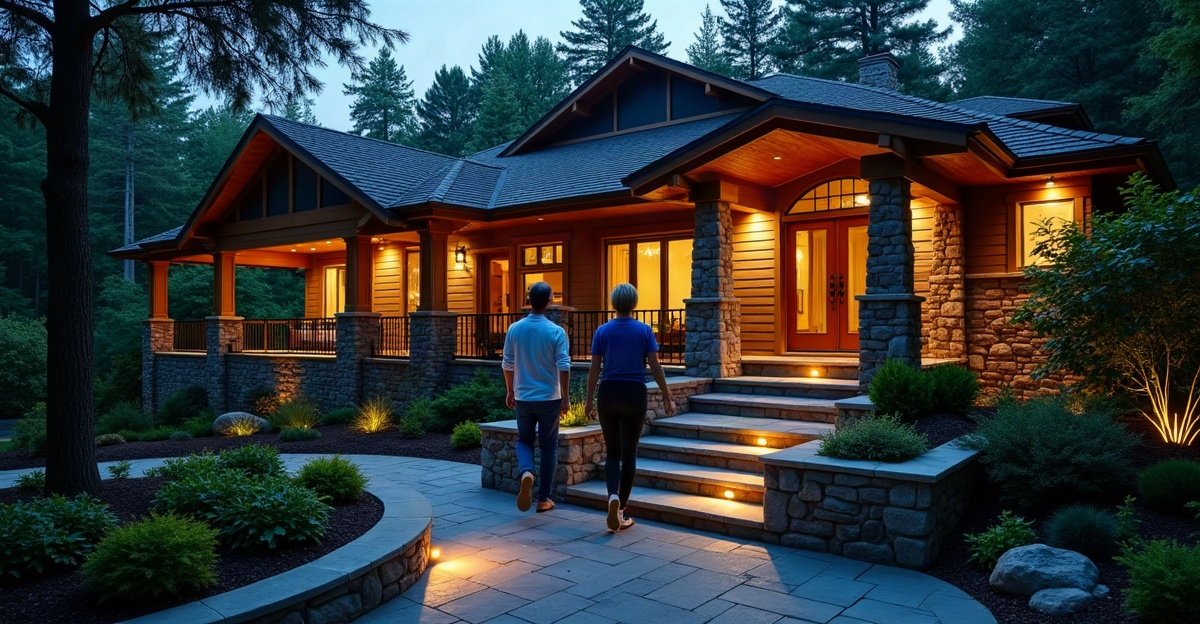
The best landscape lighting options depend on how each outdoor area serves us after dark, from guiding movement along paths and steps to showcasing trees, architecture, decks, and entrances. A layered plan blends focused task lighting, purposeful accent lighting, and permanent smart exterior lighting. This approach improves visibility, curb appeal, and year-round versatility while limiting glare.
Key Takeaways
- Path, step, deck, and wall lights deliver low, downward-facing illumination for walkways, changes in elevation, outdoor living spaces, and entrances.
- Uplights highlight trees, stonework, columns, and architectural features, while downlights provide soft overhead coverage for patios, paths, and planting beds.
- Floodlights suit larger spaces, including driveways, parking areas, backyards, and commercial exteriors, when we aim and shield them correctly.
- Permanent smart exterior lighting installed along rooflines and eaves provides everyday architectural illumination plus programmable displays for seasons, holidays, and special events.
- Weather-rated fixtures, properly planned transformers and wiring, smart placement, and professional installation help ensure dependable performance for years.
Choose Landscape Lighting by the Area We Need to Illuminate
We start every landscape lighting design by identifying how the property needs to function after dark. Safe, comfortable movement, curb appeal, architectural emphasis, entertaining areas, navigation routes, and seasonal displays each call for a different lighting approach.
Landscape lighting fixtures installed in gardens, planting beds, walkways, and hardscapes serve a different purpose than permanent exterior lighting mounted along rooflines, eaves, and building features. Both can work together, but each system should illuminate the areas it handles best.
Effective outdoor lighting uses layers. We combine functional illumination for paths, stairs, entries, and driveways with accent lighting for trees, plants, stonework, and architecture. This creates balanced visibility and focal points without relying on a single overly bright fixture.
Thoughtful exterior lighting improves visibility around paths, steps, entries, and parking areas. It also helps define the property’s layout after sunset. For planning inspiration, explore these outdoor landscape lighting ideas and consider how each area is used at night.
Path, Step, Deck, and Wall Lights for Safer Everyday Movement
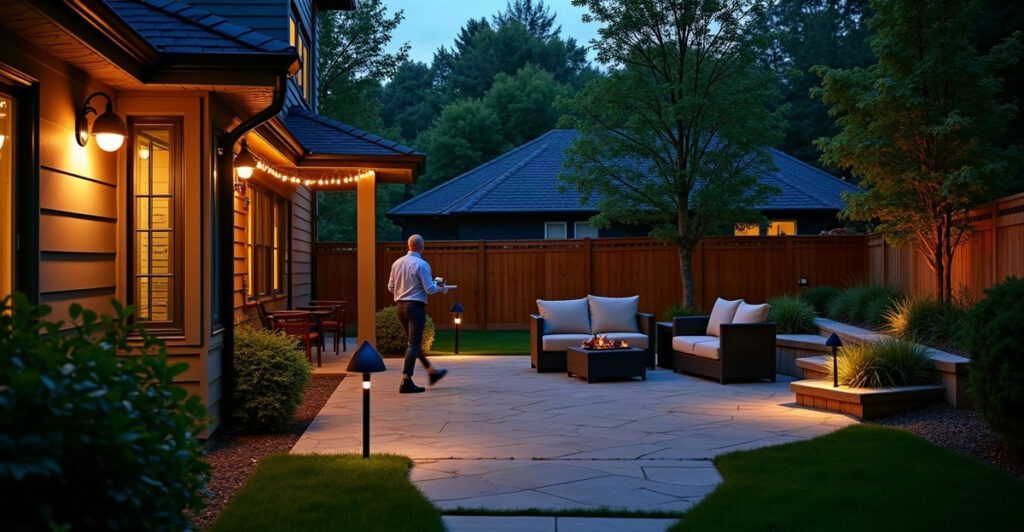
Path lights provide low-level walkway lighting along front approaches, garden paths, sidewalks, and driveway edges. Their job is to define the route and illuminate the walking surface without sending glare into people’s eyes. Proper spacing matters. Fixtures placed too far apart create dark gaps, while crowded fixtures can make a path look cluttered.
Step lights make changes in elevation easier to see. We install them in stair risers, retaining walls, sidewalls, and nearby hardscape features. A downward-directed beam gives each tread definition while keeping the light source comfortable to view.
Deck lighting extends the usable hours of patios and outdoor living spaces. Post lights, railing lights, perimeter lights, and deck stair lights create useful guidance without overpowering the atmosphere. Low, even illumination works especially well around seating and dining areas.
Wall lights are practical near entrances, gates, garage doors, patios, and commercial access points. Wall-mounted fixtures can provide dependable entry lighting where ground-mounted landscape lighting fixtures would interfere with landscaping, pavement, or access.
We avoid aiming lights directly at faces, windows, or neighboring properties. Excessively bright driveway lighting and harsh wall lights can reduce comfort instead of improving it. A controlled, downward beam gives the property a polished appearance and makes movement easier after dark. For more entry-focused options, review these front-of-house lighting ideas.
Uplights, Downlights, and Floodlights for Trees, Architecture, and Larger Areas
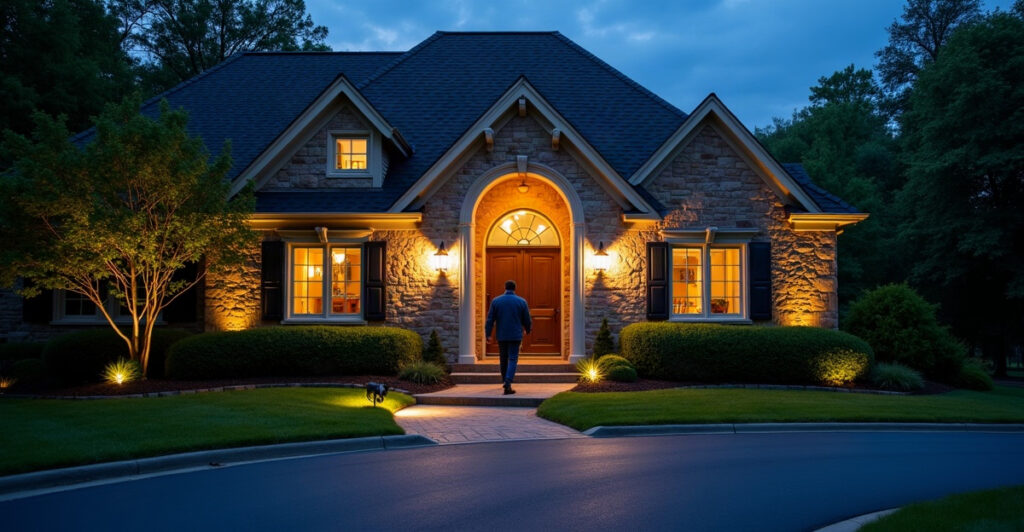
Uplighting creates height, texture, shadow, and visual emphasis. We position uplights at the base of mature trees, columns, garden structures, stonework, walls, and selected architectural details. A narrow beam suits a tall tree trunk or column, while a wider beam can wash a stone wall or broad canopy.
Downlighting creates a natural-looking effect from above. Fixtures mounted in mature trees, pergolas, eaves, or elevated structures can cast soft illumination across paths, patios, planting beds, and seating areas. This approach often feels less intrusive than placing many fixtures along the ground.
Floodlights provide broad, controlled coverage for larger spaces. Outdoor flood lighting may suit wide driveways, parking areas, commercial exteriors, rear yards, expansive walls, and large landscape features. Output, aiming, shielding, and mounting height determine whether floodlights provide useful coverage or create unwanted glare and light spill.
Color temperature also shapes the final result. Warm light often complements residences, wood, stone, and planting areas. Cooler light can fit certain modern designs or commercial applications. We select the color and beam angle for the feature, rather than treating brighter lighting as the default answer.
Professional landscape accent lighting gives trees, walls, and architectural features a clear purpose within the larger design. For properties that need clear visibility around access points and larger exterior areas, our security lighting installation service can help plan controlled, practical coverage.
Permanent Smart Exterior Lighting for Year-Round Curb Appeal and Seasonal Displays
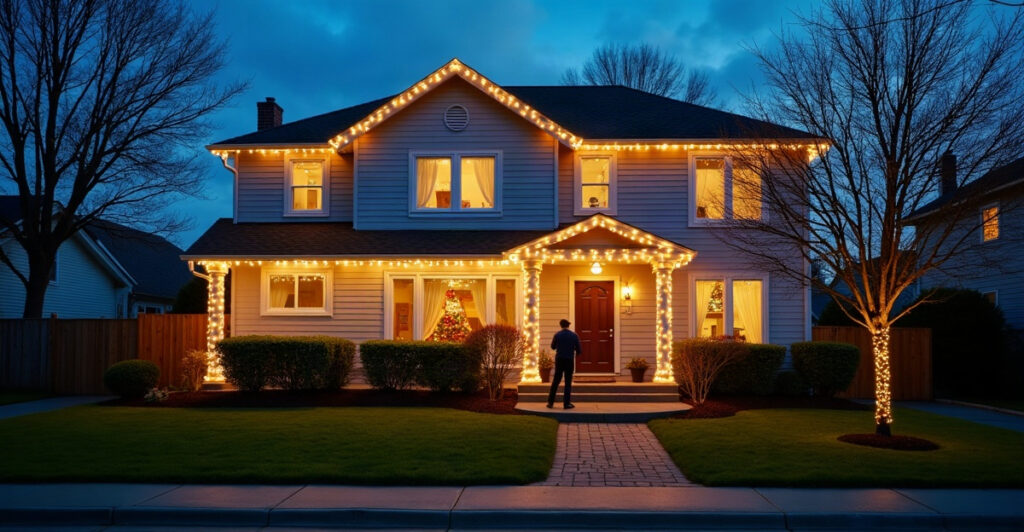
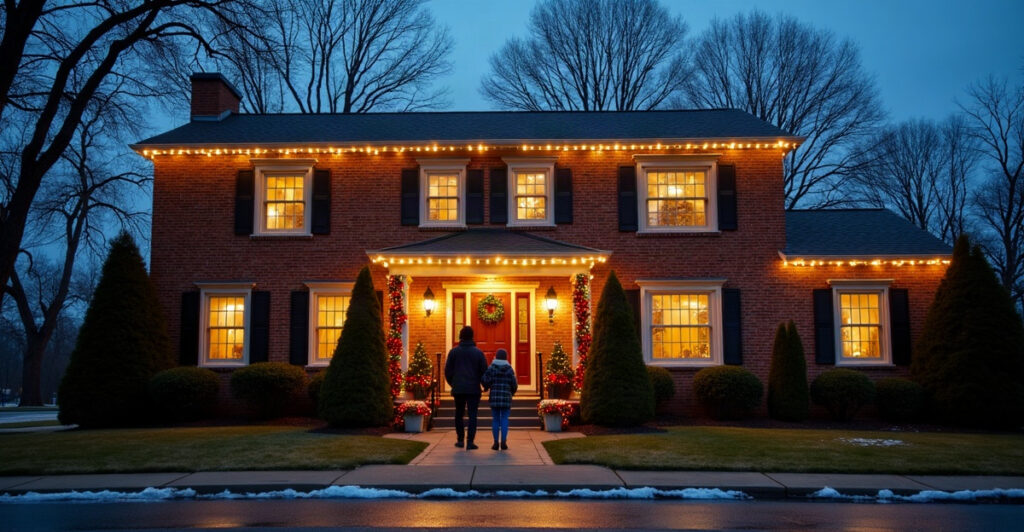
Permanent exterior lighting mounts along rooflines, eaves, and building features rather than in gardens, planting beds, or hardscapes. Roofline lighting and eave lighting can outline the home or business, reinforce its architectural lines, and create a consistent evening appearance.
Permanent smart lighting is not limited to holiday use. We can use subtle white architectural exterior lighting for everyday curb appeal, then program colors for holidays, celebrations, events, or business promotions. This makes permanent exterior lighting a practical alternative to repeatedly installing and removing temporary seasonal products.
Smart outdoor lighting controls support scheduling, lighting zones, brightness changes, color selection, and convenient control of separate exterior areas. Homeowners, property managers, and business owners can adjust the system for normal evenings, special occasions, or seasonal displays without changing the physical installation.
A combined system often produces the strongest result. Smart landscape lighting can illuminate paths, decks, trees, and garden beds, while permanent architectural lighting highlights the building itself. We recommend reviewing these smart lighting design ideas and the benefits of smart lighting before choosing controls and zones.
Plan for Durability, Professional Installation, and Long-Term Performance
Reliable low-voltage landscape lighting begins with a complete site assessment. We consider electrical capacity, transformer sizing, wiring routes, drainage, weather exposure, local code requirements, and the property layout before installation starts.
Weather-rated lighting and durable fixture materials are essential for long-term outdoor use. Sun exposure, snow, rain, wind, soil conditions, and landscape growth can all affect fixture placement and performance. Western U.S. properties may also need planning for HOA requirements and local lighting ordinances.
LED landscape lighting offers dependable illumination with low operating demand, but the system still needs sound design. We evaluate control-system reliability, maintenance access, fixture placement, warranty terms, and the ability to service wiring or components without disrupting the landscape.
Temporary DIY products and professionally installed systems serve different needs. Simple products may work for a short-term project, while permanent systems, multi-zone controls, extensive properties, and commercial exteriors often benefit from professional landscape lighting installation. Our comparison of DIY versus professional lighting explains the practical differences.
Investment varies with property size, fixture count, access conditions, installation complexity, control features, desired lighting zones, and maintenance expectations. A clear plan helps avoid unnecessary fixtures, uneven coverage, and future rework. We provide residential lighting installation for systems built around long-term performance and a clean finished appearance.
Match the Lighting System to Your Property’s Needs
A simple residential landscape lighting plan may need path lights, step lights, and a few uplights. That combination can provide practical navigation and visual interest without filling every area with fixtures.
Entertaining-focused properties benefit from layered deck lighting, patio lighting, downlighting, and tree or garden accents. These outdoor lighting zones help patios, decks, and seating areas remain comfortable and usable after dark.
For curb appeal and architectural emphasis, we pair uplighting and wall lighting with permanent exterior lighting in complementary zones. This approach gives the landscaping and building their own visual role without creating unnecessary brightness or clutter.
Commercial landscape lighting should prioritize clear visibility at entrances, walkways, parking areas, signage, and building facades. Careful aiming and output selection control glare and light spill while maintaining a professional exterior appearance.
Every custom landscape lighting design should reflect the property’s goals, architecture, landscape features, maintenance preferences, and desired level of control. A focused landscape lighting consultation helps us identify the right fixture types, locations, and control options for balanced visibility, intentional focal points, and dependable operation.