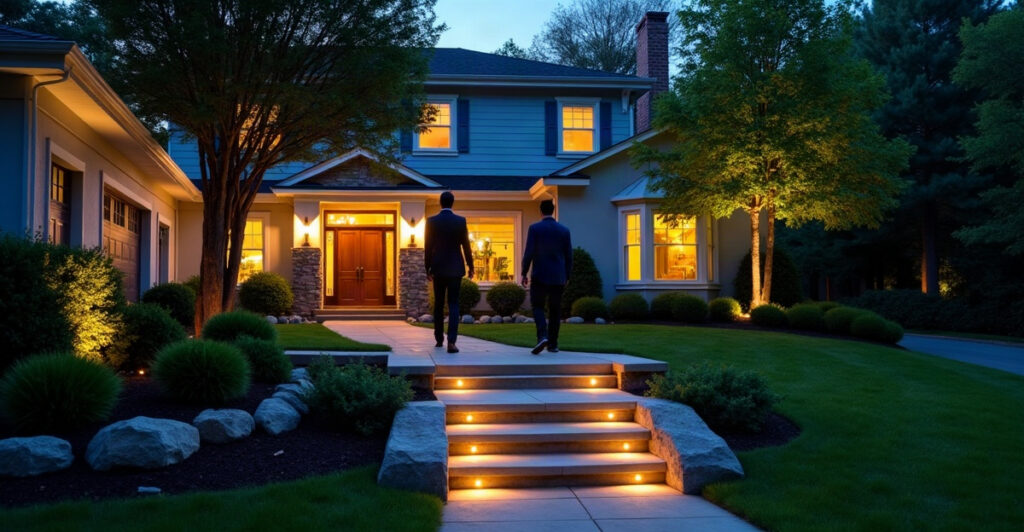
Best Outdoor Lighting Ideas for Front of House Design
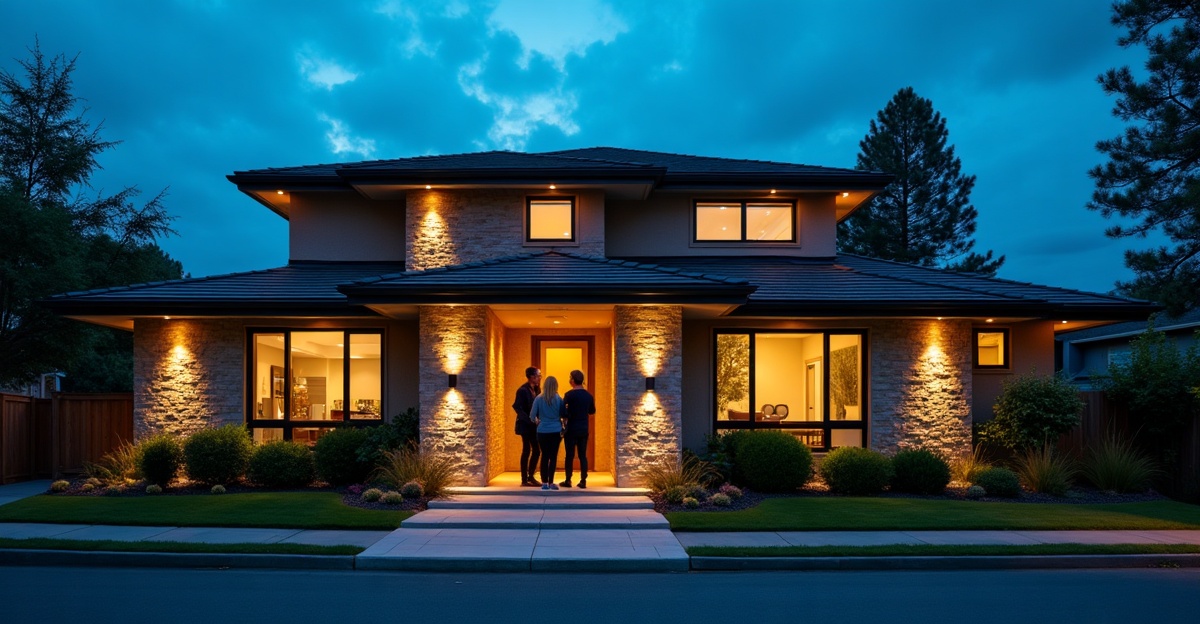
The best outdoor lighting ideas for front of house design focus on safety, visibility, curb appeal, and long-term durability instead of short-lived decorative impact. We evaluate outdoor lighting ideas for front of house projects by comparing architectural techniques, solar solutions, and permanently installed systems based on climate exposure, maintenance needs, and overall performance.
Key Takeaways
- Proper front-of-house lighting improves wayfinding, security, and architectural definition while staying subtle during the day.
- Architectural techniques such as uplighting, pathway lighting, soffit lighting, and linear roofline integration create balanced, intentional results when we install them with climate-appropriate materials.
- Solar lighting works best for light-duty accents in areas with strong sun exposure, but it rarely delivers the consistency required for primary or security lighting.
- Professionally installed permanent systems deliver reliable year-round performance, smart controls, sectional design, and lower safety risks compared to seasonal installations.
- Long-term value depends on durability, maintenance demands, climate conditions, and installation quality—not just initial cost.
What Proper Front-of-House Lighting Should Achieve
Effective outdoor lighting ideas for front of house design focus on performance first and appearance second. Strong design improves curb appeal, increases safety, clarifies wayfinding, and supports long-term property value.
Architectural lighting serves a different purpose than seasonal holiday décor. Temporary string lights create short-term atmosphere. Year-round systems highlight structure, guide movement, and strengthen security every night of the year. They remain discreet during the day and dependable after dark.
Practical outcomes matter. Most homeowners and property managers want:
- Reduced seasonal installation and removal
- Clear, even nighttime visibility
- A greater sense of security
- Lighting that stays subtle during the day
In the Western United States, durability plays a larger role than many people expect. Rooflines endure intense UV exposure. Desert regions face extreme heat and dust. Coastal areas deal with salt air and corrosion. Foothill and mountain communities see large temperature swings. Materials and installation methods must account for these factors.
Modern outdoor lighting ideas for front of house projects also reflect changing priorities. Property owners between 30 and 65 increasingly prefer convenience, reliability, and professional results over short-term savings. They want systems that perform consistently and look intentional, not improvised.
This guide covers practical comparisons, including modern outdoor lighting ideas for front of house, outdoor solar lighting ideas for front of house, and professionally installed permanent systems. Each approach has advantages. The right choice depends on goals, exposure conditions, roof configuration, and desired control.
Modern Architectural Lighting Ideas That Elevate Curb Appeal
Thoughtful placement and fixture selection transform a home’s exterior without overwhelming it. Architectural lighting should emphasize lines, texture, and depth while maintaining visual balance.
Core Architectural Techniques and Placement Guidance
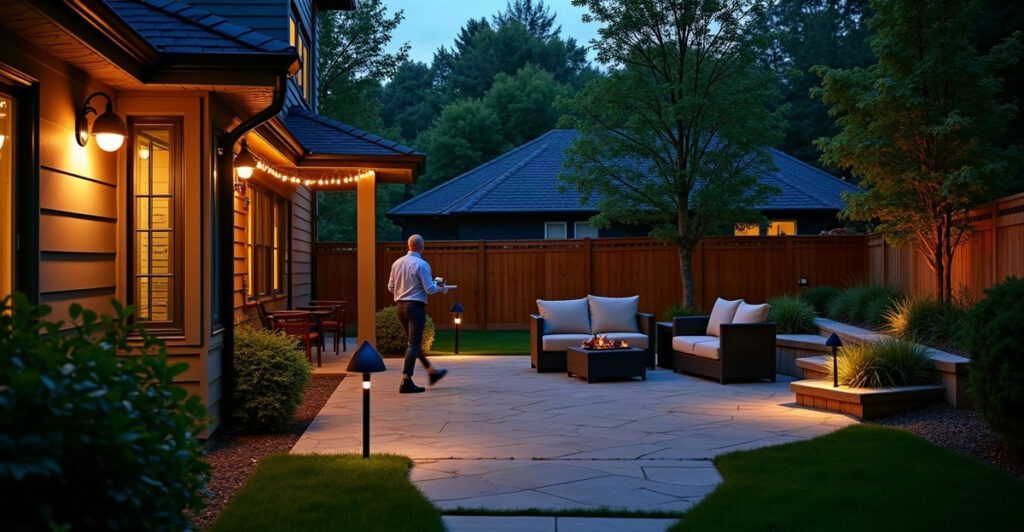
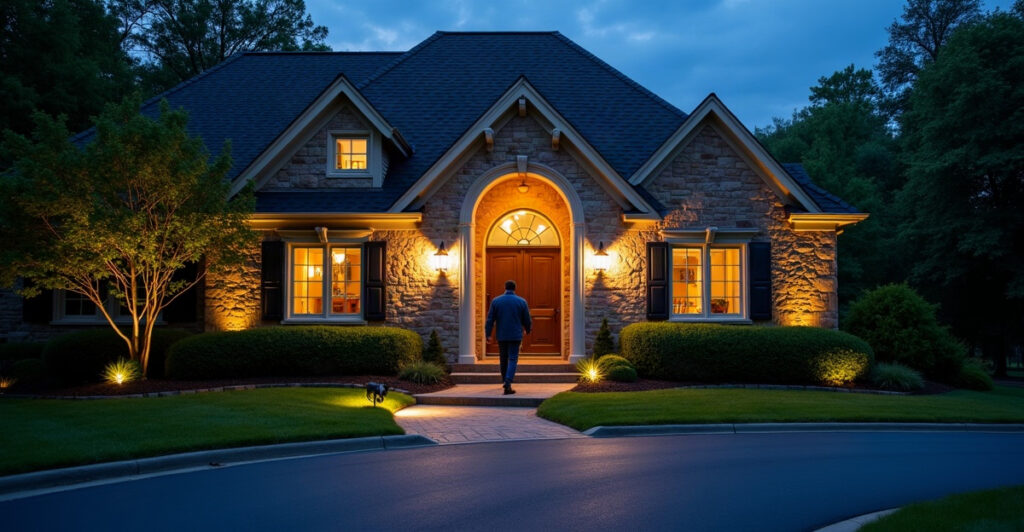
Uplighting for facades and columns highlights stonework, brick texture, entryways, and mature trees. We typically position fixtures at the base of the surface and aim them between 15 and 45 degrees. This reduces glare and produces a clean vertical wash of light. Weather-resistant housings and proper drainage prevent moisture damage. Concealed wiring keeps the installation clean and safe.
Pathway and driveway lighting adds function and structure. Even spacing prevents harsh brightness gaps or distracting over-lighting. Fixtures should direct light downward, not outward. In desert climates, we select materials that tolerate heat and dust. In coastal zones, corrosion-resistant finishes are essential for long-term performance.
Downlighting and soffit lighting provide a controlled, architectural effect. Fixtures installed under eaves cast a soft wash down walls and near entryways. This approach reduces glare and keeps equipment protected from direct weather exposure. Integrated installations often require less maintenance than exposed stake lights.
Modern linear lighting systems work especially well on contemporary homes with clean geometry. Installed along rooflines or architectural breaks, they create defined edges without visible bulk. Fade resistance and consistent color output matter in regions with intense sunlight. Proper integration ensures minimal daytime visibility, which many homeowners prioritize.
Regional conditions guide every decision. UV exposure can discolor low-quality plastics. Coastal air corrodes weak metals. Desert heat stresses wiring and connections. Sustainable results require professional selection and placement, particularly for large estates or multi-building properties.
Homeowners considering structured architectural lighting can review examples of professionally executed landscape accent lighting to see how controlled illumination shapes curb appeal without appearing harsh or overly bright.
Solar Lighting: When It Works and Where It Falls Short
Outdoor solar lighting ideas for front of house projects typically include pathway stakes, small spot accents, and decorative garden lights. Solar works best for light-duty applications where wiring access is limited.
Advantages include:
- No electrical wiring required
- Lower initial cost
- Straightforward DIY installation
These benefits make solar attractive for short walkways or secondary landscape areas. However, performance depends heavily on sun exposure and panel placement.
Brightness consistency often varies. Shaded areas, north-facing facades, and coastal fog can significantly reduce charging time. If panels do not receive sufficient direct sunlight, output drops or lights shut off early.
Battery degradation presents another factor. Rechargeable cells lose capacity over time and require replacement. Extreme desert heat accelerates this process. Heavy rain and temperature swings also affect quality in lower-tier products.
Before selecting solar, we recommend evaluating:
- Average daily direct sun hours
- Panel orientation and shade patterns
- Realistic expectations for brightness and runtime
- Anticipated battery replacement intervals
Solar systems can be effective for light accent roles. They are rarely the best solution for primary entry illumination, long driveways, or security-focused lighting. Wired or integrated systems provide greater consistency where performance matters most.
Balanced evaluation prevents disappointment. Solar has a place, but it works best under specific environmental conditions and moderate lighting expectations.
Permanent Professionally Installed Lighting Systems
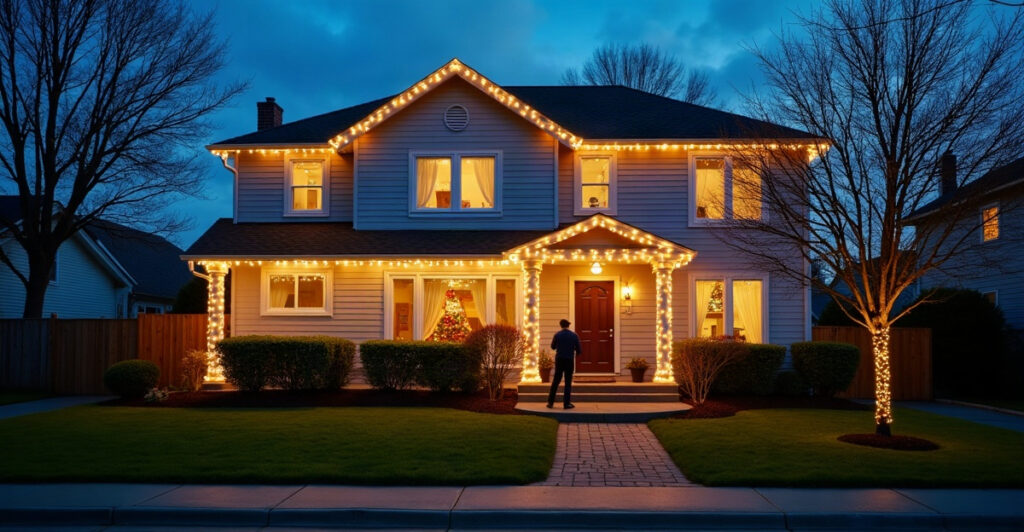
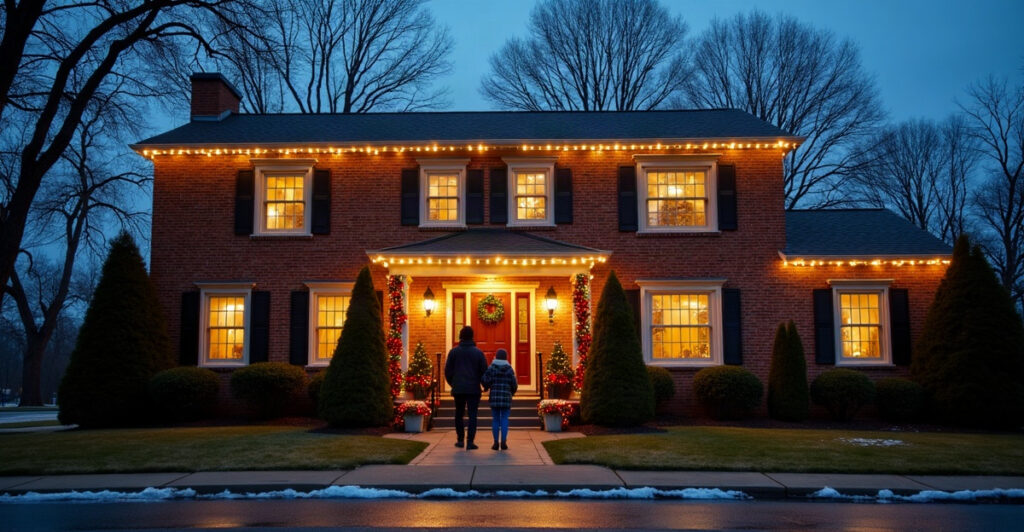
Roofline-integrated permanent systems deliver architectural lighting year-round with the flexibility to change colors for holidays, events, or team celebrations. When installed with precision, fixtures align tightly along soffits and fascia so they remain minimally visible during the day.
Professional-grade components support long-term reliability. Commercial-quality wiring, sealed connections, fade-resistant lenses, and sectional circuit design maintain consistent output. If one segment encounters a problem, adjacent sections continue operating. This limits disruption and simplifies service.
Integrated solutions also connect to smart controls. Through app-based management, we can schedule on and off times, adjust brightness, and select color scenes. Automation reduces manual effort and keeps lighting consistent throughout the year. For homeowners interested in integrated control systems, smart lighting automation capabilities allow temperature, timing, and scene programming without physical adjustments.
Safety improves with professional installation. Ladder-related injuries increase during seasonal light hanging. Permanent systems eliminate repeated roof access. Licensed installation also reduces electrical hazards and ensures alignment with building standards.
For homeowners prioritizing durability and a refined appearance, permanent outdoor lighting provides structural integration instead of temporary attachment. The result is long-term performance without seasonal storage, tangled cords, or visible clips.
Craftsmanship matters. Accurate spacing, secure mounting, concealed wiring paths, and careful color matching preserve architectural integrity. A well-installed system should look intentional, not improvised.
Comparing DIY, Solar, and Permanent Systems: Cost, Maintenance, and Long-Term Value
Clear comparison helps homeowners and property managers evaluate trade-offs confidently.
Upfront investment differs significantly. DIY plug-in systems and solar lights cost less initially. Permanent installed systems require greater initial investment due to materials and professional labor.
Long-term value shifts that perspective. Seasonal lights demand yearly installation, removal, and storage. Clips break. Bulbs fail. Cords degrade. Solar batteries require periodic replacement. These ongoing efforts consume time and money.
Maintenance frequency also varies. DIY and solar setups often require regular adjustment or component replacement. Professionally installed systems typically require minimal upkeep beyond occasional inspection.
Brightness consistency separates categories further. Solar depends on sun exposure. Seasonal plug-in lights often produce uneven color or fading over time. Integrated LED systems deliver stable output engineered for extended use.
Durability matters in Western climates. Desert heat stresses plastics and wiring. Coastal salt air corrodes low-grade metals. High UV intensity fades inferior materials quickly. Permanent architectural systems selected for these conditions provide greater resilience.
Lifecycle thinking offers clarity. Lower startup cost does not always equal lower lifetime expense. Reduced labor, improved durability, minimized replacement, and enhanced property value change the equation over several years.
Safety and liability also influence decisions. Frequent ladder use increases personal risk. Poorly managed electrical connections introduce hazards. Professionally installed systems reduce those exposures.
The goal is informed evaluation. We encourage careful consideration of time, climate, architecture, and long-term plans before selecting a system.
Common Questions Homeowners Ask Before Installing Front-of-House Lighting
How long do systems last?
Solar batteries often require replacement every few years. Seasonal plug-in lights commonly degrade within several seasons depending on quality and exposure. Permanent LED systems, when professionally installed, are built for extended multi-year performance with stable output.
Are permanent systems visible during the day?
Properly integrated systems mount along rooflines or soffits with color-matched tracks. From typical viewing distances, they remain low-profile and unobtrusive.
Can lights change colors and brightness?
Modern RGB systems allow full color adjustment, dimming, scheduling, and preset scenes through mobile apps. We can create understated white architectural lighting for everyday use and switch to vibrant themes for events within seconds.
What happens if a section fails?
Quality permanent systems use modular segments. If a section experiences an issue, adjacent sections continue operating. This simplifies diagnostics and service without disabling the entire installation.
Are they weather-resistant?
Professional-grade systems use sealed components rated for heat, rain, and high UV exposure common throughout the Western United States. Material selection plays a major role in long-term performance, particularly in coastal and desert environments.
A structured design assessment clarifies the best path forward. Evaluating rooflines, sun exposure, architectural style, and long-term goals helps create a system that performs consistently and complements the property. Homeowners and property managers ready to explore options can request a consultation through the contact page to review site conditions and build a plan grounded in durability and professional installation.