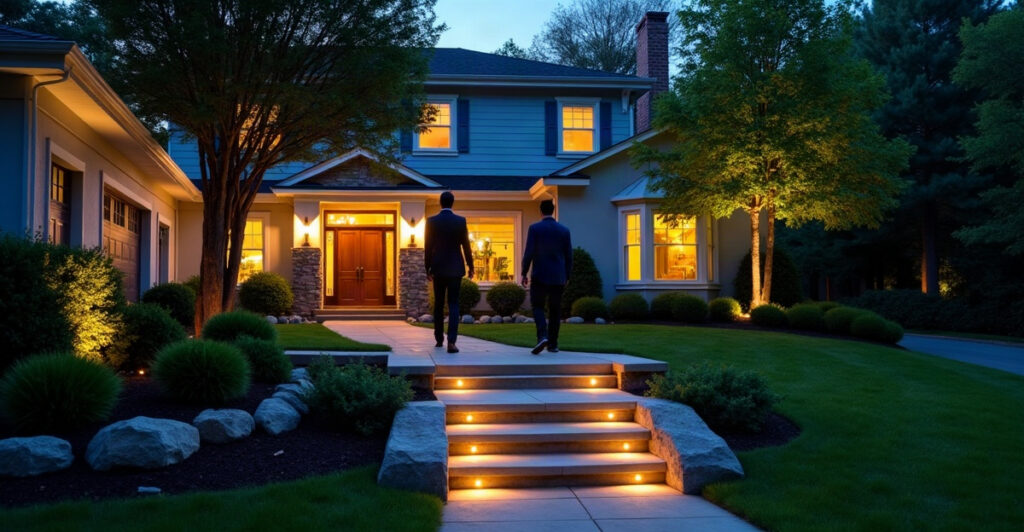
Where to Place Landscape Lighting for the Best Results?
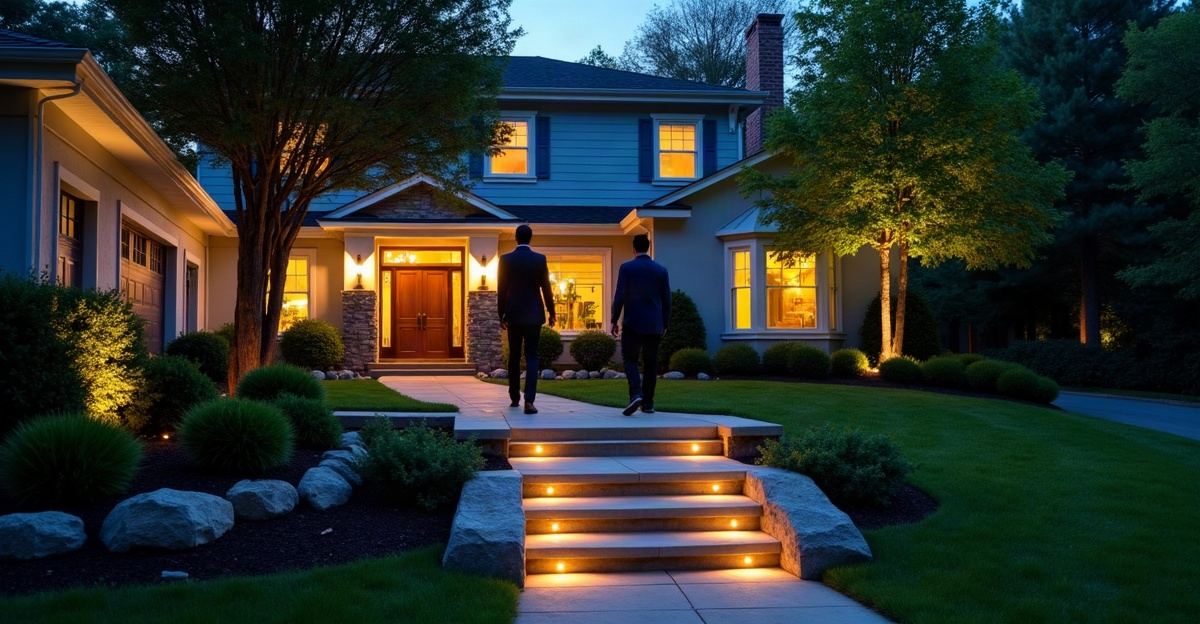
Effective landscape lighting begins at entries, walkways, steps, driveway transitions, and outdoor living areas used after dark. We then add focused accent and downlighting to feature important architectural details, established trees, and patios. This approach prevents glare, severe shadows, and unwanted light spill.
Key Takeaways
- We prioritize lighting for main routes, entrances, stairs, elevation changes, gates, parking areas, and address numbers before adding decorative lighting.
- We use staggered path lights and low-profile step or deck lights to support safe, clear movement without creating a runway effect.
- We direct fixtures away from windows, seating areas, drivers, streets, and neighboring properties to limit glare and light spill.
- We feature a limited number of focal points, including stonework, columns, gables, established trees, and planting beds, to add depth and preserve contrast.
- We use permanent roofline lighting to complement the architecture, rather than replace essential path, step, entry, and task lighting.
Light the Places People Use First
Landscape lighting should go first where we enter, walk, park, gather, or need to identify hazards. We then layer light around a limited number of architectural and landscape focal points. This approach answers where to place landscape lighting without turning the property into a uniformly bright space.
Every fixture should perform a clear job. It may guide movement, reveal a step, identify an address, support outdoor use, highlight architecture, or add atmosphere. A successful system combines these jobs in layers rather than relying on one intense fixture or broad wash of light.
We recommend starting with the routes used most often: curb to entry, driveway to door, gate to yard, patio to house, and paths between outdoor zones. Walkways, garden paths, steps, deck transitions, retaining walls, grade changes, and uneven surfaces all deserve close attention. Front doors, side doors, rear entries, gates, mailbox areas, and house numbers should also remain visible after dark.
More light does not automatically improve visibility or security. Excessive brightness can create glare, deep shadows, and unwanted spill onto streets or nearby homes. Controlled light at the right height and angle produces clearer sightlines and a more comfortable exterior. A thoughtful outdoor lighting plan gives every zone a purpose before installation begins.
Place Safety and Wayfinding Lighting Along Paths, Steps, Driveways, and Entries
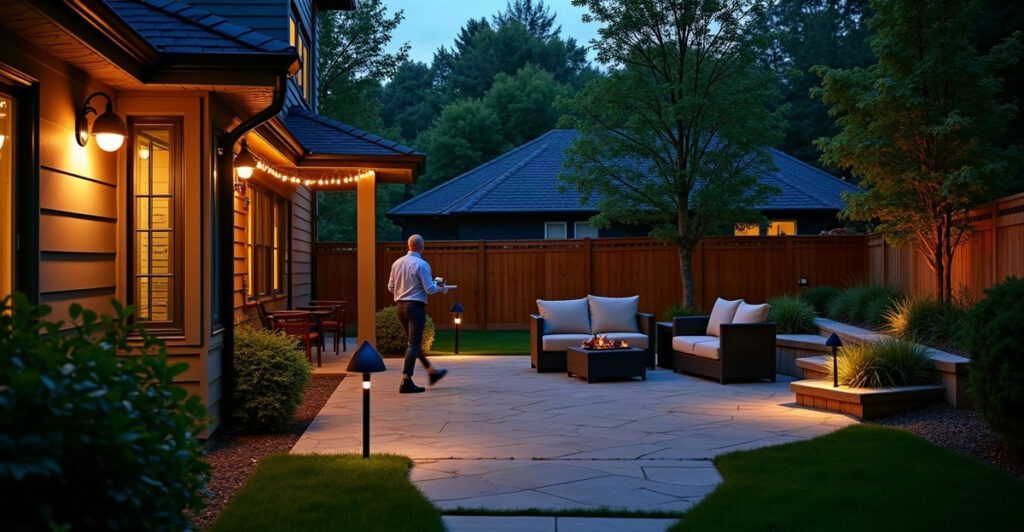
Path lights belong along walkways, garden paths, and transitions between outdoor areas. We stagger fixtures instead of placing them in perfect, evenly spaced rows. Symmetrical rows can create an airport-runway appearance and often add more visible hardware than needed.
The goal is even pools of light that reveal the walking surface. Fixtures should avoid exposing the lamp directly to eye level. Correct shielding, beam spread, and aiming reduce glare while keeping the route clear.
Step and deck lights work best on risers, sidewalls, railings, retaining walls, and deck transitions. These locations define elevation changes that can otherwise disappear at night. Low-level lighting is usually more useful here than a strong fixture aimed across the entire area.
Driveways need targeted lighting at entrances, turns, gates, garage approaches, and transitions into parking areas. We avoid aiming fixtures at drivers, sidewalks, streets, and neighboring homes. For front approaches, combine driveway lighting with front-of-house lighting ideas that make the entry easy to find without overpowering the façade.
Entry lighting should make front doors, side doors, gates, address numbers, and mailbox areas easy to locate. For security-sensitive locations, add controlled visibility around side yards, detached garages, rear entries, service areas, gates, and darker boundaries. Lighting may discourage some unwanted activity, but it cannot guarantee security. Broad floodlighting should not be the default answer. It often creates harsh glare, hides areas behind deep shadows, and sends unnecessary light beyond the property. Our guide to home security lighting placement covers these locations in greater detail.
Create Depth With Selective House and Landscape Accent Lighting
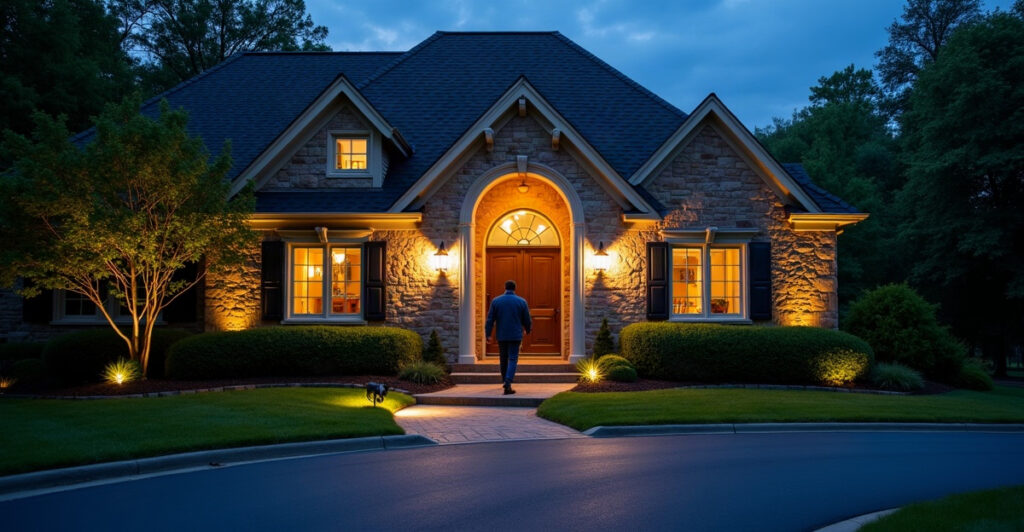
Where to place landscape lighting on house exteriors depends on which details deserve attention. We commonly place uplights at the base of mature trees, stonework, columns, walls, gables, and selected façade features. Front entries, garage surrounds, brickwork, and stone accents often provide strong focal points.
Restraint produces better results than lighting every tree, shrub, wall, and detail. A few deliberate focal points create depth and draw attention through the property. Lighting every surface can flatten the façade, remove contrast, and make the exterior feel visually crowded. Professional landscape accent lighting uses contrast to create a composed, polished result.
Downlighting offers another useful layer. We can mount fixtures in trees, eaves, pergolas, or architectural structures and direct them over paths, patios, and seating areas. This produces a natural ambient effect while keeping fixtures less visible. Tree-mounted fixtures require suitable mounting methods, safe aiming, maintenance access, and respect for tree health. Eave and pergola fixtures also need careful placement so they illuminate surfaces rather than windows or guests’ faces.
For additional fixture guidance, review these types of landscape lighting and their best applications. The fixture type should match the lighting task, not simply fill an empty area.
Make Patios, Outdoor Kitchens, and Gathering Areas Usable After Dark
Patios, outdoor kitchens, dining areas, seating zones, pergolas, fire features, and yard transitions need a mix of task and ambient light. We first provide usable illumination where food is prepared, served, and carried. Softer lighting can then define the seating area and create a relaxed setting.
Downlighting from pergolas, eaves, or nearby structures often gives the cleanest result. It provides useful illumination without filling the space with prominent fixtures. We avoid aiming lights into seating areas, directly at guests’ eye level, or into windows.
It helps to separate outdoor lighting into three roles:
- Functional landscape lighting supports paths, entries, stairs, and outdoor use.
- Decorative accent lighting highlights architecture and planting beds.
- Permanent smart roofline lighting supports holidays, events, and everyday exterior ambiance.
Each role has value, but no single layer can replace the others.
Before selecting fixture locations, consider views from inside the home, from the street, and from neighboring properties. A balanced plan looks intentional from every common viewpoint. Explore our outdoor landscape lighting ideas for practical ways to connect these layers.
Use Permanent Roofline Lighting as a Complement, Not a Replacement
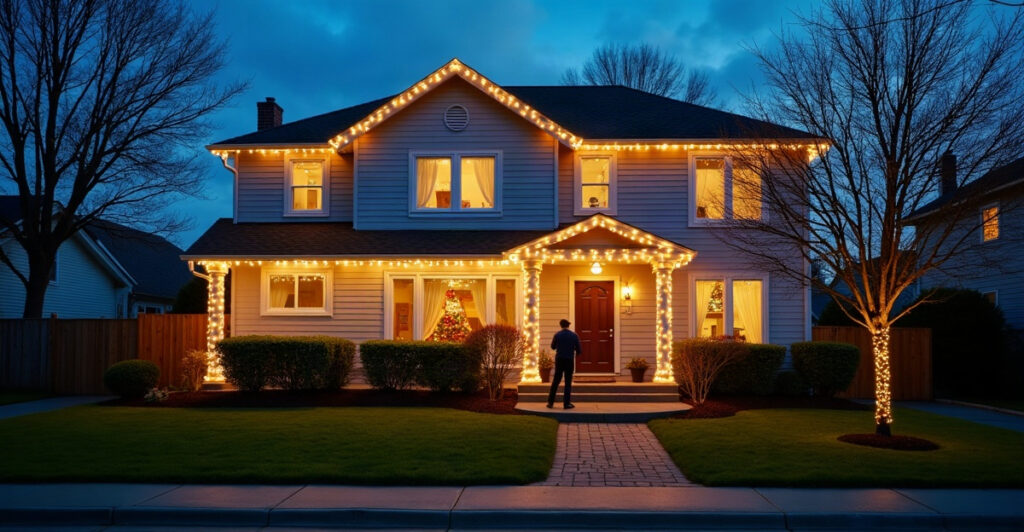
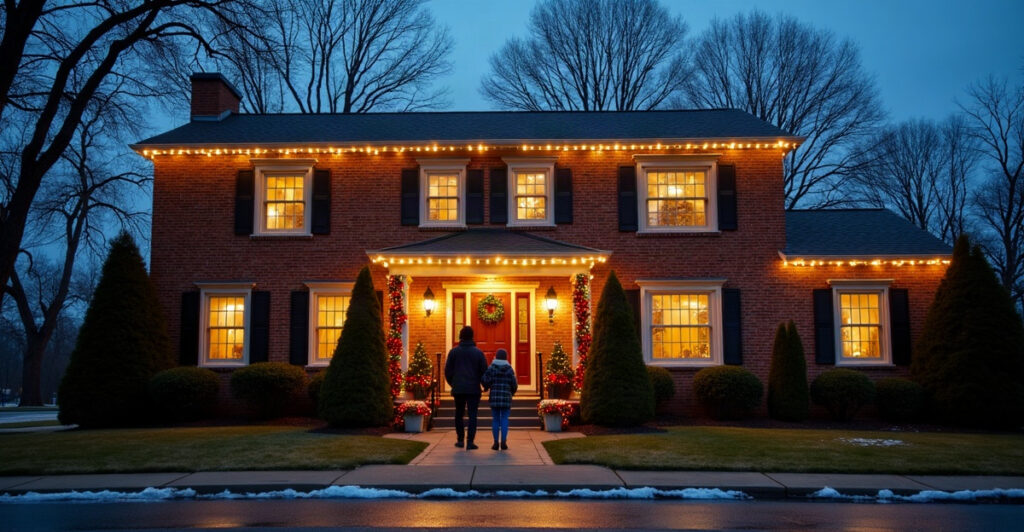
Permanent roofline lighting is generally installed beneath eaves, along rooflines, around gables, within architectural trim, or at selected façade edges. Smart controls allow us to set scenes for holidays, special events, game days, and everyday curb appeal without seasonal hanging and removal.
This lighting adds an appealing architectural layer, but it does not replace ground-level landscape lighting. Roofline fixtures alone cannot properly illuminate walking surfaces, stairs, house numbers, driveway turns, gates, or entry points. We use them alongside path, step, entry, and accent lighting for a complete result.
Year-round smart control also gives homeowners and property managers a practical way to maintain consistent operation and adjust scenes as needs change. For a clean, contemporary approach, our modern landscape lighting ideas show how architectural and ground-level lighting can work together.
Plan Spacing, Aiming, Concealment, and Professional Installation for a Durable Result
We begin by walking the property at night and identifying dark, hazardous, or confusing areas. Next, we mark primary routes from curb to entry, driveway to door, gate to yard, and patio to house. Steps, grade changes, uneven surfaces, and entrances come before decorative effects. Once these priorities are covered, we select two to five focal points for architecture and landscaping.
Fixture spacing never follows one universal rule. Output, beam spread, mounting height, path width, surrounding plants, ambient light, and the intended effect all affect placement. Path-light spacing should be treated as a starting point that needs on-site adjustment, not a fixed measurement. We test positioning and aiming before finalizing locations whenever possible.
Keep the light source outside direct sightlines. Aim fixtures away from windows, seating areas, sidewalks, streets, drivers, and adjacent properties. Conceal equipment behind planting, hardscape, or architectural features where practical, while ensuring nothing blocks the intended light. Shields, appropriate beam angles, and lower-output fixtures often prevent glare, hard shadows, and spill more effectively than brighter equipment.
Site conditions also change. Plants mature, trees create new shadows, irrigation affects fixture locations, and snow, rain, dust, weather exposure, and seasonal décor can alter perceived brightness and maintenance access. We plan for these realities from the start. Visible wires, exposed equipment, runway-style path lights, and lighting every feature are common errors that reduce the finished appearance.
Quick Placement Answers
Landscape lights around a house should emphasize entries, primary routes, steps, selected façade details, mature trees, and outdoor living areas. Path lights should sit far enough apart to create overlapping pools of light without a continuous row of bright points; final spacing depends on the fixture and site.
For security-oriented areas, we prioritize side yards, gates, rear entries, detached garages, service zones, and darker boundaries with controlled, glare-free illumination. Uplights generally face toward a selected house or landscape feature, while path and downlights face toward walking surfaces and activity areas. The areas to light first are entries, routes, stairs, elevation changes, and parking transitions.
Permanent roofline lighting cannot replace path, step, or entry lighting. Professional installation is especially valuable for complex rooflines, large properties, commercial sites, uneven terrain, multiple outdoor zones, electrical work, smart controls, and extensive architectural lighting. We use weather-rated equipment, safe low-voltage design where applicable, protected connections, concealed wiring, code-compliant electrical installation, and systems that remain accessible for adjustment and maintenance.
A professional assessment helps identify the most effective locations for permanent architectural, landscape, path, and smart lighting. We invite property owners to request a lighting consultation and create a clear plan for a reliable, refined outdoor result.