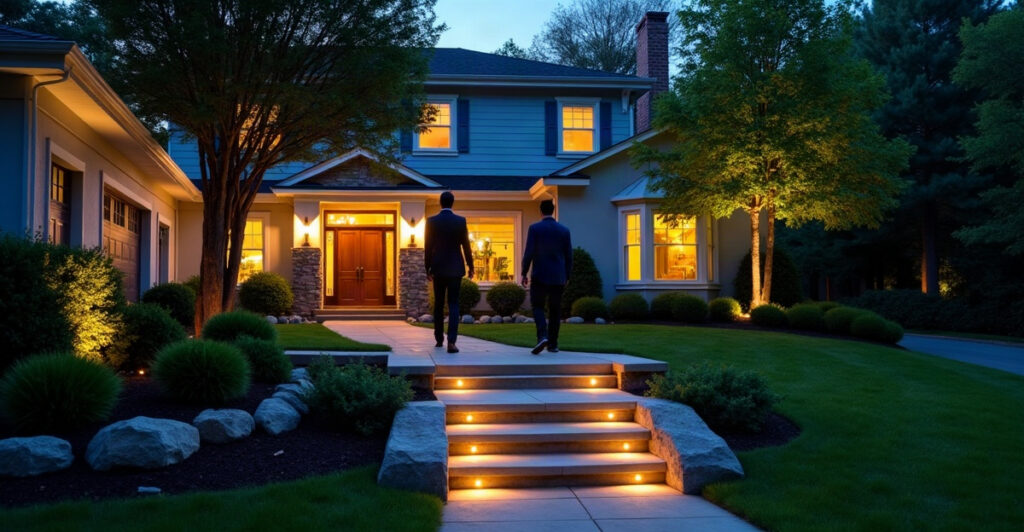
Traditional Christmas Light Colors for a Timeless Display
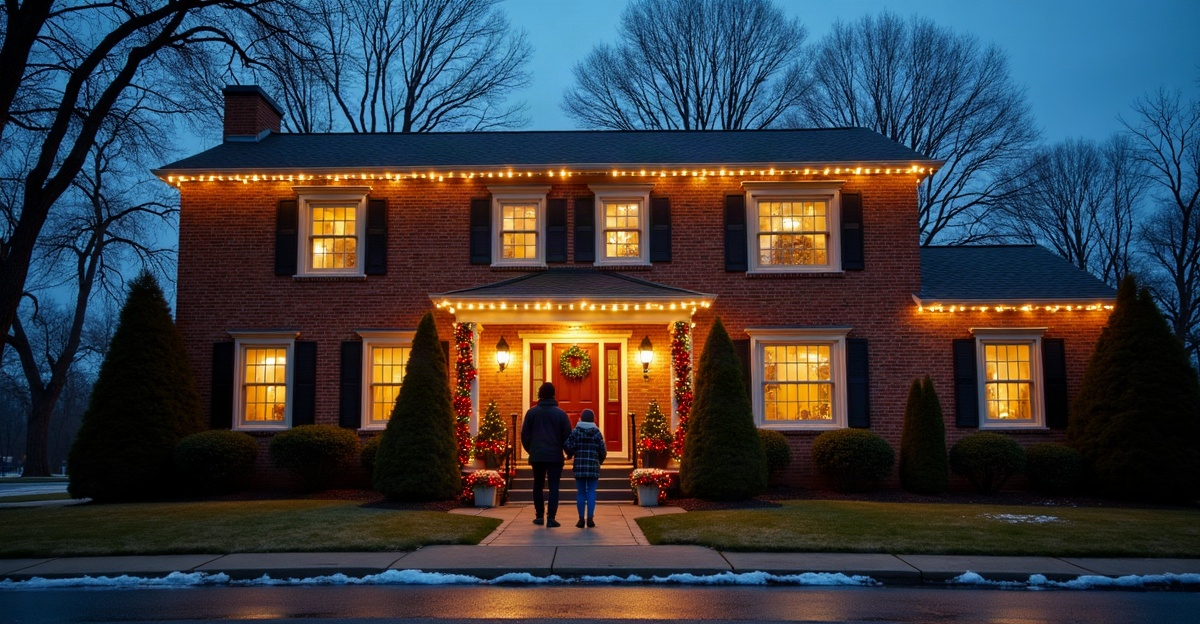
Traditional Christmas light colors—warm white, red, green, and classic multicolor—create a familiar holiday display for homes, storefronts, and commercial properties. A lasting result starts with a cohesive palette, aligns with the property’s architecture, and uses consistent spacing and light temperature across the design.
Key Takeaways
- Warm white delivers the most traditional white-light appearance, while cool white often creates a more modern, winter-inspired effect.
- Proven traditional palettes include warm white alone, balanced red and green, warm white with red-and-green accents, and coordinated classic multicolor displays.
- We recommend starting with the roofline as the primary visual framework, then repeating the selected palette across entryways, trees, landscaping, wreaths, and garlands.
- Brick and warm-toned exteriors often work best with warm white and restrained red-and-green accents, while dark or contemporary properties benefit from warm white or limited color.
- Permanent outdoor lighting makes repeatable holiday displays simpler. We can save traditional color presets without seasonal installation, removal, or storage.
What Are Traditional Christmas Light Colors?
The most common traditional Christmas light colors are warm white, red, green, and classic multicolor. These familiar shades remain popular because they create a welcoming holiday look that suits many home and business styles.
For anyone asking what traditional Christmas light colors are, there is no single required palette. A classic display can feel formal, nostalgic, playful, religious, or understated. Regional preferences, family traditions, exterior architecture, and personal taste can all influence the best choice.
We recommend starting with one of four proven schemes:
- Warm white only
- Red and green
- Warm white with red and green accents
- Classic multicolor
An optional color-palette graphic can help compare these approaches before planning a display. Color also affects the overall character of your lighting. For additional guidance, review these Christmas light color options and practical holiday color combinations.
Warm White vs. Cool White: Choosing the Most Timeless Glow
Warm white resembles the soft, golden glow of incandescent bulbs, making it the more traditional white-light choice. It feels welcoming, polished, and appropriate for nearly every holiday setting.
Cool white produces a brighter, crisper, blue-toned appearance. It can work well for icy winter scenes, modern properties, or blue-and-white displays, but it generally reads as more contemporary than traditional.
White lights are not interchangeable. Mixing warm white and cool white can make rooflines, trees, and garlands look uncoordinated because the difference in color temperature becomes especially noticeable after dark. We recommend selecting one white tone and carrying it throughout the property.
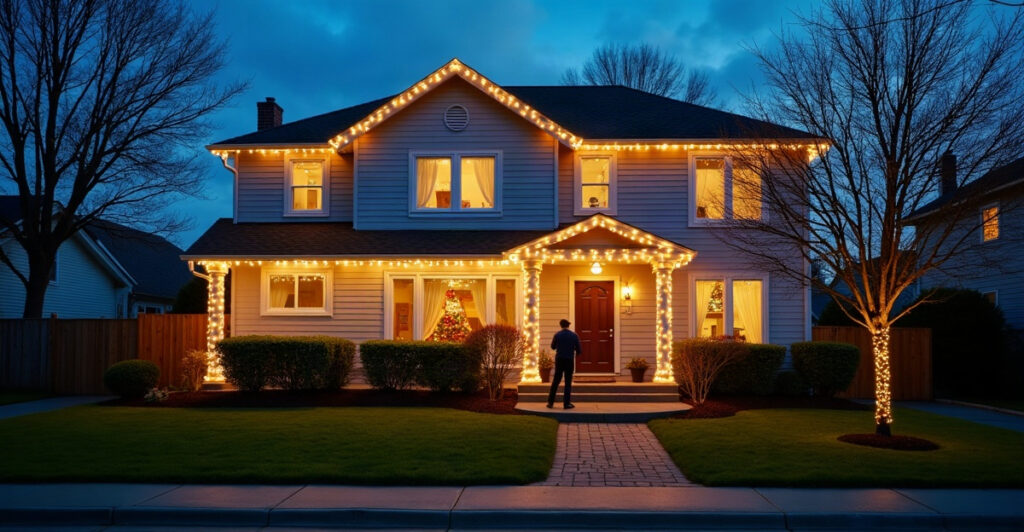
For a refined traditional display, warm white is the most adaptable choice. It works especially well on rooflines, peaks, trees, columns, walkways, landscaping, and entryways. A side-by-side warm-white and cool-white image can make the contrast easy to see, particularly alongside a warm-white roofline on a traditional home.
For many properties, LED lighting offers a practical way to achieve this classic glow with less seasonal energy use and fewer bulb replacements. Compare your options in our guides to LED versus traditional lights and incandescent versus LED lights.
Four Classic Christmas Color Schemes That Still Look Polished
Warm White Only
Warm white only is the most timeless and flexible option. It gives traditional, modern, brick, stucco, light-colored, and dark-sided properties a clean, consistent appearance. This scheme suits formal homes, understated displays, and commercial locations that need a dependable holiday look.
Red and Green
Red and green create an unmistakable Christmas identity. Balanced spacing matters. If too much of one color appears in a single area, the roofline can look uneven or overly busy. Alternating the colors consistently keeps the result festive and organized.
Warm White With Red and Green Accents
Warm white with red and green accents offers a more refined version of a classic palette. We recommend using warm white as the primary roofline color, then adding controlled red and green accents at peaks, entryways, wreaths, garlands, columns, or selected landscaping. This approach adds color without making the full display feel crowded.
Classic Multicolor Lights
Classic multicolor lights remain a cheerful, nostalgic choice, especially for family-oriented homes and long-standing holiday traditions. The key is consistency. Use one cohesive multicolor pattern across the main display rather than combining unrelated colors, animated effects, and different white temperatures.
An evenly spaced multicolor roofline, coordinated trees, and simple entryway décor can feel intentional and timeless. For more inspiration, explore these festive outdoor lighting ideas.
How to Match Traditional Colors to Your Home or Commercial Property
We start with the roofline because it creates the strongest visual framework. Once the roofline palette is established, extend it to peaks, trees, columns, walkways, landscaping, and entryways where it supports the overall design.
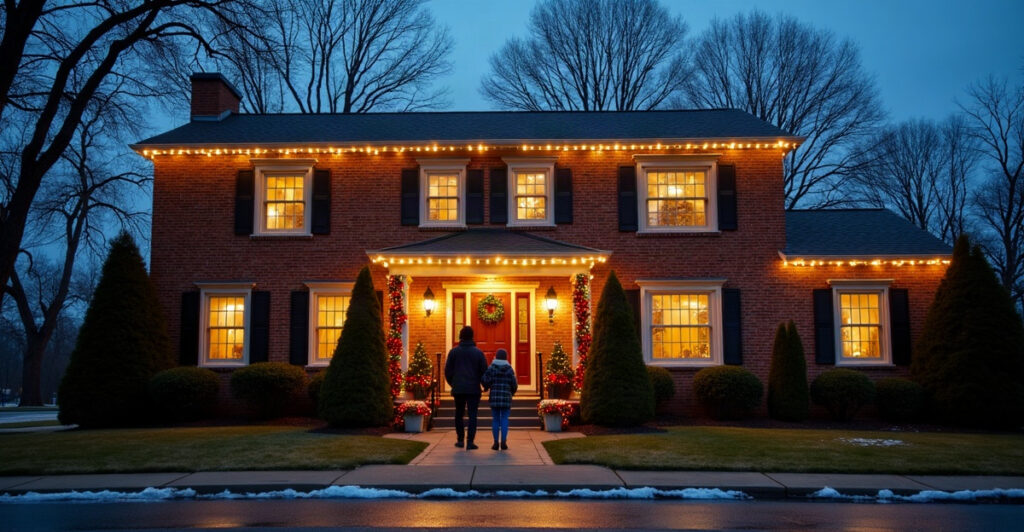
Brick and other warm-toned exteriors often pair especially well with warm white lighting and measured red-and-green accents. The warm glow complements the exterior instead of competing with it.
White, light gray, and stucco properties can support warm white, red and green, or classic multicolor displays. The best choice depends on the desired level of contrast. Warm white feels restrained, while multicolor and red-and-green lighting create a stronger seasonal statement.
Dark siding, dark trim, and modern exteriors generally benefit from warm white or limited color accents. These options provide clear visibility while preserving a clean architectural appearance. A palette that suits a traditional brick home may need adjustment for a dark-sided or contemporary property.
Commercial properties should prioritize visibility, brand appropriateness, even spacing, and simple combinations that remain attractive from a distance. A limited palette usually gives storefronts, offices, and shared properties a more professional result. Additional outdoor holiday lighting ideas can help shape the layout beyond the roofline.
Details That Make Traditional Christmas Lights Look Intentional
A polished display depends on more than selecting the right colors. Consistent bulb spacing, even roofline placement, coordinated wreaths and garlands, and one clear lighting temperature all make a visible difference.
We recommend using one primary palette across the property. Avoid adding several color combinations or competing effects simply because each one looks appealing on its own. The roofline should lead the design. Peaks and entryways can reinforce it, while trees, shrubs, columns, walkways, and landscaping should support the main visual rather than create clutter.
Wreaths and garlands should also follow the selected scheme. Warm white, red, green, and multicolor elements all work well when they match the roofline and use the same general light tone.
Seasonal lighting also brings practical work. Ladder use, weather exposure, electrical connections, burned-out bulbs, tangled strands, setup and takedown time, and off-season storage can all affect the experience. Professional Christmas light installation can help keep the design organized while reducing the seasonal workload.
Using Permanent Outdoor Lighting for Reusable Traditional Holiday Displays
Permanent outdoor lighting can support a traditional display after the preferred colors and layout are clear. Professionally installed systems may allow homeowners to save and reuse warm white, red-and-green, and multicolor holiday presets without reinstalling seasonal strands each year.
This approach can reduce recurring ladder use, untangling, seasonal light replacement, takedown time, and storage needs. It does not replace thoughtful color selection. Instead, it makes a proven traditional palette easier to return to each holiday season.
Our permanent outdoor lighting options can provide a practical foundation for repeatable holiday scenes while also supporting other exterior lighting uses throughout the year.
Common Questions About Traditional Christmas Colors
Are Warm White Christmas Lights Traditional?
Yes. Warm white is generally the most traditional white-light choice because it resembles the soft glow of incandescent bulbs.
Are Cool White Lights Traditional for Christmas?
They can work in winter-themed displays, but their crisp, icy, blue-toned appearance often feels more modern than warm white.
Is Red and Green Christmas Lighting Too Much?
No. Red and green lighting can look classic and festive when it is balanced, evenly spaced, and used within a limited palette.
Are Multicolor Christmas Lights Still Popular?
Yes. Classic multicolor lights remain a nostalgic, cheerful choice for family-oriented and traditional displays.
What Color Christmas Lights Look Best on a Brick House?
Warm white and measured red-and-green accents often pair especially well with brick and other warm-toned exteriors.
Can Permanent Outdoor Lighting Create Traditional Christmas Colors?
Yes. Professionally installed systems may allow homeowners to save and reuse warm white, red-and-green, and multicolor holiday presets.
If you want a traditional holiday display without annual installation and storage, explore professionally installed permanent outdoor lighting options from Bosso Smart Lighting.