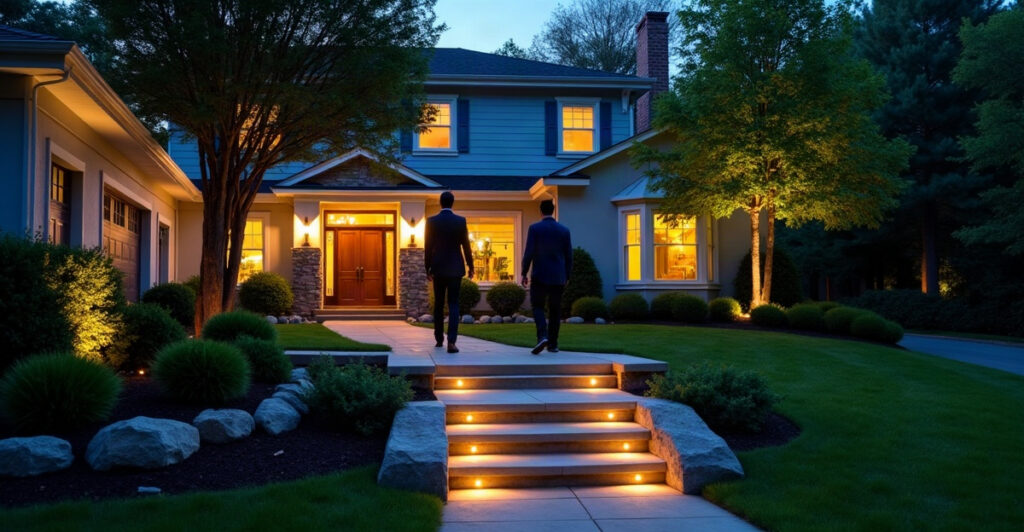
Commercial Outdoor Christmas Light Displays for Businesses
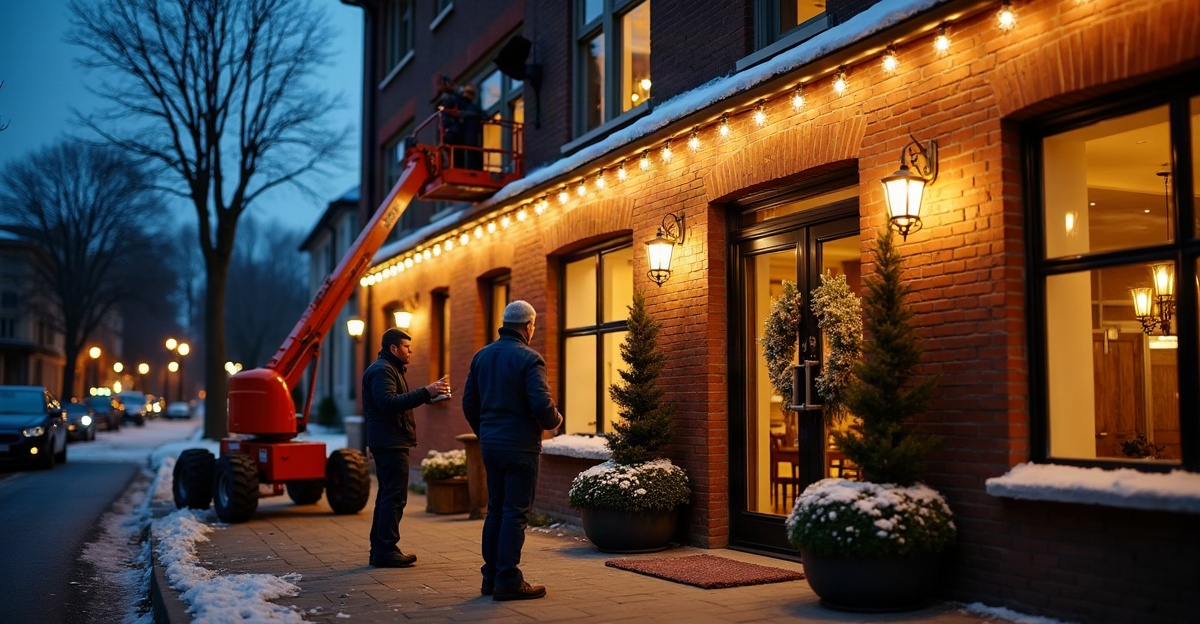
Commercial outdoor Christmas light displays give businesses a polished holiday presence while helping manage seasonal labor, storage, installation demands, and long-term operating costs. Temporary installations, rental programs, and permanent architectural lighting each provide distinct benefits based on property use, budget timeframe, control preferences, and year-round lighting plans.
Key Takeaways
- Permanent lighting supports Christmas displays, event themes, brand colors, and daily architectural accents. Seasonal options work well for properties with limited annual lighting needs.
- Effective commercial displays highlight rooflines, entrances, façades, landscaping, and customer-facing spaces without distracting from the building’s architecture.
- Zone-based controls, schedules, preset scenes, and authorized-user access help us maintain consistent lighting across large properties and multi-site portfolios.
- Project costs vary by property size, linear footage, access, mounting conditions, electrical capacity, lift requirements, controls, and local code requirements.
- Professional site assessments confirm design options, installation requirements, maintenance needs, permits, and property-owner approvals before work begins.
Choosing the Right Commercial Holiday Lighting Approach
Commercial properties need a welcoming holiday experience without adding seasonal labor, storage demands, and repeat setup work to an already busy schedule. We help storefronts, restaurants, office buildings, hotels, retail centers, multifamily communities, resorts, event venues, and managed properties create polished displays with a clear plan for installation, operation, and service.
Commercial outdoor Christmas light displays can include temporary professionally installed holiday lights, seasonal rental display programs, traditional string lights and décor, or permanent architectural lighting programmed for Christmas and other occasions. Each approach can work well, but the best fit depends on how often the property will use lighting, the desired visual impact, operational priorities, and the available budget horizon.
Temporary installations are a practical choice for properties that want a classic Christmas presentation for a limited season. Seasonal rental programs can reduce storage and ownership responsibilities. Permanent systems suit properties that want repeatable Christmas outdoor light displays plus lighting options for events, promotions, and everyday architectural accents.
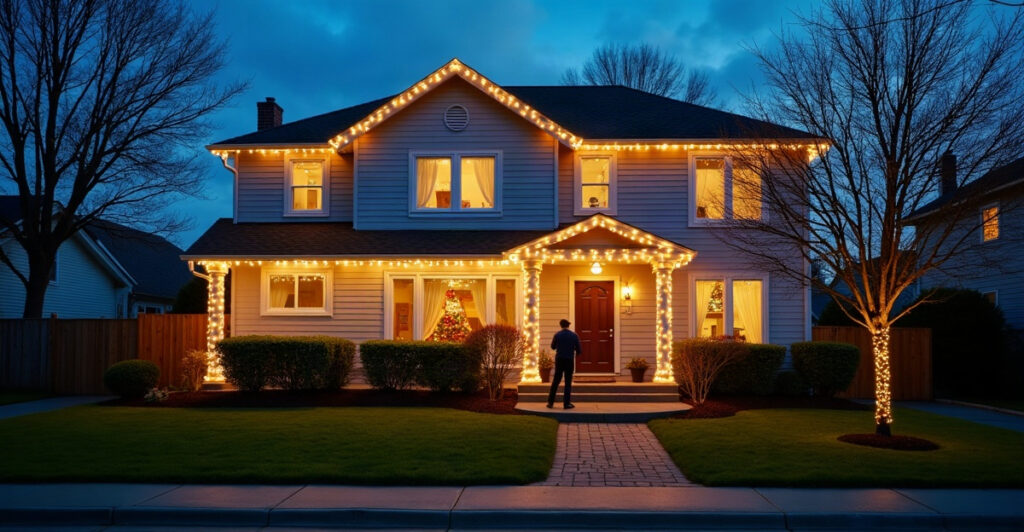
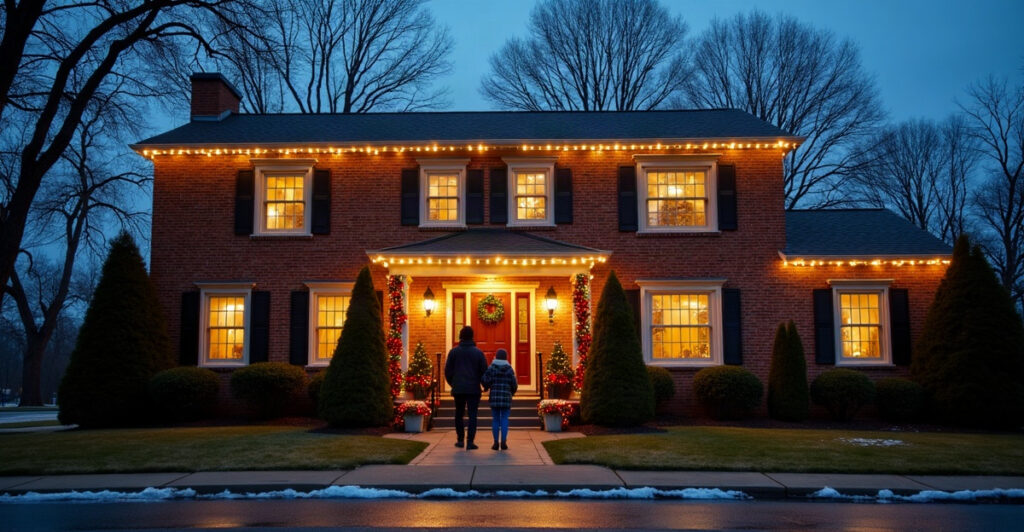
For many businesses, large outdoor Christmas light displays create a stronger impression when they follow the building’s rooflines, entries, columns, landscaping, and key customer-facing areas. A restaurant may focus on its patio and front entrance. A shopping plaza may coordinate multiple storefronts. A hotel or resort may use several building elevations and gathering spaces to create a cohesive arrival experience.
Permanent lighting, temporary professional installation, and rental displays each have different operating requirements. Permanent systems are installed once, then programmed and used throughout the year where appropriate. Temporary professional installation requires seasonal setup and removal. Rental displays generally include seasonal equipment and installation, but the program structure varies by provider.
Upfront investment is usually higher for a permanent system, while temporary and rental programs often spread costs across individual seasons. Permanent lighting does not automatically cost less than seasonal installation. Long-term value depends on the property’s use frequency, recurring labor needs, design goals, maintenance expectations, and ownership timeline. For a closer look at seasonal planning, we recommend reviewing Christmas light installation costs before comparing property-specific options.
Storage needs also differ. Permanent systems remain installed. Temporary owned décor requires secure off-season storage. Rental programs may remove that responsibility, depending on the agreement. Design flexibility is available with all approaches, although permanent systems provide the greatest opportunity for year-round color changes and programmed scenes.
How Permanent Exterior Lighting Supports Christmas and Year-Round Displays
Professionally installed permanent outdoor lighting uses low-profile fixtures mounted along rooflines, trim, channels, or other suitable architectural features. The installation may include mounting tracks, electrical connections, controllers, and programmable zones. Depending on the selected system, controls may be available through a mobile app, centralized interface, or both.
For Christmas, permanent systems can support traditional red, green, warm white, blue, or multicolor scenes. Some systems also support animated patterns and coordinated effects for large outdoor Christmas light displays across façades and rooflines. The best display design respects the building’s architecture rather than covering every surface with light.
Christmas is only one use case. Permanent lighting can also support other holidays, grand openings, tenant events, community gatherings, game-day themes, promotional color schemes, and everyday architectural accent lighting. A property can use brand colors for a campaign, then switch to a warm, understated scene for normal operations. Explore permanent outdoor lighting options when year-round programming is a priority.
Decorative permanent lighting does not replace required, code-compliant security, egress, parking-lot, or safety lighting. We evaluate decorative systems as a separate layer within the broader exterior lighting plan.
Daytime appearance matters for commercial properties. A professionally planned system can blend well with many rooflines and architectural features, but fixtures are not always invisible. Visibility depends on fixture style, color, placement, building materials, roofline shape, and viewing angle. System capabilities also vary by manufacturer and selected product. Fixture construction, weather ratings, brightness, controls, warranties, and service requirements should be reviewed before final selection.
Controls, Zoning, and Consistent Property Operations
Controls turn installed lighting into an organized property tool. Where supported by the selected system, teams can adjust color and brightness, create schedules, set timers, save preset scenes, and separate the property into independently controlled zones.
Lighting zones help commercial properties manage different façades, entrances, common areas, courtyards, and tenant-facing spaces. A retail center may use one scene at a main entrance and another at a restaurant row. A multifamily community may keep entry monuments and shared amenities coordinated while limiting decorative effects near residential windows. Offices and hospitality properties can align lighting with business hours, events, and guest activity.
Access should be managed carefully. We recommend assigning authorized users, setting clear staff permissions, and identifying who owns scheduling responsibility. This prevents accidental changes and keeps Christmas light outdoor displays consistent across the property.
Documented preset scenes and simple operating procedures are especially useful for managed properties with several staff members, vendors, or decision-makers. Plans should reflect actual operating hours, local restrictions, community events, and property-management standards. Reliable controls are part of a strong installation, not an afterthought.
What Determines the Cost and Long-Term Value of a Commercial Lighting System
Commercial lighting pricing should follow a property-specific assessment. Flat-rate quotes rarely account for the practical differences between a single storefront and a multi-building campus.
Primary investment factors include building size, total linear footage, roofline and façade complexity, building height, access conditions, lift requirements, mounting materials, electrical access, and needed electrical work. The number of independently controlled zones, controller needs, custom color patterns, scheduling requirements, permits, local code requirements, and operating ordinances also affect the project scope.
Long-term value often comes from reduced seasonal coordination rather than a single universal cost outcome. Properties may benefit from avoiding repeated installation and removal planning, seasonal storage, inconsistent appearance, and annual labor coordination. Frequent use beyond Christmas can also strengthen the case for permanent lighting.
Decorative lighting may support curb appeal, customer or tenant experience, and a polished property appearance. Results vary based on location, property design, display quality, business operations, and how consistently the system is used. We do not promise guaranteed energy savings, increased traffic, property value gains, lower liability, or identical weather performance in every setting.
Technical specifications should be confirmed through manufacturer documentation, local authority requirements, licensed electrical professionals, and verified project information. For seasonal projects that need professional support without a permanent system, our commercial lighting installation service can help define the right scope.
From Site Assessment to Finished Display: The Professional Installation Process
A professional project begins with a site assessment and a discussion of the property’s goals. We review where lighting will have the greatest effect, whether the plan focuses on holiday décor, year-round accents, or both.
Next, we develop a property-specific design and lighting-zone plan. This stage addresses power availability, wiring paths, building access, roofline conditions, mounting surfaces, and control locations. Roofline complexity, façade materials, electrical capacity, safe access, lift needs, and mounting conditions all affect the installation approach.
Installation focuses on secure mounting, discreet routing, and a finished appearance that fits the building. After installation, we test the system, program initial scenes, configure controls, and explain normal operation and service expectations. Properties that want a temporary holiday display can also consider professional Christmas light installation for seasonal décor without a permanent system.
Commercial installation timing varies. Building size, total linear footage, access, lift requirements, electrical work, design complexity, and the number of zones determine the project schedule. A site assessment provides the most accurate timeline.
Permanent exterior systems are built for long-term outdoor use, but they are not maintenance-free and do not last forever. Periodic inspection, cleaning, troubleshooting, firmware or app updates, and service may be needed. Before approving a project, we recommend reviewing daytime and nighttime examples, before-and-after photos, lighting-zone diagrams, installation images, and holiday versus everyday architectural scenes. Installation practices, electrical considerations, and local compliance should be reviewed by experienced installers or licensed electrical professionals where applicable.
Compliance, Approval Requirements, and Decision Checklist
Commercial properties may need to confirm electrical-code requirements, local lighting ordinances, signage rules, brightness limits, operating-hour restrictions, and permit requirements. Lease terms, landlord approval, HOA rules, and property-management standards may also apply.
We recommend confirming requirements with the local authority, property owner, landlord, HOA, licensed electrical professional, or other relevant party before installation. Approval should happen early, especially for managed commercial properties and shared retail or multifamily sites.
Permanent lighting may be a practical fit when a property has recurring seasonal labor needs, expects to use lighting beyond Christmas, wants architectural accents or stronger visibility, needs zone-based control, has a suitable budget horizon, and offers appropriate mounting conditions. The property must also be willing to maintain the system when needed.
A commercial site assessment or professional lighting design consultation can clarify layout options, control needs, compliance concerns, and project-specific investment factors. We can start that conversation through our commercial lighting consultation process.
Commercial Outdoor Christmas Lighting FAQs
What are commercial outdoor Christmas light displays?
They include temporary professionally installed holiday lights, rental programs, traditional string-light décor, and permanent architectural lighting programmed for Christmas, events, and other occasions.
What is the difference between permanent commercial lighting and seasonal holiday lighting?
Permanent lighting is installed for extended use and can support year-round programming. Seasonal lighting is installed and removed for a specific holiday period. The difference affects recurring labor, storage, controls, maintenance, and how often the property can use the display.
Can permanent outdoor lighting be used after Christmas?
Yes. Depending on the system, properties can use holiday scenes, seasonal colors, brand-color displays, event themes, and everyday architectural accents.
Are permanent lighting fixtures noticeable during the day?
They can be. Fixture visibility depends on style, color, placement, building materials, roofline design, and viewing angle.
How are commercial permanent lights controlled?
Available features may include schedules, timers, zones, preset scenes, mobile-app access, centralized controls, and permissions for authorized staff.
What affects the cost of a commercial outdoor lighting installation?
Key factors include property size, linear footage, access, roofline complexity, mounting materials, electrical work, lighting zones, controls, custom design needs, and local requirements.
Do permanent commercial lighting systems require maintenance?
Yes. Systems may need periodic inspections, cleaning, troubleshooting, firmware or app updates, and service.
Do businesses need permits or approval for outdoor holiday lighting?
Requirements vary. A project may involve local codes, lighting ordinances, landlord approval, lease restrictions, HOA rules, permits, or property-management standards.
Can permanent decorative lighting replace security or parking-lot lighting?
No. Decorative lighting is not a replacement for required, code-compliant security, egress, parking-lot, or safety lighting.
How long does commercial permanent outdoor lighting installation take?
Timing depends on property size, design scope, access, lift requirements, mounting conditions, electrical work, and the number of lighting zones. A site assessment provides the most reliable schedule.