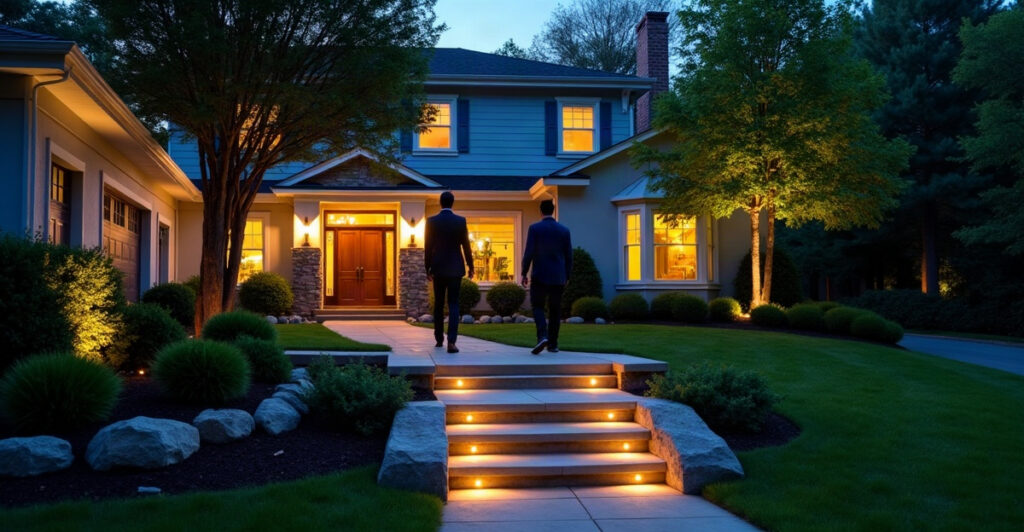
Cost of Landscape Lighting Installation: What Affects the Price?
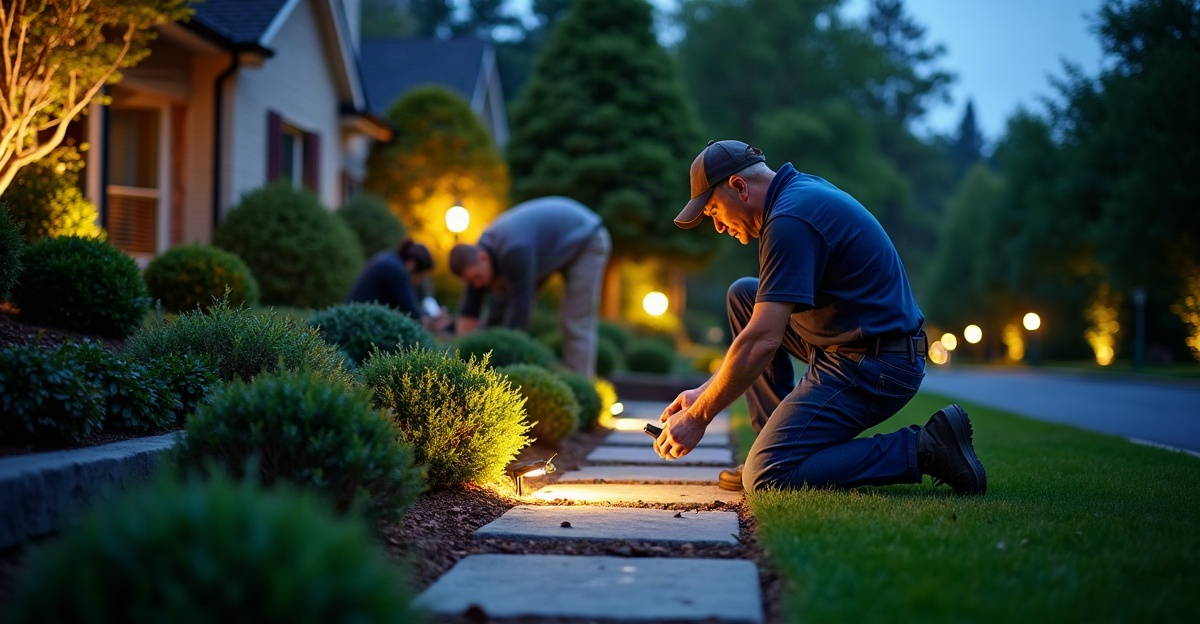
Landscape lighting installation costs depend on project scope, including property size, lighting goals, fixture quality, wiring requirements, controls, and site access. A professional proposal should cover system design, transformer capacity, weather-resistant installation, nighttime aiming, and room for future additions instead of relying on a basic per-fixture price.
Key Takeaways
- Larger properties and multi-zone lighting plans often need more fixtures, longer wire runs, greater transformer capacity, and additional installation labor.
- Durable, serviceable fixtures with corrosion resistance, weather sealing, and replaceable parts can influence upfront pricing and reduce long-term maintenance demands.
- Trenching around irrigation lines, roots, hardscapes, slopes, rocky soil, and established landscaping can add labor and installation challenges.
- Quotes may vary because they can include different levels of design, wiring, controls, weatherproofing, cleanup, programming, and post-installation support.
- A property-specific assessment delivers the most accurate estimate because we account for lighting goals, electrical planning, site conditions, and future system expansion.
How Much Does Professional Landscape Lighting Installation Cost?
The cost of landscape lighting installation varies substantially from one property to another. Property size, lighting goals, fixture selection, wiring requirements, controls, access conditions, and regional labor rates all shape the final investment.
For that reason, we don’t recommend relying on a universal price or a simple per-light formula. A small path-lighting project may cover a front walk, a few garden beds, and a basic timer. A custom whole-property system may include paths, trees, patios, facade accents, multiple control zones, smart programming, and capacity for future additions. These are fundamentally different project scopes.
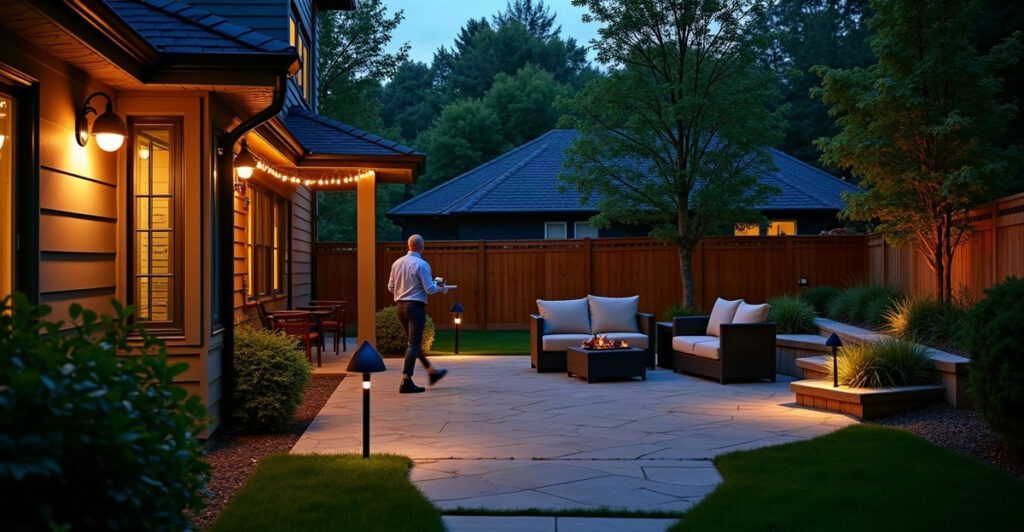
Professional low-voltage landscape lighting can include path lights, garden fixtures, tree uplights, architectural accents, patio lighting, and lighting for security-focused visibility. A well-planned system can improve nighttime visibility, support curb appeal, and make outdoor areas more usable after dark.
The professional landscape lighting cost depends on what the system needs to accomplish, how the property is built, and how much long-term flexibility is needed. We evaluate the complete installation rather than treating fixtures as isolated items. This approach gives us a clearer view of the true cost to install landscape lighting.
What Affects the Cost of Landscape Lighting?
Every outdoor lighting system needs a design that matches the property, the desired effect, and the site conditions. The cost of outdoor landscape lighting rises or falls based on several connected factors.
Property size and the number of areas being illuminated have a direct impact. A front walkway needs a different layout than an expansive property with driveways, gardens, mature trees, patios, pool areas, facades, and security-focused areas. Larger properties often require more wire runs, additional transformer capacity, and separate lighting zones.
Lighting goals also matter. Path safety, front-of-home curb appeal, tree uplighting, architectural highlighting, patio use, and security visibility each call for different fixture styles, beam spreads, mounting methods, and power planning. Our outdoor landscape lighting ideas show how layered lighting can create a balanced result without over-lighting the property.
Professional design time is another important part of the cost to install outdoor landscape lighting. We plan fixture placement, beam angles, glare control, balanced light levels, nighttime aiming, mature plant growth, and possible future expansion. Good design helps prevent harsh hotspots, dark gaps, visible glare, and fixtures that lose their intended effect as landscaping changes.
Fixture selection affects both initial cost and long-term service needs. Higher-investment fixtures should offer clear advantages, including corrosion resistance, dependable weather sealing, durable finishes, quality lenses, and replaceable components. Fixture construction matters in areas exposed to irrigation, wind, sun, snow, or salt air.
Power and wiring requirements also shape the project. We consider transformer capacity, voltage-drop planning, electrical protection, wire length, wire gauge, the number of runs, and room for added fixtures or zones. An undersized transformer or poorly planned wiring can cause uneven brightness and limit future expansion.
Installation conditions can add labor. Trenching and wire concealment may involve irrigation lines, roots, hardscape, retaining walls, slopes, rocky soil, and mature landscaping. Roofline access is generally associated with permanent architectural lighting rather than landscape lighting, but access challenges around a property can still affect labor and cleanup.
Regional factors also vary. Labor rates, local electrical requirements, permits where applicable, and site conditions can change the cost of landscape lighting. Properties in Western markets may experience dry climates, strong sun exposure, wind, irrigation systems, snow, sloped lots, expansive lots, or rocky soil. These conditions do not apply to every home, but they can influence equipment choices and installation methods where present.
What Is Included in a Complete Professional Landscape Lighting System?
Professional installation involves far more than purchasing fixtures and placing them in the ground. A complete system combines design, equipment selection, power planning, installation workmanship, programming, adjustment, weather protection, and ongoing support.
A site evaluation gives us the information needed to plan fixture placement, beam spread, transformer load, voltage drop, wiring routes, irrigation lines, hardscape, slopes, mature landscaping, access, and future expansion. We then select fixtures based on intended use, finish, construction, weather sealing, lens quality, and the availability of replaceable parts.
The electrical system includes appropriately sized transformer capacity, low-voltage wire, connectors, weatherproofing, and electrical protection. Installation labor typically includes wire routing, trenching, burial or concealment, fixture mounting, aiming, programming, nighttime adjustments, restoration, and cleanup around landscape and hardscape areas.
Controls can range from a timer or photocell to zoned app-based controls, color-capable fixtures, and seasonal programming. Smart lighting means practical control features, not a vague label. With smart lighting automation, we can set schedules, adjust zones, manage colors where appropriate, and integrate seasonal displays into the broader system.
Our landscape accent lighting service focuses on these connected details so the lighting looks intentional, operates reliably, and remains serviceable over time.
Why Do Landscape Lighting Quotes Vary So Much?
Landscape lighting estimates often differ because providers are quoting different systems, not because they charge different amounts for identical work. One proposal may include basic fixtures and surface-level wiring, while another includes professional design, buried wire, voltage-drop planning, weatherproof connections, transformer capacity, control setup, aiming, and post-installation support.
We recommend comparing the complete system rather than the lowest fixture count or the lowest per-light price. A lower initial estimate can omit design, wire burial, transformer upgrades, weatherproof connections, programming, cleanup, service, or future expansion planning.
What to Confirm in Each Quote
Before comparing proposals, confirm whether each estimate includes the following:
- Site evaluation and lighting design
- Fixtures with clear specifications for construction, finish, and intended use
- Transformer capacity, controls, timers, or app setup
- Wire, connectors, weatherproofing, and electrical protection
- Trenching, wire burial, or wire concealment
- Installation labor, fixture aiming, programming, and nighttime adjustments
- Restoration and cleanup around landscaping and hardscape
- Warranty terms, service options, and repair support
- Compatibility with future fixtures, zones, and controls
It is also important to ask how the installer plans for voltage drop, whether components are replaceable, how repairs are handled, and whether post-installation adjustments are available. These answers often reveal the practical difference between a basic installation and a complete lighting system.
For a clearer view of the process from planning through final adjustments, review our lighting installation process.
Landscape Lighting vs. Permanent Roofline Lighting: What Is the Difference?
This discussion focuses on professionally installed low-voltage landscape lighting. These systems typically sit in gardens, pathways, trees, patios, hardscape features, and ground-level architectural areas.
Permanent roofline, soffit, and holiday-capable architectural lighting uses different products, mounting methods, controls, access equipment, wiring routes, and labor requirements. Roofline access and mounting surface conditions can significantly change project scope and pricing.
The two systems can overlap in purpose. Both may highlight architectural features or support seasonal programming. Still, they should not be treated as directly equivalent when comparing estimates. Color-capable fixtures, integrated seasonal displays, roofline mounting, and elevated access all affect the cost structure.
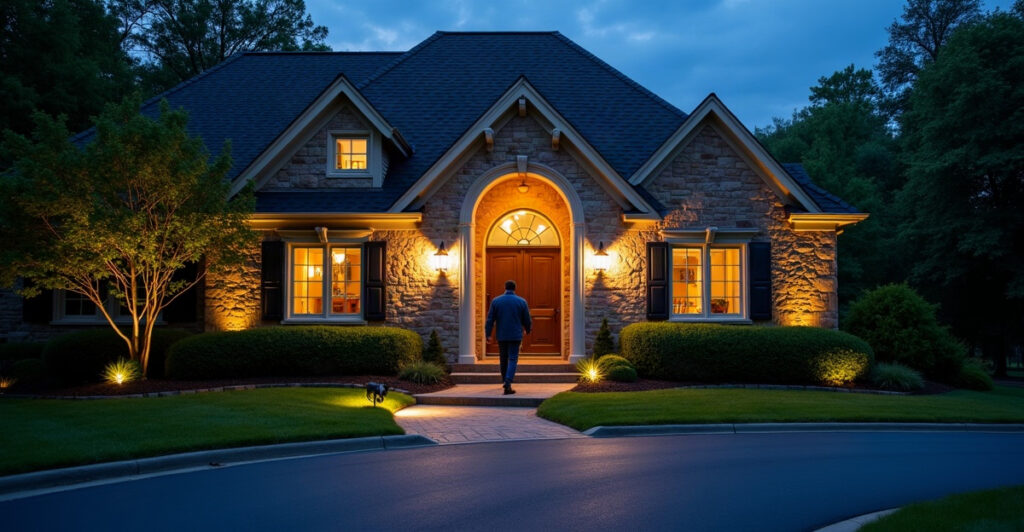
For roofline and seasonal systems, our Christmas light installation cost guide explains the factors that can influence those projects. For ground-level facade and entry lighting, explore these front-of-house lighting ideas.
Long-Term Cost, DIY Comparisons, and Common Questions
Upfront price matters, but long-term value matters as well. LED systems use relatively little energy, yet professionally installed lighting is not maintenance-free. Lenses may need cleaning, fixtures may need repositioning as plants grow, and damaged wires, connectors, or components may need repair. Fixture construction, weather exposure, electrical protection, installation quality, replacement-part availability, app usability, service options, and warranty limitations all influence long-term ownership costs.
DIY kits can work well for smaller, simpler projects and usually carry a lower initial cost. However, kit pricing may not include professional design, commercial-grade fixtures, properly sized transformers, buried wiring, weatherproof connections, troubleshooting, warranty support, or labor. Compare DIY and professional systems based on scope, appearance, durability, electrical planning, safety, and long-term service rather than upfront cost alone. Our DIY versus professional lighting guide offers a practical comparison.
Per-fixture pricing can be misleading because design, transformers, wiring, trenching, controls, access, and labor are shared project costs. A property-specific proposal gives a more accurate total cost of landscape lighting installation.
Most professionally installed low-voltage systems use a transformer sized for the lighting load, voltage-drop planning, electrical protection, and possible expansion. Additional lights can often be added later when transformer capacity, wiring, controls, and available system load were planned accordingly.
Professional landscape lighting lifespan depends on fixture construction, weather exposure, installation quality, maintenance, electrical protection, and the availability of replacement components. Periodic care remains normal and may include lens cleaning, fixture adjustment, plant management, and repairs to damaged wires or connections.
An on-site property assessment is the most reliable way to determine fixture needs, installation complexity, system options, and the total cost to install landscape lighting. We can review the property and discuss the right scope through our landscape lighting consultation.