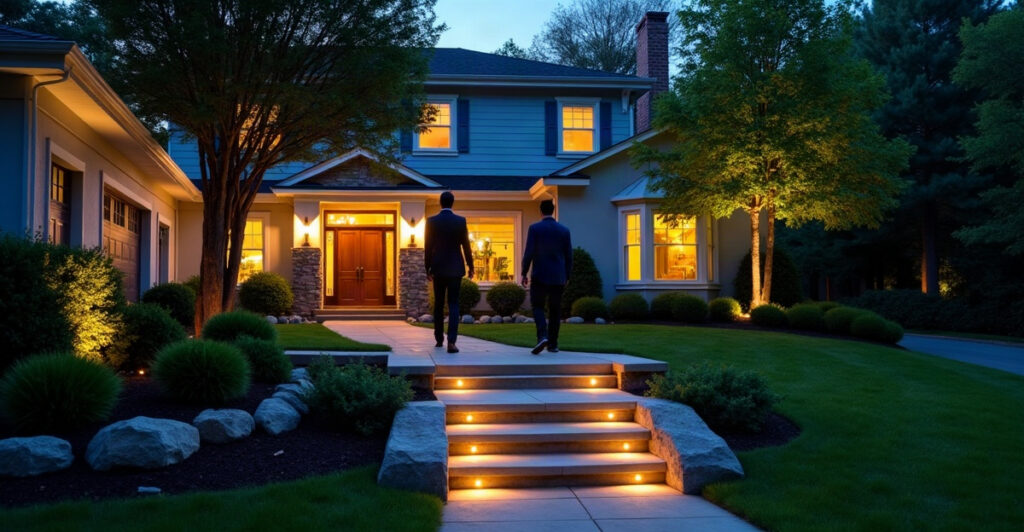
Accent Lighting Ideas to Highlight Your Outdoor Space
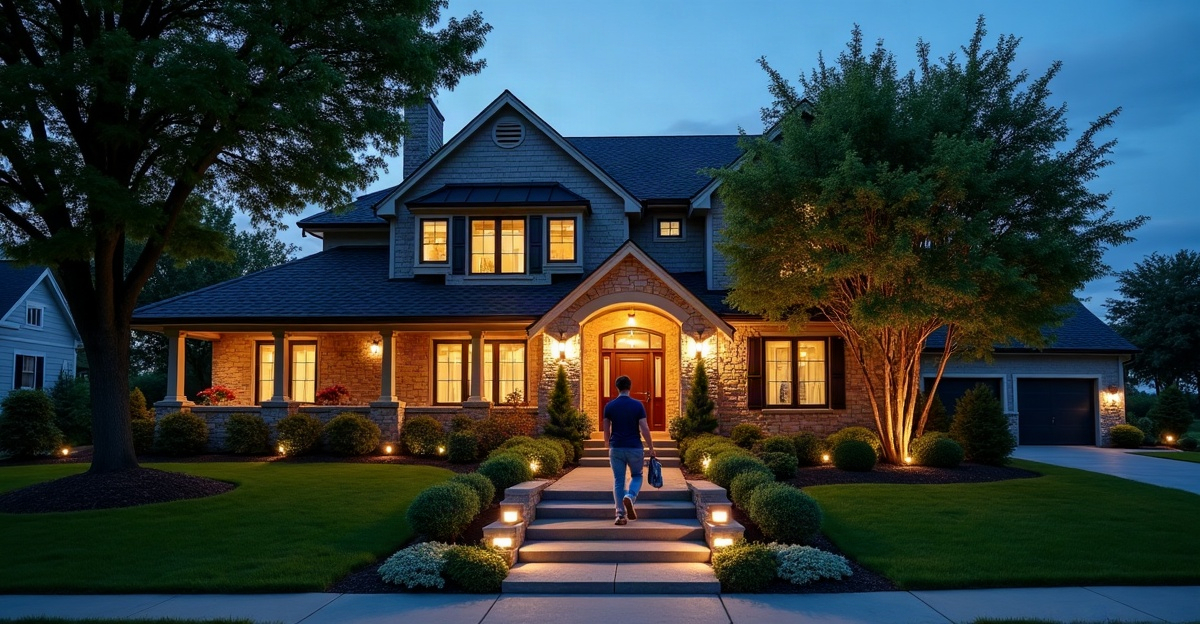
Accent lighting can define rooflines, entryways, trees, stonework, patios, and commercial frontages. It also improves nighttime wayfinding and adds visual depth. A balanced plan uses controlled brightness, accurate fixture aiming, and layered task lighting to create inviting outdoor areas without glare or visual clutter.
Key Takeaways
- Focus on two to four priority areas for a clear, purposeful lighting plan instead of lighting every surface.
- Use accent lighting to draw attention to focal points. Add functional lighting near walkways, steps, entrances, and gathering spaces.
- Choose warm white light for daily use. Reserve color options for holidays, events, or personal style.
- Reduce glare by managing brightness, beam angle, fixture spacing, and aiming near windows, streets, and neighboring properties.
- Professionally installed permanent lighting delivers reliable, year-round performance, discreet daytime placement, weather-resistant connections, and easy scheduling controls.
Outdoor Accent Lighting: What It Highlights and Why It Matters Year-Round
Outdoor accent lighting draws attention to focal points, adds dimension, and creates atmosphere after dark. It does not need to make every exterior surface brighter or serve as the sole source of functional lighting across the property.
The best accent lighting ideas start with everyday value. Carefully placed fixtures can define architecture, improve entry visibility, guide movement around paths, support outdoor entertaining, and give a home or business a clearer nighttime presence. Results vary based on the property layout, surrounding conditions, fixture selection, and installation quality.
Accent lighting differs from broad floodlighting, which covers large areas with general illumination. Task lighting focuses on a specific practical need, such as steps, doors, or an outdoor kitchen workspace. Landscape lighting can include accent fixtures but also covers path lights, area lighting, and safety-focused illumination. Decorative holiday string lights usually serve a temporary purpose and do not provide the consistency or control of a permanent system.
Well-planned outdoor accent lighting ideas can improve visibility around entries and walkways, may increase curb appeal, and can help make patios and gathering areas more usable after sunset. A year-round lighting system also avoids seasonal ladder work, storage bins, exposed cords, repetitive setup, and the uneven look that can come with temporary DIY installations.
For a deeper look at fixture options, review these types of landscape lighting before selecting a direction for the property.
Outdoor Accent Lighting Ideas for Architecture, Landscaping, and Gathering Areas
Exterior accent lighting ideas for rooflines, landscaping, walkways, and patios work best when they emphasize a limited number of strong features. We recommend choosing focal points that already give the property character instead of trying to illuminate every detail.
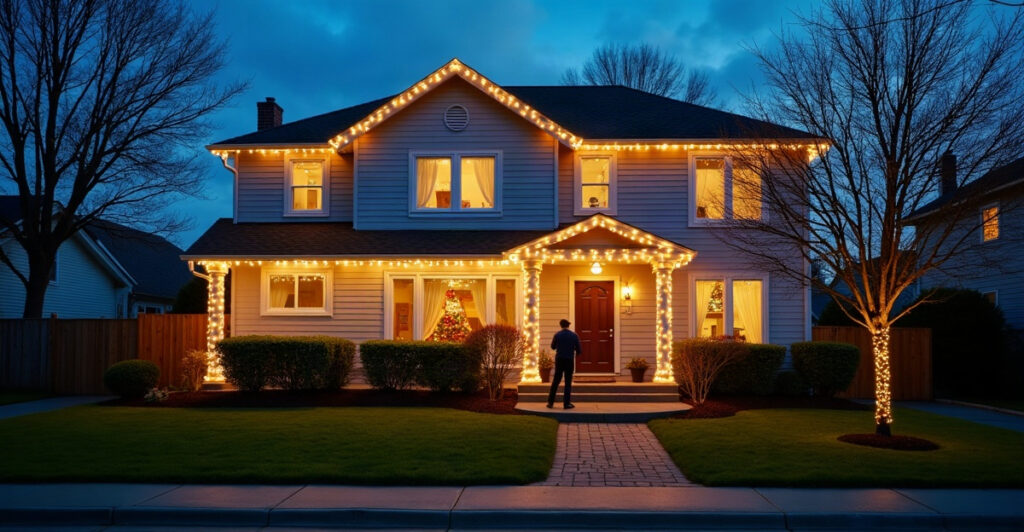
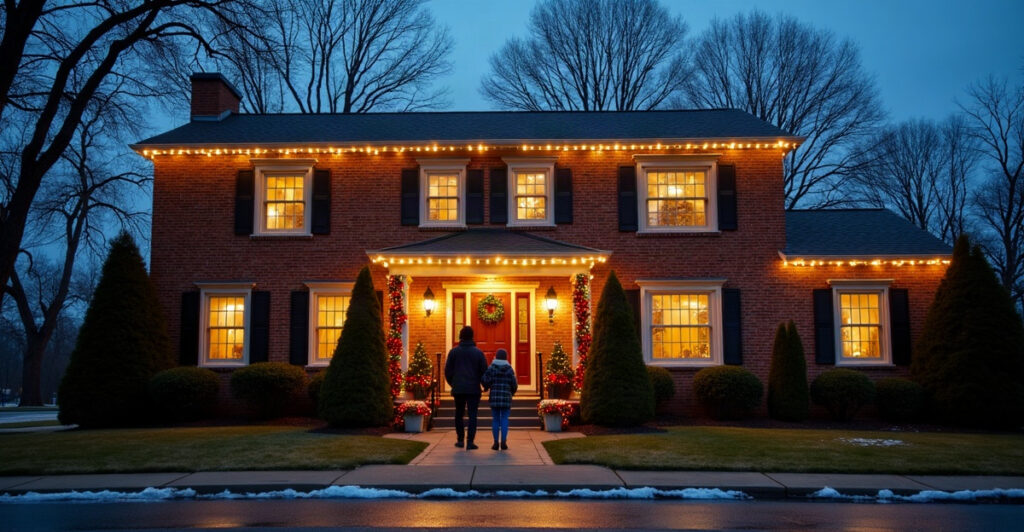
Rooflines, eaves, and gables can define the property silhouette and make architectural lines easier to appreciate at night. Keep brightness controlled so the outline looks clean rather than excessively bright. Consistent fixture spacing creates a polished result.
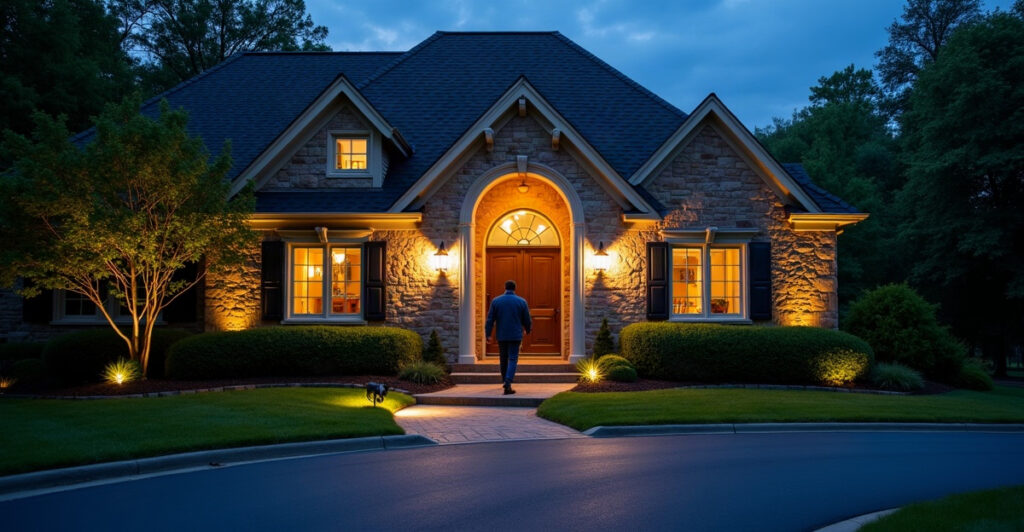
Entryways, porches, columns, doors, and covered entries benefit from focused illumination. This creates a welcoming focal point and improves nighttime orientation for guests, residents, and customers. Avoid aiming lights directly into the eyes of people approaching the door.
Stone, brick, siding, and façade details gain depth when fixtures reveal texture with a controlled wash or grazing effect. Light should bring out the surface rather than flatten it with an overly wide or bright beam. This approach works especially well on distinctive materials and architectural features.
Mature trees, specimen plants, retaining walls, garden features, fences, and gates can give a landscape height and visual structure after sunset. Select a few priority features. Lighting every plant or boundary can make the landscape look cluttered.
Walkways, steps, driveway edges, and customer entry points need functional visibility. Lighting can improve orientation, but it does not replace maintained surfaces, handrails, proper drainage, code-required lighting, or other safety measures.
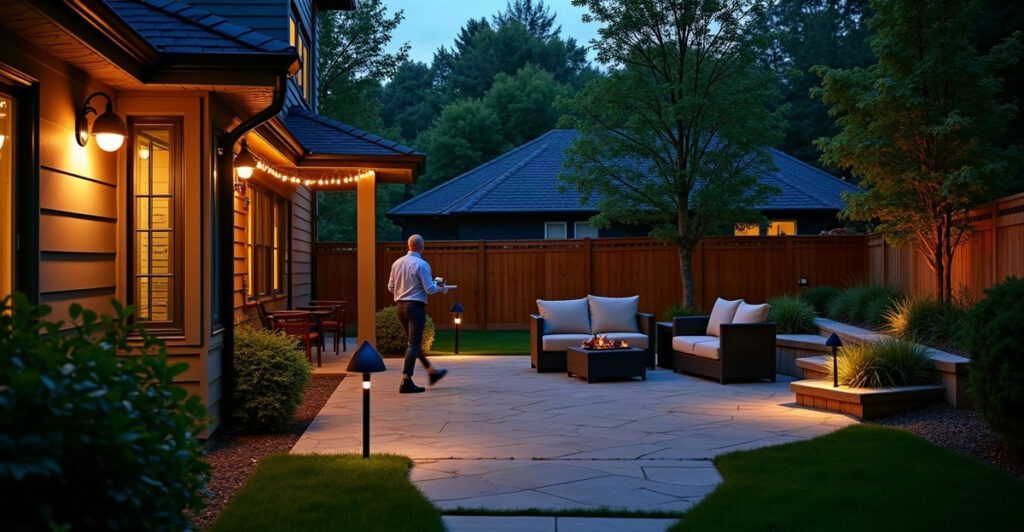
Patios, decks, pergolas, pools, water features, and outdoor kitchens can benefit from soft, layered light. Use focused accents for visual interest, then add practical lighting where people walk, cook, or gather. Our landscape accent lighting approach balances atmosphere with usable visibility.
Commercial outdoor accent lighting can highlight storefronts, building frontage, signage areas, customer entrances, and pedestrian paths. Commercial plans should account for local regulations, driver visibility, customer circulation, neighboring properties, and the operating hours of the site.
For additional inspiration, explore these front-of-house lighting ideas and consider how the strongest features of the property can carry the design.
How to Build a Balanced, Low-Glare Lighting Plan
A balanced outdoor lighting design starts by selecting two to four priority zones. This may include the entry, roofline, a mature tree, a patio, or a commercial frontage. Focusing on a few areas creates contrast and helps the property feel intentional rather than harsh or overcrowded.
Layer the system based on purpose:
- Accent lighting highlights focal points.
- Functional lighting supports visibility where movement occurs.
- Limited decorative lighting can add atmosphere for seasonal displays or special events.
Fixture aiming, direction, spacing, brightness, beam spread, mounting height, and color temperature all affect the final result. Warm white outdoor lighting often suits everyday use because it feels comfortable and works well with common exterior materials. Color outdoor lighting can be reserved for holidays, team celebrations, events, or personal preferences.
Avoid uncontrolled color changes, excessive brightness, and competing focal points. Direct light away from windows, streets, neighboring homes, and drivers. Check HOA rules, municipal requirements, and commercial-property guidelines before installation.
Outdoor home accent lighting ideas should match the architecture, landscape, property use, and nearby conditions. A modern home, mountain property, retail building, and poolside patio each need a different plan. Our guide to creating an outdoor lighting plan explains how to organize those decisions before installation.
When Permanent Outdoor Lighting Is a Practical Option
Permanent outdoor lighting is one solution for properties that need dependable year-round exterior lighting without repeated setup and removal. It is not necessary for every home or business, but it can be a practical choice for difficult rooflines, high-elevation areas, weather-exposed locations, frequent holiday decorating, and properties that benefit from scheduled lighting.
Professionally installed permanent lighting systems can provide everyday white lighting alongside color displays for holidays, events, and celebrations. App-based controls make it easier to schedule zones, change colors, and manage the system without handling temporary lights or climbing ladders.
Daytime appearance matters. Fixture visibility depends on trim color, architecture, mounting location, viewing angle, fixture style, and installation quality. A professional design aims for a discreet daytime appearance, but no system should promise to be completely invisible in every setting.
DIY lighting projects can work well for lower-risk decorative applications. Permanent electrical systems, roofline installations, high-elevation work, weatherproofing, and integrated controls often benefit from professional planning and installation. We help property owners assess whether permanent outdoor lighting fits their goals and property conditions.
What to Compare in a Professionally Installed Outdoor Lighting System
A professionally installed outdoor lighting system should look consistent, operate simply, and hold up in local conditions. Upfront cost matters, but long-term value also depends on durability, convenience, finish quality, controls, service, and warranty support.
Compare how fixture placement works with soffits, trim, rooflines, and other architectural features. Review whether wiring is concealed, spacing is consistent, connections are weatherproofed, and the finished system supports a clean daytime appearance.
Weather-resistant outdoor lighting should suit local heat, cold, wind, rain, snow, and UV exposure. This is especially important across the Western United States, where conditions can shift quickly and exterior materials face intense sun or seasonal weather.
Ask about product components, expected service life, workmanship, and outdoor lighting warranty coverage. Also confirm what happens if a fixture, controller, or connection needs attention after installation.
Outdoor lighting controls and scheduling should be simple enough for daily use. Look for zoning options that allow different parts of the property to operate independently, along with timers, app access, warm white settings, color options, and easy seasonal programming. Our smart lighting automation services help make those controls practical rather than complicated.
Review completed work in our outdoor lighting gallery to compare daytime integration, nighttime spacing, entry lighting, roofline treatment, and landscape effects.
Common Mistakes, Practical FAQs, and Next Steps
Common Mistakes to Avoid
Most weak results come from poor planning rather than a lack of fixtures. Keep these issues in mind:
- Using excessive brightness that creates glare or washes out architectural detail.
- Aiming fixtures into windows, streets, neighboring properties, or drivers’ sightlines.
- Using too many colors or competing focal points at the same time.
- Installing inconsistent fixture spacing, visible cords, or exposed connections.
- Relying on lighting instead of maintaining steps, paths, handrails, and required safety features.
- Selecting a system without confirming maintenance, service, warranty, or support options.
Frequently Asked Questions
What is the difference between accent lighting and landscape lighting?
Accent lighting highlights focal points such as architecture, trees, stonework, and entry features. Landscape lighting is a broader category that can include accent lighting, path lighting, area lighting, and visibility-focused fixtures.
What areas of a home look best with outdoor accent lighting?
Rooflines, entryways, porches, columns, façade materials, mature trees, retaining walls, patios, decks, and pergolas often work well. The best accent lighting ideas focus on the property’s strongest features rather than trying to light every surface.
Can permanent outdoor lighting be used year-round?
Yes. Permanent outdoor lighting can provide warm white everyday illumination and color settings for holidays, events, and celebrations when the system supports both capabilities.
Is permanent outdoor lighting visible during the day?
Some visibility is possible, depending on fixture style, trim color, mounting location, architecture, and viewing angle. Professional installation aims for a discreet daytime appearance without promising invisibility in every setting.
Can outdoor accent lighting use both warm white and color settings?
Yes. Many systems support warm white outdoor lighting for regular use and color outdoor lighting for seasonal or event-based displays.
How do we avoid glare and light shining into a neighbor’s property?
Use appropriate brightness, proper aiming, controlled beam spreads, and schedules that match the property’s use. We also recommend reviewing HOA and local lighting rules before installation.
Is professional installation worth it for permanent outdoor lighting?
Professional outdoor lighting installation is often worthwhile for rooflines, high-elevation work, electrical connections, weatherproofing, concealed wiring, and integrated controls. It can also improve visual consistency and access to service support.
How much maintenance does permanent exterior lighting need?
Maintenance needs vary by system and exposure conditions. Periodic visual checks, controller updates when applicable, and prompt service for damaged components help keep permanent exterior lighting operating properly.
Original project photography should show both daytime discretion and nighttime results, including roofline illumination, entryway accents, tree lighting, pathway guidance, patio ambiance, and commercial building frontage. If you would like help designing a clean, year-round lighting plan for your home or property, schedule a professional lighting consultation.