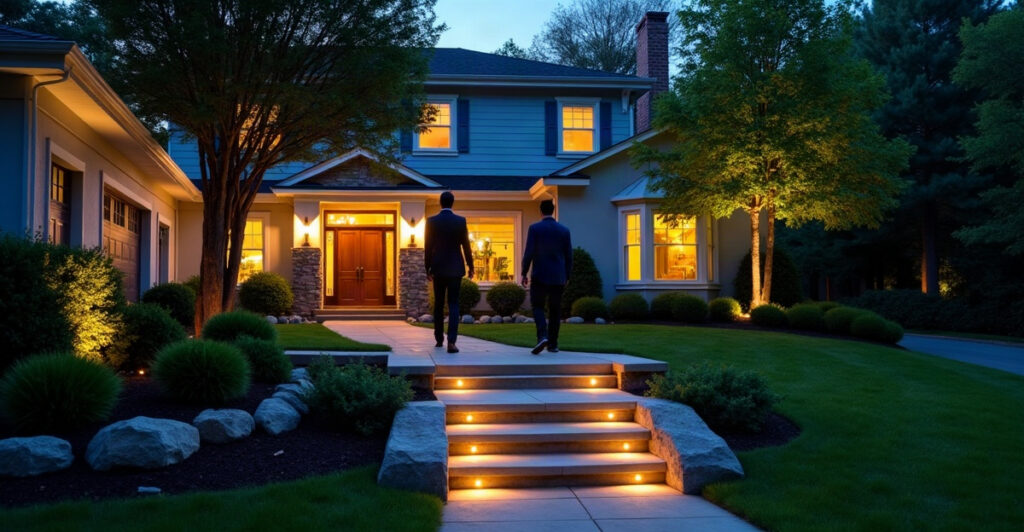
Smart Outdoor Landscape Lighting: A Guide for Homeowners
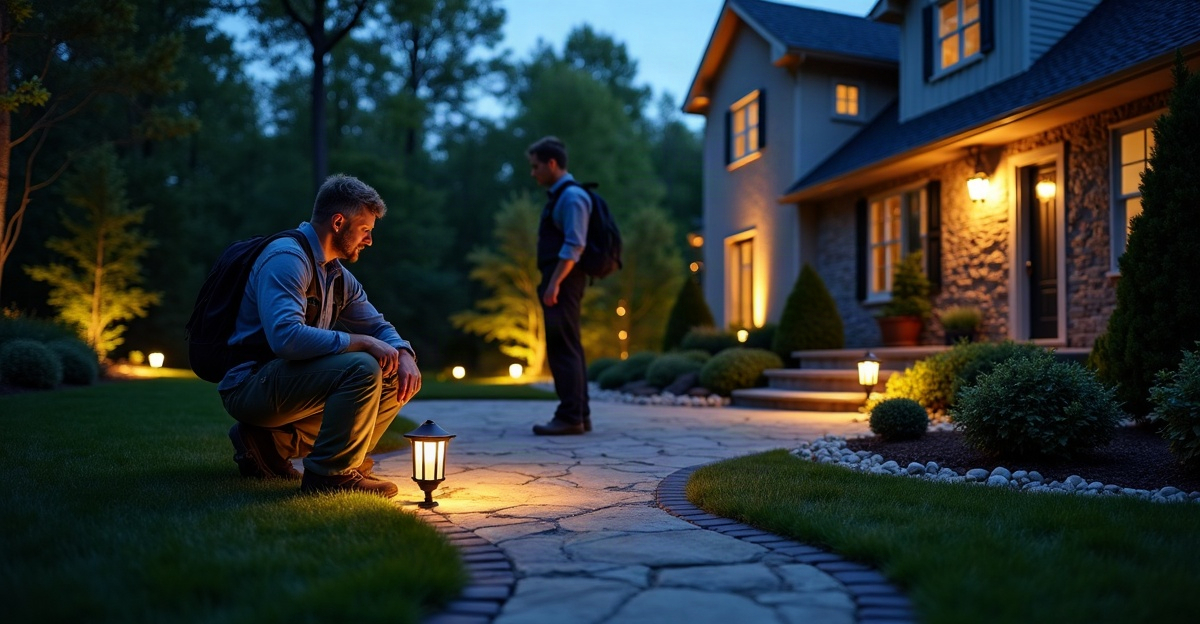
Smart outdoor landscape lighting combines professionally installed fixtures, intelligent controls, schedules, and zones to improve visibility, highlight exterior features, and support daily or seasonal use. We evaluate system design, installation quality, maintenance requirements, warranty coverage, and long-term service before choosing a provider.
Key Takeaways
- Smart systems can light paths, gardens, patios, architectural features, and rooflines through centralized app control.
- Separate lighting zones let us control areas such as entrances, backyards, gardens, and rooflines independently.
- Professional installation helps ensure safe electrical planning, weather-resistant mounting, discreet component placement, and consistent lighting performance.
- Outdoor lighting needs periodic inspections, debris removal, and controller or app reviews, even with durable components built for year-round use.
- Project pricing depends on property size, fixture count, control options, site access, electrical needs, customization, and installation requirements.
What Smart Outdoor Landscape Lighting Can Do for a Property
Smart outdoor landscape lighting is a professionally installed system that illuminates paths, gardens, architectural features, patios, outdoor living areas, and, where applicable, rooflines. It gives us dependable control of the property’s appearance and visibility after dark without requiring manual adjustment of individual fixtures.
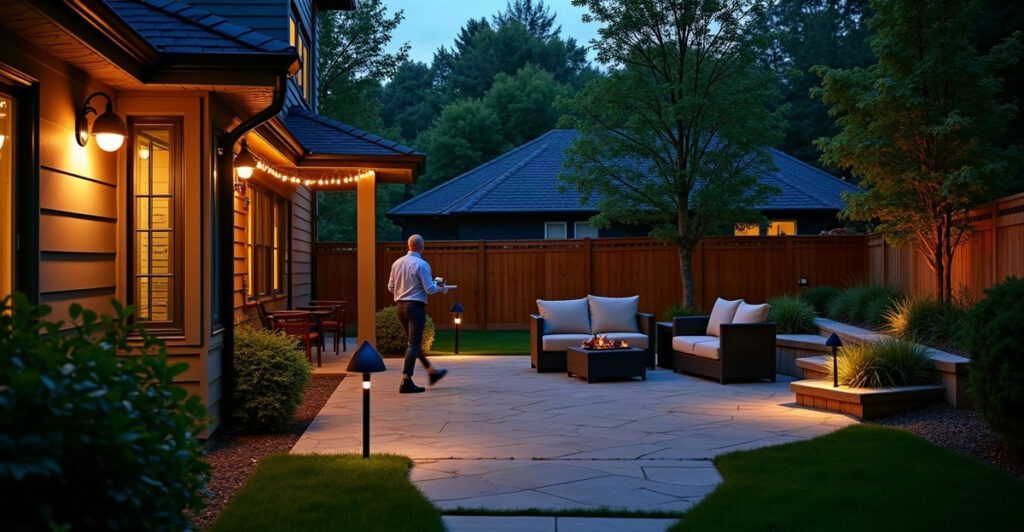
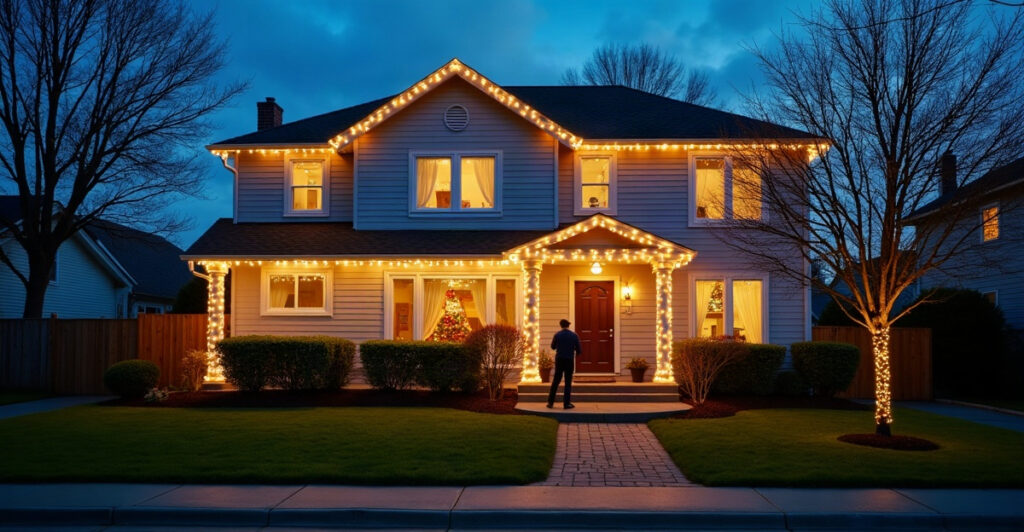
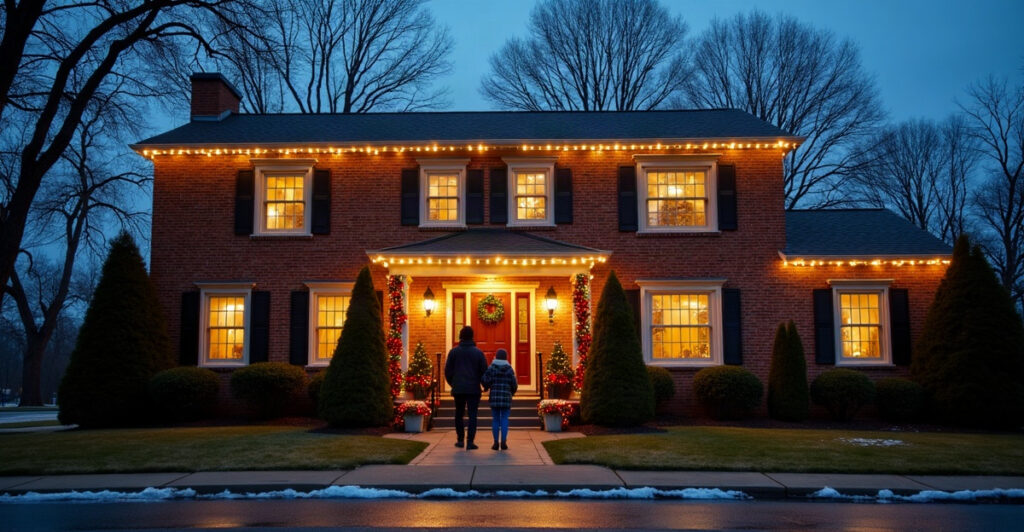
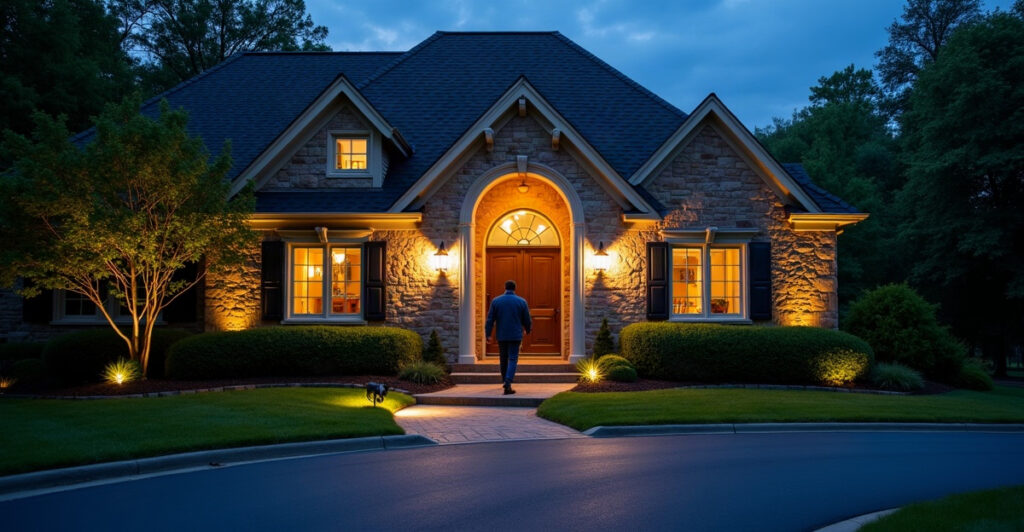
Smart landscape lighting can include path lights that define walking routes, garden fixtures that highlight planting beds, architectural lighting that brings out stonework or façade details, and outdoor accent lighting that creates depth around patios and gathering spaces. Permanent outdoor lighting often focuses on rooflines and can support white light, color scenes, and holiday displays from a fixed installation.
We match the lighting application to the property’s goals. A front entry may need clear, welcoming illumination. A backyard may benefit from low-glare patio and garden lighting. A roofline can provide seasonal color and a finished exterior appearance. For inspiration, our landscape lighting types guide explains where common fixture styles fit best.
Everyday uses extend well beyond holiday lighting. Smart outdoor landscape lighting can support architectural accents, safer visibility around walkways and steps, outdoor entertaining, game-day colors, seasonal themes, and business branding for suitable commercial properties. Our smart outdoor lighting ideas show how a cohesive lighting plan can support modern exterior design.
Lighting can improve visibility around a property and help us identify entrances, routes, and exterior activity more clearly. It should not replace a security system, and it does not guarantee crime prevention. For properties where security-minded illumination is a priority, we recommend combining thoughtful lighting placement with appropriate security measures. Our security lighting ideas cover this balanced approach.
How Smart Controls, Scheduling, Colors, and Zones Work
Smart lighting controls use a controller to connect the lighting system to an app or other control method. Instead of adjusting fixtures one at a time, we can manage the system from a central interface. An outdoor lighting app can make daily operation simple, especially for properties with several lighting areas.
Landscape lighting zones are groups of lights that operate separately. For example, we may set up zones for the front entry, garden beds, backyard patio, roofline, or storefront. This gives us the option to keep a pathway softly lit while changing the roofline for an event or turning off an unused patio area.
Common smart features include:
- App-based controls for everyday changes
- Outdoor lighting schedules for regular operation
- Timers and automation
- Customized scenes for gatherings or holidays
- Color-changing landscape lighting where the system supports it
- Zone-based control
Some systems can also integrate with other smart-home equipment, but compatibility varies.
Technical terms matter because they affect how the system performs in daily use. LEDs are the light-producing components. Channels can hold and protect roofline lighting components. Voltage affects electrical design and system requirements. Controllers manage commands, while automation follows programmed schedules or scenes. Together, these components can reduce seasonal setup, simplify operation, and keep lighting consistent.
We should compare smart controls carefully before choosing a system. App functions, available colors, zone capacity, schedules, integrations, component quality, and warranty coverage vary by manufacturer and installer. Our smart lighting automation service focuses on controls that make practical lighting routines easier to manage.
What Professional Installation Changes: Appearance, Reliability, and Safety
Professional landscape lighting installation starts with a plan, not a fixture count. We consider the property layout, focal points, walking routes, existing landscaping, available power, drainage, access requirements, and the lighting effect needed in each area. A clear outdoor lighting plan helps prevent dark gaps, excessive brightness, and poorly placed fixtures.
Installation quality affects both appearance and long-term operation. We use clean wire management, consistent fixture placement, safe electrical planning, weather-resistant mounting, and proper system configuration. These details support a polished result at night and a more orderly daytime appearance.
Discreet outdoor lighting does not mean every fixture, wire, channel, or mounting component disappears completely during the day. Visibility depends on the installation location, building materials, landscaping, and viewing angle. We position components to integrate with the architecture as effectively as possible while maintaining secure mounting and service access.
Permanent lighting installation differs from temporary seasonal products in important ways. A professionally integrated system reduces the need to hang, remove, and store seasonal lighting each year. DIY products can work well for small or temporary projects, but they often require more homeowner maintenance, have more visible wiring, and produce less consistent placement. Professional systems are generally planned for long-term use rather than short-term holiday displays. Our permanent outdoor lighting service is built around that long-term approach.
Durability, Maintenance, and Realistic Year-Round Ownership Expectations
Durable outdoor lighting should support year-round outdoor lighting use, but no system lasts forever or requires zero maintenance. Actual performance depends on documented system specifications, component quality, installation methods, local climate, moisture exposure, debris, and operating habits.
Low-maintenance landscape lighting still benefits from periodic attention. We recommend inspecting fixtures, connections, mounting points, and wiring; clearing leaves or plant growth that blocks light output; and checking controller settings, schedules, and app connectivity as needed. Warranty details and available service should also be clear before installation.
LED landscape lighting, channels, voltage, controllers, and weather-resistant lighting hardware should be evaluated from the system’s actual specifications. Broad durability claims can overlook important differences in materials, mounting methods, electrical design, and environmental exposure. Our LED retrofit upgrades can also help update compatible existing systems where appropriate.
Energy use depends on the number of fixtures, brightness levels, schedules, color settings, and total operating time. We recommend reviewing the planned system and actual use patterns instead of assuming a particular energy outcome. An outdoor lighting warranty also deserves close attention, including separate coverage for fixtures, controllers, installation, and labor.
What Affects the Cost and Long-Term Value of a Smart Lighting System
Smart landscape lighting cost reflects the property and the scope of work. Permanent outdoor lighting cost can vary based on property size, roofline or landscape complexity, lighting zones, system features, access requirements, and installation labor.
Fixture quantity, control options, color capability, electrical requirements, mounting surfaces, and customization also affect the final professional lighting installation cost. A compact front-entry project requires a different approach than a large home with garden areas, patios, multiple rooflines, and separate control zones. A detailed outdoor lighting estimate should explain the proposed scope rather than relying on a single broad price.
Long-term value comes from useful outcomes: stronger curb appeal, outdoor spaces that remain practical after dark, reduced seasonal setup compared with temporary holiday lights, consistent lighting operation, and access to professional installation and support. These benefits depend on the selected system and how it is used. We should avoid treating energy savings, security improvements, or property-value increases as guaranteed results.
Homeowners, property managers, and small business owners should compare the complete system rather than the initial price alone. Component quality, control capabilities, installation methods, warranty terms, and service support all shape the full landscape lighting investment.
Questions to Ask Before Choosing a Smart Outdoor Lighting Provider
A Practical Comparison Checklist
Before choosing a landscape lighting company, we should ask direct questions and compare documented answers:
- Which areas will the system illuminate, including paths, gardens, architecture, patios, rooflines, and storefronts?
- How discreet will fixtures, wiring, and channels appear during the day?
- Which smart controls are included, and does the system include an app?
- Can the property be divided into separate zones?
- Are scheduling, automation, color options, and custom scenes available?
- What electrical planning and weather-resistant mounting methods will the installer use?
- What warranty coverage applies to fixtures, controllers, installation work, and labor?
- What maintenance should we expect over time?
- Which factors will affect the final project price?
- Who provides support if a fixture, controller, or app connection needs attention?
A smart outdoor lighting provider should explain system capabilities clearly and avoid vague promises. We recommend comparing component quality, installation methods, warranty coverage, permanent lighting comparison details, and long-term support before making a decision.
Professional outdoor lighting service is a strong option for properties that need integrated design, dependable installation, and ongoing support. Still, the right system depends on the property’s goals, budget, expected maintenance, and desired level of control. Our lighting installation process provides a clear framework for planning a system that fits those practical requirements.