Spotlight vs Floodlight: Choosing the Right Outdoor Lighting Fixture
Choosing between a spotlight and a floodlight depends on whether a property needs focused illumination for a feature or wide coverage for safe, practical visibility. Beam angle, fixture placement, shielding, controls, and site conditions all affect performance while limiting glare and unwanted light spill.
Key Takeaways
- Spotlights use narrow or medium beam angles to accent trees, architectural details, signs, columns, and landscape features.
- Floodlights cast light across larger spaces, including driveways, yards, entrances, parking areas, and loading zones.
- Lumens alone won’t identify the right fixture. Beam spread, mounting height, aiming angle, and distance to the target determine usable illumination.
- Many properties benefit from layered lighting, with floodlights providing broad coverage and spotlights adding visual definition and targeted visibility.
- Accurate aiming, effective shielding, suitable output, and after-dark adjustments help us reduce glare, light trespass, and uneven coverage.
The Core Difference: Focused Light vs. Wide Coverage
A spotlight concentrates light into a narrower beam for targeted illumination. A floodlight spreads light across a broader area for wide coverage.
The spotlight vs. floodlight decision comes down mainly to beam spread and light distribution, not brightness alone. Outdoor spotlights direct attention to a defined target. Outdoor floodlights help make larger areas easier to see and use after dark.
| Feature | Spotlight | Floodlight | What It Means for the Property Owner |
|---|---|---|---|
| Beam angle | Narrow and focused | Wide and spread out | Spotlights concentrate illumination; floodlights distribute it. |
| Coverage | Small target area | Large area | Match the fixture to the size of the space or feature. |
| Best for | Features, trees, columns, signs | Driveways, yards, entrances, loading areas, parking zones | Use the fixture that supports the property’s main goal. |
| Typical effect | Dramatic accenting | Functional broad visibility | Spotlights create focal points; floodlights support wider use. |
| Placement sensitivity | Precise aiming required | Careful shielding and aiming needed to avoid spill and glare | Both require thoughtful placement after dark. |
| Common mistake | Under-lighting a wide area | Over-lighting or disturbing neighbors | More output does not automatically create better results. |
Beam angle describes how widely light leaves a fixture. A smaller beam angle concentrates light on a tighter area. A larger beam angle distributes light over a wider area. These floodlight vs. spotlight differences affect visual comfort, coverage, glare, and the overall appearance of the property.
How Beam Angle, Lumens, Placement, and Controls Affect Results
Lumens measure the total visible light a fixture produces. They do not, by themselves, show how broadly or effectively the fixture distributes that light. A high-lumen narrow-beam fixture can appear intense in one focused location, while a similar-output wide-beam fixture covers more area with less concentrated intensity.
Fixture categories can overlap. Manufacturers use different optics, housing designs, beam patterns, and intended applications. Rather than relying on a universal beam-angle or lumen range, we evaluate the actual fixture and the location where it will operate.
Mounting height, distance from the target, beam direction, and shielding all shape the finished result. Controls matter as well. Dimming, timers, motion sensors, and smart lighting automation help us use light only when and where it adds value. Color temperature also influences the look of stone, plants, siding, and pavement.
Property size, nearby homes or businesses, surrounding darkness, and reflective surfaces should guide every fixture choice. More light is not always better. Balanced coverage usually provides better visibility and a cleaner appearance than one overly bright fixture. Outdoor lighting can improve visibility and contribute to a greater sense of safety, but it does not guarantee crime prevention. Our guide on lighting and property security explains this relationship in practical terms.
When to Choose an Outdoor Spotlight
Outdoor spotlights use narrow-to-medium beam patterns to deliver focused illumination to a feature or specific target area. Their purpose extends beyond decoration. With the right output, aiming, and location, they can support visibility, wayfinding, signage, and architectural emphasis.
We recommend a narrow-beam outdoor spotlight for a mature tree, architectural column, sculpture, façade detail, address marker, or sign. Spotlights work especially well for building features, focal landscaping, and commercial signs that need targeted illumination without lighting the entire surrounding area.
A carefully aimed spotlight helps create curb appeal and landscape definition while limiting broad spill light. It is one fixture type within a larger landscape-lighting system. Path lights, wall lights, deck lights, and step lights serve different jobs and often work alongside spotlights. Our overview of landscape lighting fixture types can help us identify the right mix.
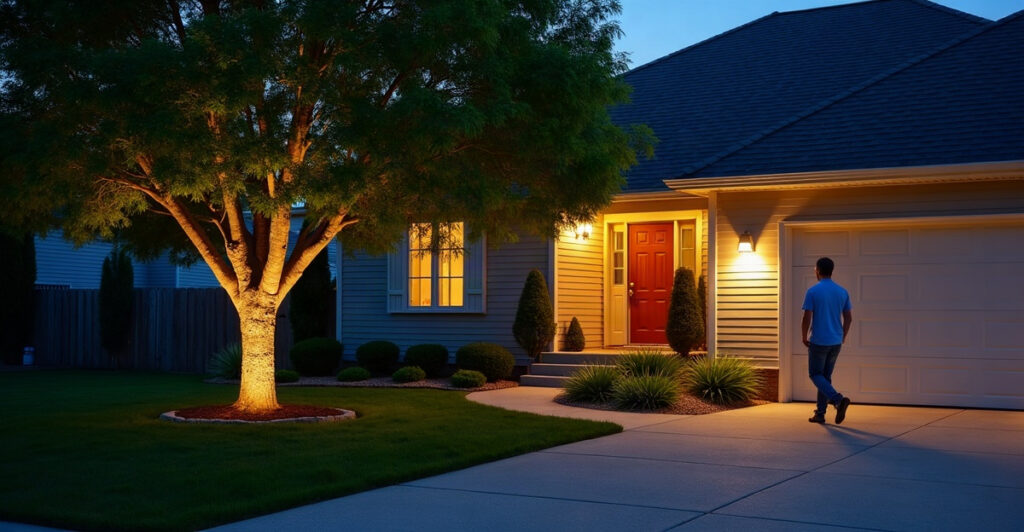
Aim the fixture at the intended feature, then test the effect after dark. Small adjustments in position and angle can reduce harsh shadows, control hot spots, and keep the light source out of direct view. For distinctive trees, stonework, and exterior details, professional landscape accent lighting creates depth without making the property feel overlit.
When to Choose an Outdoor Floodlight
Outdoor floodlights spread light across a broad area for wider functional visibility. We use them for driveways, broad side yards, entrance approaches, loading areas, parking sections, and other large outdoor zones where a focused fixture would leave too much area unlit.
Flood coverage can support commercial circulation areas, delivery zones, parking areas, and broad building perimeters. At a front entry, a floodlight can support approach visibility, but it should not serve as the only source of entry lighting. A layered lighting plan produces a more comfortable and useful result.
Floodlights also support evening usability, vehicle access, commercial operations, and safer navigation around larger exterior spaces. For homes, our guidance on security lighting placement helps identify locations that benefit from wider coverage.
A floodlight mounted too high or aimed outward can create glare without improving usable visibility. It may also leave the space directly below it darker than expected. We plan broad coverage carefully to avoid overly bright patches and deep shadows around the edges of the light.
Choosing the Right Fixture Mix for Your Property
For security and visibility, we choose coverage based on the actual area that needs to be seen. Lighting can support awareness and visibility, but it cannot guarantee crime prevention. Our review of security lighting types explains how common fixture options serve different exterior areas.
Driveways and side yards often benefit from floodlights because these spaces need wider coverage for vehicle access and open-area visibility. Front entries usually benefit from layered lighting. A floodlight may help illuminate the approach, while smaller fixtures or spotlights can define the entry and improve visual comfort.
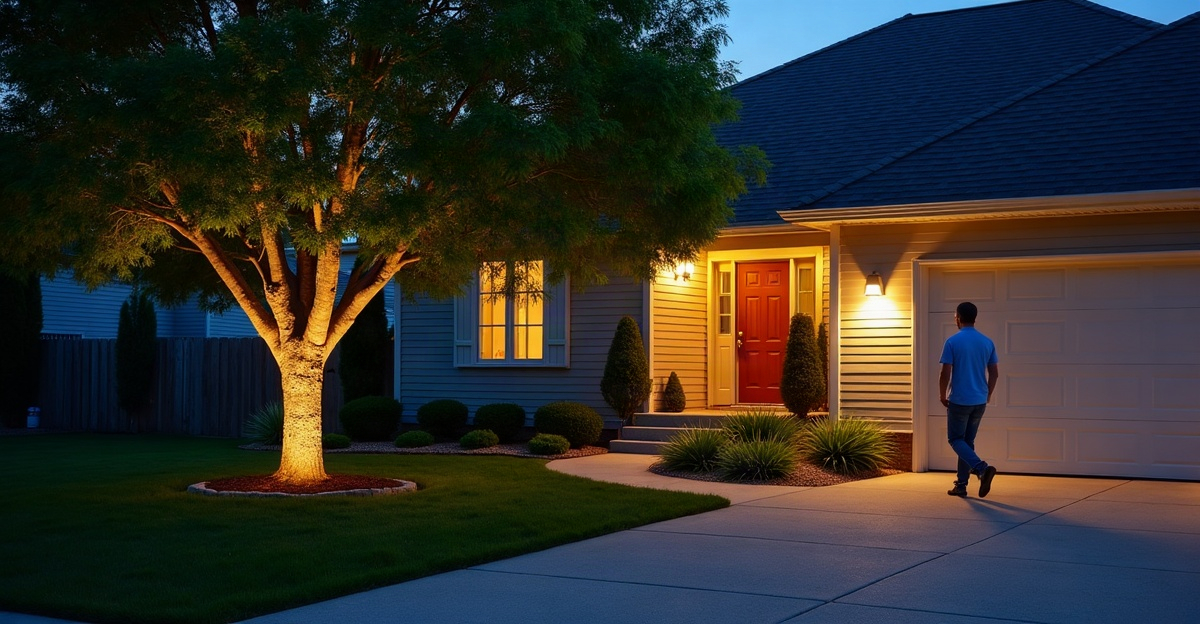
Trees, landscaping, columns, façades, and address markers benefit from spotlights. Focused beams create depth, reveal texture, and build curb appeal. For ideas that prioritize visual impact without excess output, review these outdoor accent lighting ideas.
Commercial exteriors often require both fixture types. Floodlights can cover circulation areas and parking zones, while spotlights highlight signs, building features, or focal landscaping. We provide commercial lighting installation for properties that need dependable coverage and a polished exterior after dark.
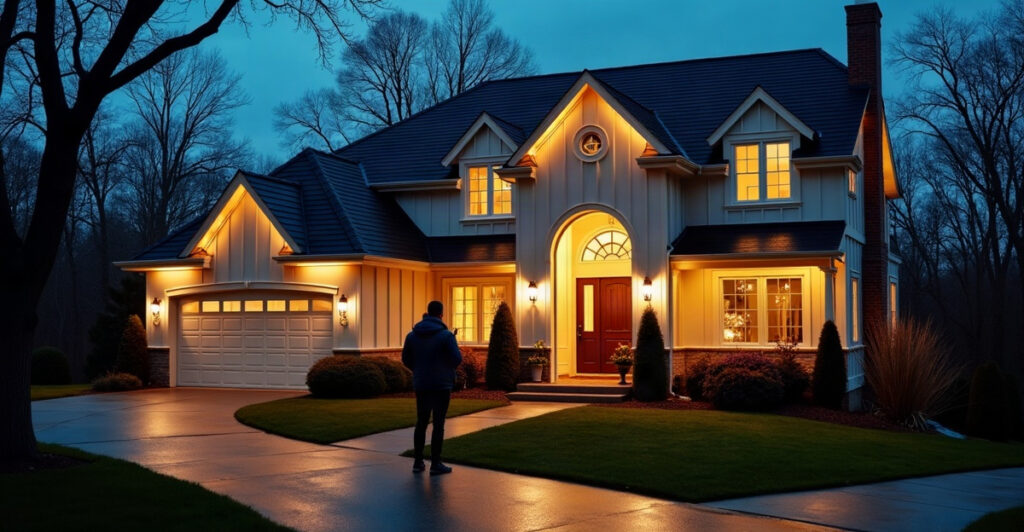
Larger properties frequently need a combination of spotlights and floodlights. A practical layered plan may use floodlights for a driveway or parking area, spotlights for mature trees and façade details, and path or step lighting for walkways and elevation changes. The best solution depends on the property goal, size, mounting location, surrounding conditions, and desired visual effect—not fixture wattage or lumens alone. A clear outdoor lighting plan prevents isolated fixtures from working against each other.
Glare, Light Trespass, and Professional Lighting Planning
Broad, poorly aimed floodlights can create uncomfortable glare, dark shadows, and spill into neighboring properties. We direct fixtures downward or toward the intended surface, use shields where appropriate, select the lowest effective output, and test every system after dark. Local ordinances, HOA rules, and commercial-property requirements may also affect fixture placement and operation.
Quality outdoor lighting needs weather-appropriate ratings, sound installation practices, and periodic inspection. Permanent installation does not mean zero maintenance. We recommend routine cleaning, aiming adjustments, fixture checks, and control testing to maintain reliable performance.
Professional planning is especially valuable for tall façades, mature trees, rooflines, hard-to-reach locations, large homes, expansive landscapes, multi-building sites, and commercial exteriors. It also helps where electrical planning, weather exposure, glare reduction, neighbor impact, or control integration require careful coordination. Our residential lighting installation service helps create discreet, permanent systems with a clean daytime appearance and dependable nighttime performance.
A professionally designed Bosso Smart Lighting system can layer focused accent lighting with broader functional illumination. Convenient controls can support everyday property use, holidays, events, and seasonal color changes without compromising the primary lighting plan.
Frequently Asked Questions
Is a spotlight brighter than a floodlight? Neither fixture is automatically brighter. A spotlight can appear more intense because it concentrates light in a smaller area. A floodlight distributes its output across a broader space.
What is the main difference between a spotlight and a floodlight? The main difference is beam spread. Spotlights focus illumination on a target, while floodlights cover a wider area.
Are floodlights or spotlights better for home security? Floodlights often work better for broad open areas that need wider visibility. Spotlights can support visibility at targeted locations. The best choice depends on the area being illuminated and does not guarantee crime prevention.
Should we use a spotlight or floodlight for a driveway? A floodlight often provides the broad coverage a driveway needs. Spotlights may complement it by highlighting an address marker, tree, or architectural feature near the drive.
What type of light is best for highlighting trees and landscaping? Spotlights are generally the best choice for trees, landscaping, columns, and textured architectural details because they provide controlled, targeted emphasis.
Can we use spotlights and floodlights together? Yes. Combining both creates functional coverage and visual depth. Floodlights can serve driveways or parking areas, while spotlights define landscape and architecture.
How do we reduce glare from outdoor floodlights? Aim fixtures downward, shield the light source where possible, choose the lowest effective output, and adjust the system after dark to limit direct views into the fixture.
When should we hire a professional for outdoor lighting design and installation? Professional support is valuable for permanent systems, large properties, difficult mounting locations, control integration, commercial exteriors, and any project where balanced coverage and glare control matter.