What Is Accent Lighting and How Does It Improve Outdoor Spaces?
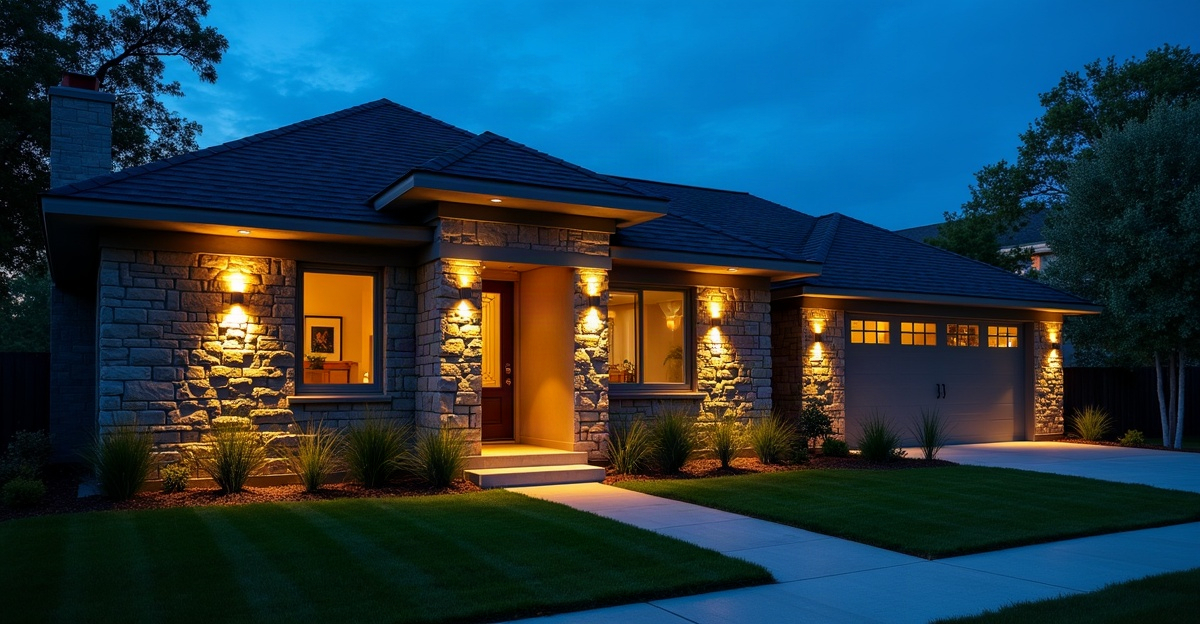
Accent lighting is targeted outdoor illumination that draws attention to architectural details, entryways, landscaping, stonework, and façades. We use it to create depth, contrast, and a polished nighttime appearance. Unlike ambient, task, or security lighting, accent lighting highlights chosen focal points. With thoughtful planning and installation, it can strengthen curb appeal, improve visibility, and maintain an appealing property presentation throughout the year.
Key Takeaways
- Accent lighting draws attention to specific exterior features instead of distributing light evenly across the entire property.
- A complete outdoor lighting plan can pair accent lighting with ambient, task, and security lighting to serve distinct needs.
- Permanent accent lighting can deliver refined everyday white-light scenes, along with programmable colors for holidays, events, and celebrations.
- Professional-quality results rely on fixture placement, beam direction, spacing, color temperature, glare management, and discreet mounting.
- Before selecting a system, we should assess design quality, weather resistance, control options, warranty coverage, maintenance requirements, and installation methods.
What Is Accent Lighting?
Accent lighting is lighting designed to highlight specific focal points rather than illuminate an entire exterior evenly. It directs attention to the features that give a property its character, such as rooflines, entryways, landscaping, stonework, architectural details, signage, and building façades.
The purpose is visual definition. A well-planned system can strengthen curb appeal, create a more intentional nighttime appearance, improve visibility around selected exterior areas, and support year-round property presentation. Landscape accent lighting gives homes and commercial properties depth and contrast after dark without making every surface equally bright.
Accent lighting is not simply brighter lighting. It also does not replace functional pathway, entry, or security lighting where those systems are needed. Each lighting type has a distinct job, and the strongest results come from combining them with a clear plan.
How Accent Lighting Differs From Other Outdoor Lighting
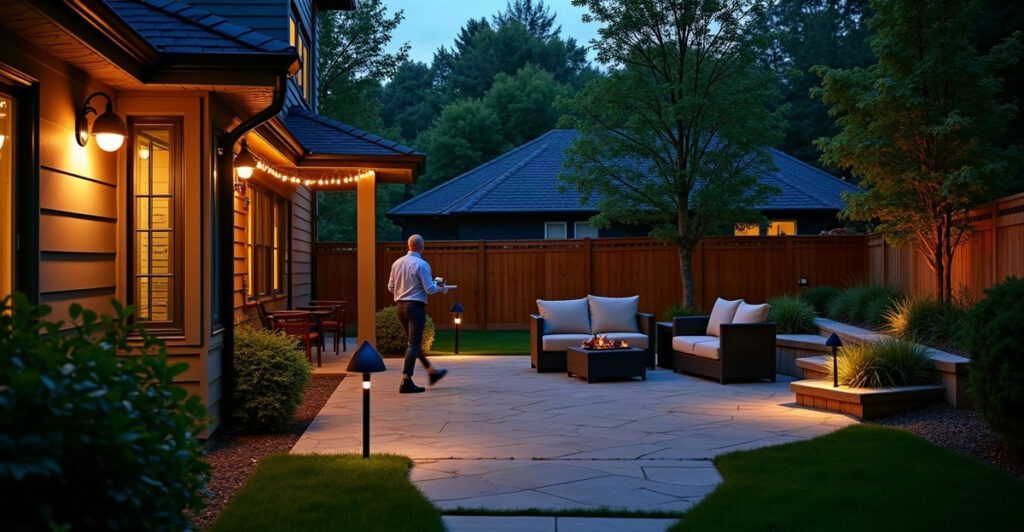
A complete exterior-lighting plan may include several lighting types. Each contributes to a property’s appearance, usability, and visibility in a different way.
Ambient lighting provides general illumination that creates an overall sense of visibility or atmosphere. It may support patios, gathering areas, and broad sections of a yard or façade.
Task lighting focuses on functional areas, including walkways, steps, doorways, patios, and grilling spaces. Its job is to help people move through and use those spaces comfortably after dark.
Security lighting improves visibility around access points, parking areas, driveways, and darker sections of a property. A properly located system can help make these areas easier to see without creating unnecessary glare.
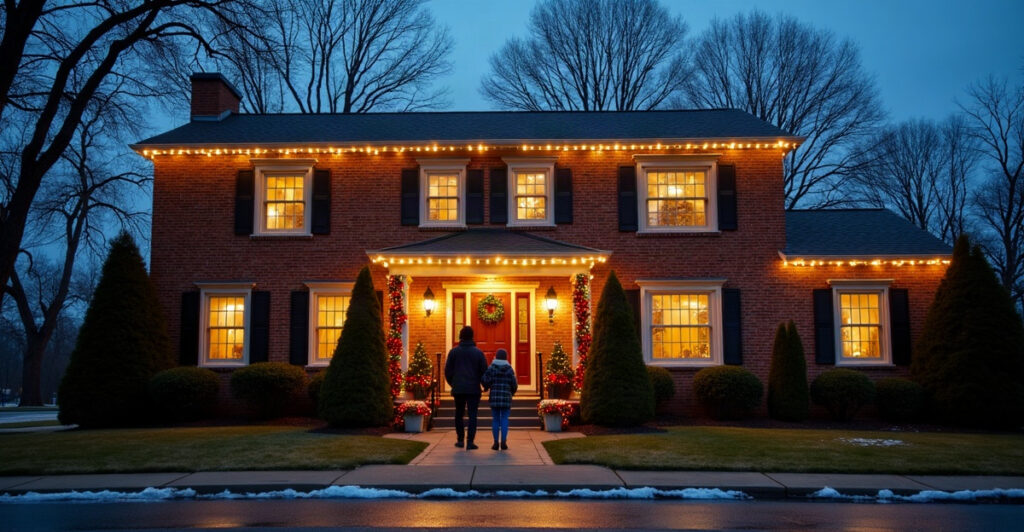
Seasonal or decorative lighting supports holidays, events, and temporary displays. Permanent systems can support this use, but their daily value should start with architectural enhancement and consistent property presentation. Holiday colors, team colors, events, and celebrations work best as an added option rather than the sole purpose of a permanent installation.
Accent lighting focuses attention on selected features. Instead of washing the entire exterior with light, it creates depth, contrast, and architectural definition. Reviewing the types of landscape lighting helps determine where accent, task, ambient, and security fixtures belong.
Outdoor Features and Front-of-Home Applications
What Is Accent Lighting Used For?
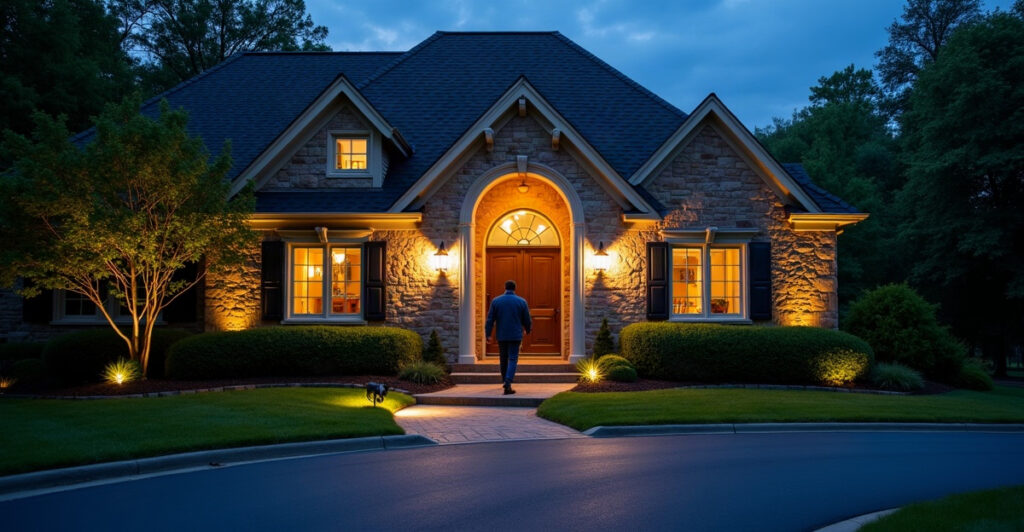
Accent lighting can highlight rooflines, gables, columns, stonework, trees, planting beds, patios, front doors, driveways, signage, storefronts, and full building façades. The right application depends on which features deserve visual emphasis from the street, driveway, patio, or primary approach.
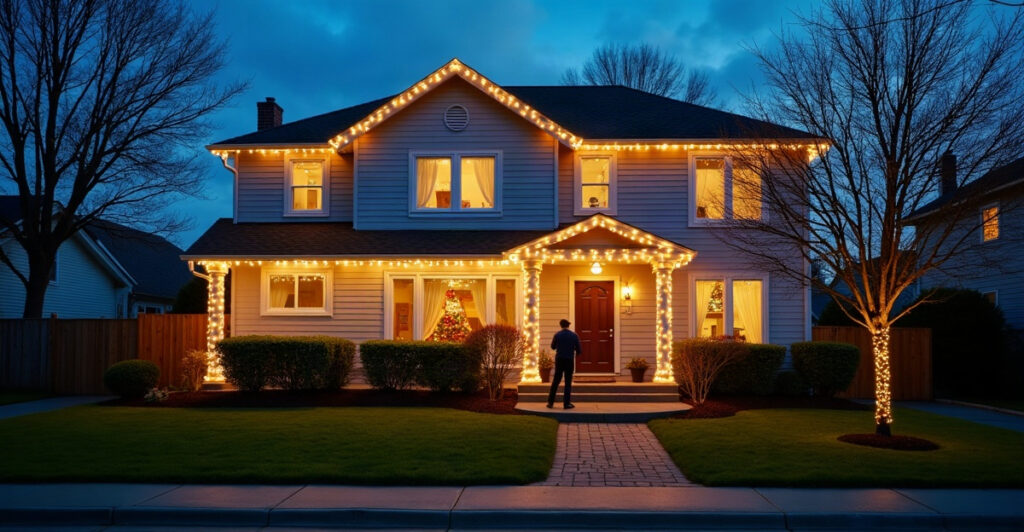
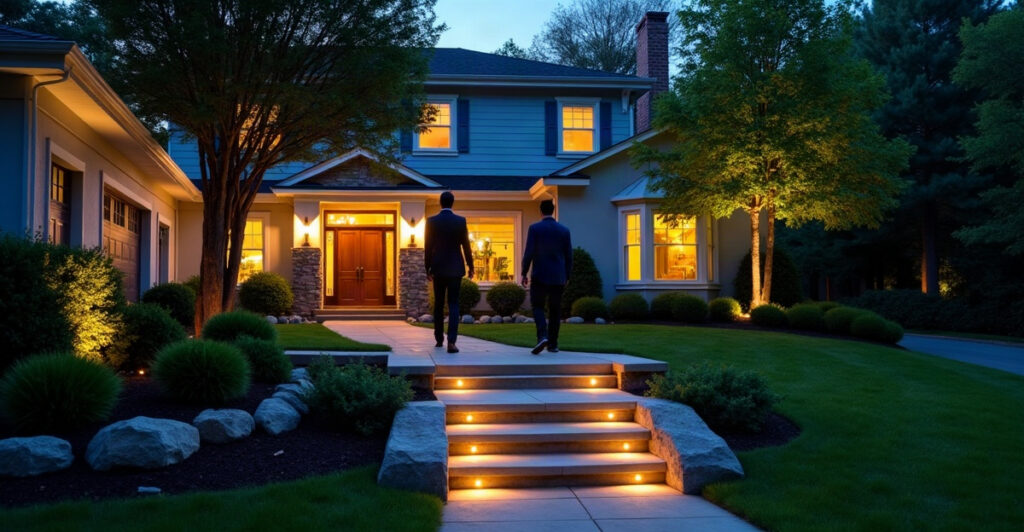
For residential properties, subtle roofline or eave lighting can define the home’s shape after dark. Entryway lighting can create a welcoming front-of-home appearance, while landscape and hardscape highlights can bring out trees, retaining walls, patios, and stone features. Adjustable white lighting often suits daily use, while color options can support special occasions.
For commercial and managed properties, accent lighting can give storefronts, office buildings, multifamily communities, hospitality spaces, and restaurants a more polished façade. It can also emphasize signage and entry features without relying on excessive brightness or harsh glare. Programmable scenes help properties shift their presentation for events or seasonal periods while maintaining a consistent everyday appearance.
What is front accent lighting? It typically refers to lighting placed at the front of a home or building to define architectural lines, draw attention to the entryway, highlight landscape features, and improve nighttime presentation. For additional planning ideas, our guide to front-of-house lighting shows how layers of light can work together.
How Permanent Accent Lighting Improves Outdoor Spaces
Permanent outdoor lighting offers year-round value without the repeated setup and removal associated with temporary holiday lighting. A professionally installed system can create clean architectural lines for homes, business façades, managed communities, and hospitality properties while supporting curb appeal, nighttime usability, and seasonal displays.
Modern permanent systems may include app-based controls, schedules, separate zones, dimming, and adjustable colors. Features vary by system, so it is important to review control options before installation. Everyday scenes generally use subtle white light to complement the property’s materials and architecture. Programmable color scenes can then support holidays, team colors, celebrations, and events without changing the physical installation.
This flexibility makes scene changes easier and reduces seasonal setup work. It also allows different parts of a property to serve different purposes. An entryway may use a restrained white scene each night, while a patio or façade shifts for an event.
Results depend on the design, component quality, installation method, and conditions at the property. A thoughtful permanent outdoor lighting installation can improve how a property is presented and used after dark, but it must fit the structure and its surroundings. For homes that benefit from connected controls, smart lighting automation can simplify scheduling and scene selection.
What Makes Exterior Accent Lighting Look Professional?
Good accent lighting is not necessarily bright lighting. Professional results come from intentional design, controlled output, and accurate installation rather than adding more fixtures or choosing the highest output available.
Fixture placement determines what viewers notice first. Beam direction and output must highlight a feature without producing harsh hotspots. Spacing should create balanced visual lines, particularly along rooflines and façades. Appropriate color temperature also matters for everyday architectural scenes, where the goal is to complement exterior materials instead of overpowering them.
A professional layout considers focal features, viewing angles, mounting surfaces, power requirements, traffic areas, and how each lighting zone works with the others. It also accounts for glare, unwanted spill into neighboring properties, and excess light directed into the sky. Before installation, start with an outdoor lighting plan that identifies priorities and practical constraints.
Professional installation generally includes planning the layout, evaluating mounting surfaces and power requirements, selecting component placement, testing zones and controls, and reviewing care or warranty information. Our residential lighting installation approach focuses on these details so the finished system looks deliberate in the evening and remains organized during the day.
Fixtures, tracks, and wiring may remain visible to some degree in daylight. Color-matched components, careful positioning, and clean mounting can make them far less noticeable. System longevity also depends on component quality, weather exposure, electrical design, mounting method, local climate, installation quality, and warranty coverage.
Professionally installed systems are built for long-term use, but they are not maintenance-free. Depending on the equipment and property conditions, occasional inspection, cleaning, software updates, or service may be needed.
Is Permanent Accent Lighting Right for Your Property?
Permanent accent lighting is a strong fit for properties that need a consistent nighttime appearance and flexible seasonal options. It works especially well where architectural lines, landscape features, entrances, or commercial façades deserve attention after dark.
Questions to Consider Before Installation
Before contacting a provider, consider these practical points:
- Which architectural or landscape features should receive attention?
- Is the main goal curb appeal, seasonal convenience, improved nighttime usability, commercial presentation, or a combination?
- Will the property benefit from a subtle everyday white-light look, programmable colors, or both?
- Are discreet daytime appearance and professional mounting important?
- Do app controls, scheduled scenes, and reduced seasonal setup add value?
- What warranty, installation process, maintenance guidance, and support options does the provider offer?
Compare providers by design quality, component quality, weather suitability, mounting method, control options, warranty coverage, and ongoing support rather than choosing solely by the lowest upfront price. For visual direction before planning, explore these modern landscape lighting ideas and practical smart outdoor lighting ideas.
For a custom lighting plan or professional property assessment, contact Bosso Smart Lighting to discuss design goals and permanent lighting options.